Estimated Reading Time: 6 minutes
The Hidden Cost of Ignoring a Small Roof Leak in a Warehouse
Tru-Kote Roofing Systems | Commercial Flat Roofing | Elkhart, IN
A small roof leak rarely looks like an emergency.
Maybe it’s a water stain near a ceiling panel. Maybe it’s a drip that only appears during heavy rain. In many warehouses, these issues are easy to overlook because day-to-day operations take priority.
Unfortunately, roof leaks rarely stay small for long.
What starts as a minor maintenance issue can gradually turn into damaged inventory, rising energy costs, structural deterioration, and expensive repairs. By the time the problem becomes impossible to ignore, the cost of fixing it may be several times greater than it would have been initially.
For warehouse owners and facility managers, understanding the true cost of a roof leak is essential for protecting both the building and the business operating inside it.
Why Small Roof Leaks Become Big Problems
Commercial flat roofing systems are designed to keep water out while protecting insulation and structural components beneath the surface.
When even a small breach develops in the roofing membrane, water can enter the system and begin spreading beyond the visible leak location.
In many cases, the water travels through insulation and along structural components before eventually becoming visible inside the building.
This means the stain you see inside may represent only a small portion of the actual damage occurring above the ceiling.
The longer a leak remains unaddressed, the more opportunities moisture has to spread throughout the roofing system.
The Hidden Damage Most Property Owners Never See
One of the biggest challenges with roof leaks is that much of the damage occurs out of sight.
Wet Insulation
Roof insulation plays a critical role in maintaining energy efficiency and temperature control.
Once insulation becomes saturated, it loses much of its insulating value and often must be replaced.
Wet insulation can lead to:
Higher heating and cooling costs
Reduced indoor comfort
Increased strain on HVAC equipment
Ongoing moisture retention within the roof system
Structural Deterioration
Water that remains trapped inside a roofing system can eventually reach structural components.
Depending on the building’s construction, this may result in:
Rust and corrosion on steel decking
Wood rot in structural members
Deterioration of fasteners and attachments
Reduced structural integrity over time
What could have been a simple repair may eventually require significant restoration work.
Mold and Indoor Air Quality Concerns
Moisture creates an environment where mold can develop.
In warehouse environments, mold growth can affect:
Employee health and comfort
Indoor air quality
Stored products
Regulatory compliance requirements
Addressing mold issues is often far more expensive than repairing the original leak.
The Impact on Warehouse Operations
Unlike many other commercial buildings, warehouses often contain valuable inventory, equipment, and operational systems.
A leak that reaches the interior can create immediate business challenges.
Inventory Damage
Water and inventory rarely mix well.
Products stored beneath a leak may become damaged, contaminated, or unsellable. Depending on the type of inventory, losses can quickly exceed the cost of the roof repair itself.
Equipment and Electrical Risks
Water intrusion near electrical systems, machinery, or automated equipment can create safety concerns and operational disruptions.
Unexpected downtime may result in:
Delayed shipments
Reduced productivity
Repair expenses
Lost revenue
Workplace Safety Issues
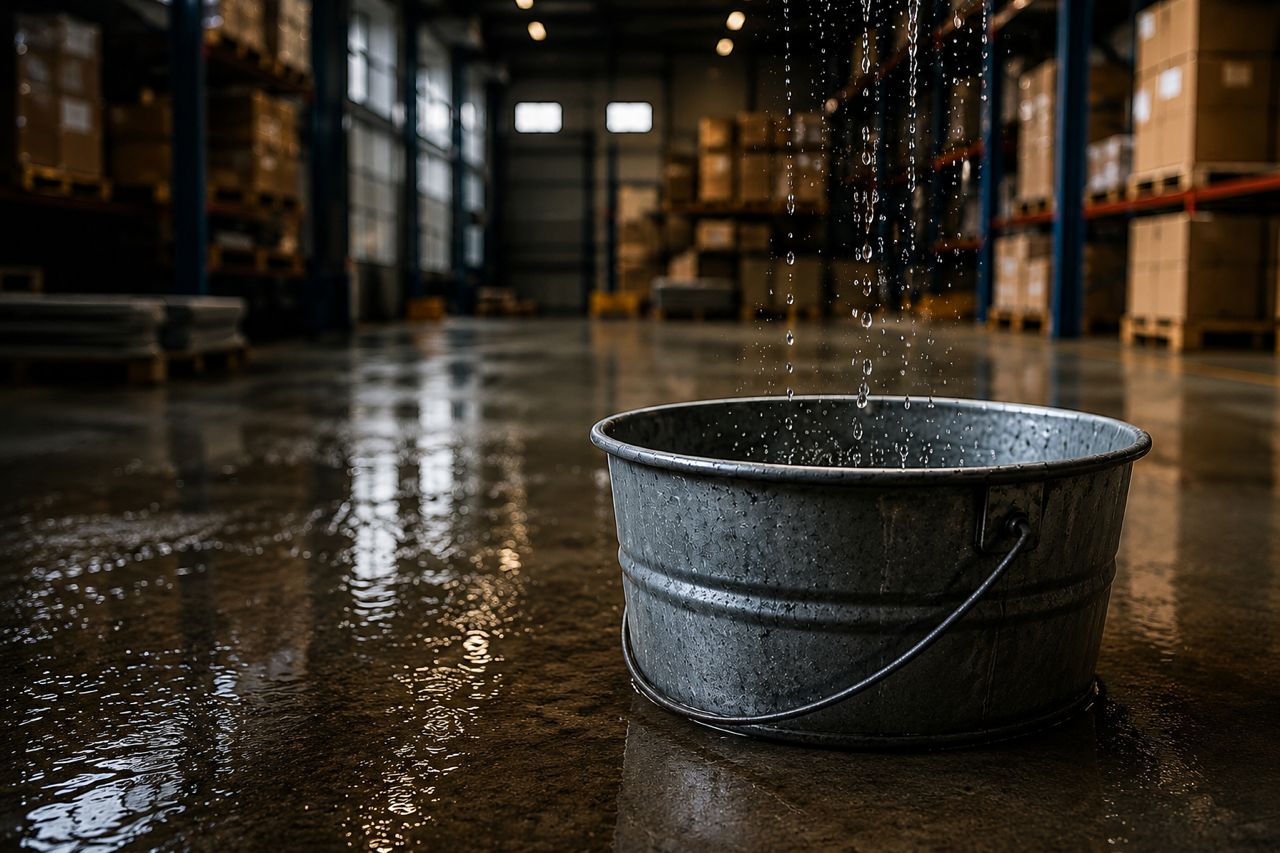
Standing water creates slip hazards for employees and visitors.
In addition to property damage, leaks can increase liability risks and workplace safety concerns.
Why Flat Roofs Require Special Attention
Most warehouse facilities utilize flat or low-slope roofing systems.
While these systems are durable and cost-effective, they naturally retain water longer than steep-slope roofs.
As a result:
Water remains on the roof surface for longer periods
Small membrane defects can allow significant moisture infiltration
Drainage issues become more important
Seasonal weather changes can accelerate deterioration
In Northern Indiana and Southwest Michigan, freeze-thaw cycles add another layer of risk. Water that enters a roofing system can expand when temperatures drop, making existing damage worse over time.
The Real Cost of Waiting
Many property owners postpone repairs because the leak appears minor.
However, waiting often increases costs in several ways.
Emergency Repairs Cost More
Small roofing issues are typically easier and less expensive to address than widespread damage.
As leaks grow, repair complexity increases.
Damage Spreads Over Time
Moisture rarely stays in one location.
What begins as a localized problem can affect larger sections of insulation, roofing membrane, and structural components.
Energy Costs Continue To Rise
A compromised roofing system forces HVAC equipment to work harder to maintain indoor temperatures.
These higher energy costs continue month after month until the issue is resolved.
Future Replacement Costs May Increase
The longer moisture remains trapped within a roofing system, the greater the chance that portions of the roof will require replacement rather than repair.
The Value of Preventive Roof Maintenance
The most cost-effective strategy for warehouse owners is prevention.
Routine roof inspections help identify developing issues before they become major expenses.
A professional maintenance program typically includes:
Scheduled roof inspections
Drain and scupper cleaning
Flashing and seam inspections
Early leak detection
Documentation of roof conditions
Repair recommendations
By addressing problems early, building owners can often avoid emergency situations and extend the life of their roofing system.
Warning Signs You Shouldn’t Ignore
Even if your roof is not actively leaking, watch for these warning signs:
Water stains on ceilings or walls
Standing water on the roof
Visible membrane damage
Bubbling or blistering roofing materials
Unexplained increases in energy costs
Mold or mildew odors
Rust around rooftop equipment
Frequent leak repairs in the same area
These symptoms often indicate that a larger issue may be developing.
Frequently Asked Questions
Is a small roof leak really a serious problem?
Yes. Small leaks often indicate a larger roofing issue and can allow moisture to spread throughout insulation and structural components.
Can a leak damage inventory even if it seems minor?
Absolutely. Even a slow leak can damage stored products, packaging materials, and equipment over time.
How often should warehouse roofs be inspected?
Most commercial roofing professionals recommend at least two inspections annually, along with additional inspections following major storms.
Can preventive maintenance save money?
In many cases, yes. Early detection and repair are typically far less expensive than emergency restoration and replacement projects.
Don’t Wait Until a Small Leak Becomes a Major Expense
The most expensive roof leak is often the one that seemed too small to worry about.
Addressing roofing issues early can help protect your building, inventory, employees, and operating budget while extending the life of your roofing system.
At Tru-Kote Roofing Systems, we help commercial property owners throughout Northern Indiana and Southwest Michigan identify roofing problems before they become costly emergencies.
If you’ve noticed signs of a leak—or simply haven’t had your roof inspected recently—contact Tru-Kote Roofing Systems to schedule a professional roof assessment.