Estimated Reading Time: 9 minutes
Routine flat roof maintenance extends your roof's lifespan by 40-60% when done correctly. That means a 20-year roof becomes a 28-32 year roof. The difference between systematic preventive care and reactive repairs determines whether you replace your roof twice in your career or once.
Most commercial building owners treat flat roof maintenance like changing oil in a car - they know it's important but delay until something goes wrong. This approach costs three times more than preventive maintenance and creates unnecessary business disruptions.
Why Preventive Maintenance Beats Reactive Repairs
Your flat roof faces constant attack from UV radiation, temperature cycles, and weather. Every day without maintenance is a day closer to expensive problems. Small issues compound into major failures that shut down operations and drain budgets.
A properly maintained commercial flat roof in Northern Indiana weathers freeze-thaw cycles, summer heat, and storm damage without catastrophic failure. An unmaintained roof develops membrane splits, ponding water issues, and structural problems that require full replacement years ahead of schedule.
The math is straightforward: preventive maintenance costs $0.75-$1.50 per square foot annually. Emergency flat roof repair costs $8-15 per square foot when problems escalate. Full replacement costs $12-25 per square foot. Smart facility managers choose the first option.
The Science Behind Roof Lifespan Extension
Flat roofing materials deteriorate through predictable processes. TPO and PVC membranes lose plasticizers over time, becoming brittle. EPDM rubber shrinks and pulls away from penetrations. Modified bitumen develops thermal splits from expansion and contraction.
Regular maintenance interrupts these deterioration cycles. Cleaning removes debris that traps moisture and accelerates membrane breakdown. Sealant renewal prevents water infiltration that causes substrate damage. Drain clearing eliminates ponding water that adds structural stress and creates leak pathways.
Temperature cycling causes the most damage to flat roofs. Summer temperatures can reach 160°F on dark membranes, while winter brings sub-zero conditions. This 200-degree swing happens hundreds of times per year. Maintenance identifies and addresses thermal stress points before they become failures.
Material-Specific Maintenance Benefits
TPO Roofs: Seam inspection and re-welding prevents wind uplift and water infiltration. Proper maintenance extends TPO lifespan from 15-20 years to 22-28 years.
EPDM Roofs: Regular cleaning and seam sealing maintains membrane flexibility. Well-maintained EPDM systems reach 25-30 years instead of the typical 18-22 years.
Modified Bitumen: Granule replacement and crack sealing prevents UV damage and thermal splitting. Maintenance can push lifespan from 12-15 years to 18-22 years.
Built-Up Roofing: Gravel replacement and flood coat renewal protects underlying plies. Proper care extends BUR systems from 15-20 years to 25-30 years.
The Four-Phase Maintenance System That Works
Effective flat roof maintenance follows a systematic approach. Random inspections and reactive fixes don't extend lifespan - they just delay inevitable problems. Professional maintenance programs use a four-phase system that addresses issues before they become expensive.
Phase 1: Quarterly Visual Inspections
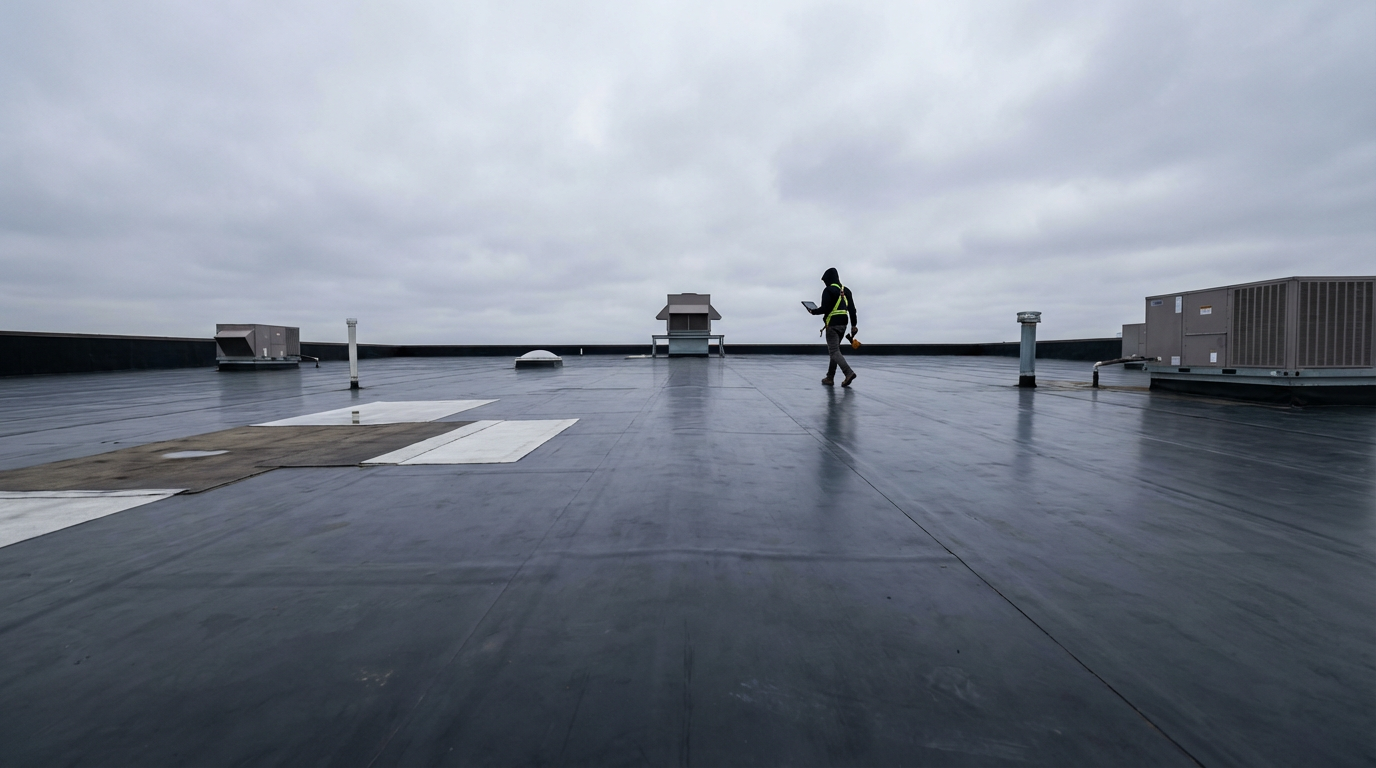
Professional inspectors examine the entire roof surface, drainage systems, and penetrations. They document membrane condition, identify developing problems, and prioritize repairs. Digital documentation tracks changes over time and guides maintenance decisions.
Key inspection points include membrane seams, roof drains, HVAC penetrations, expansion joints, and perimeter details. Early identification of issues like loose seams, clogged drains, or damaged flashing prevents water infiltration and structural damage.
Phase 2: Immediate Minor Repairs
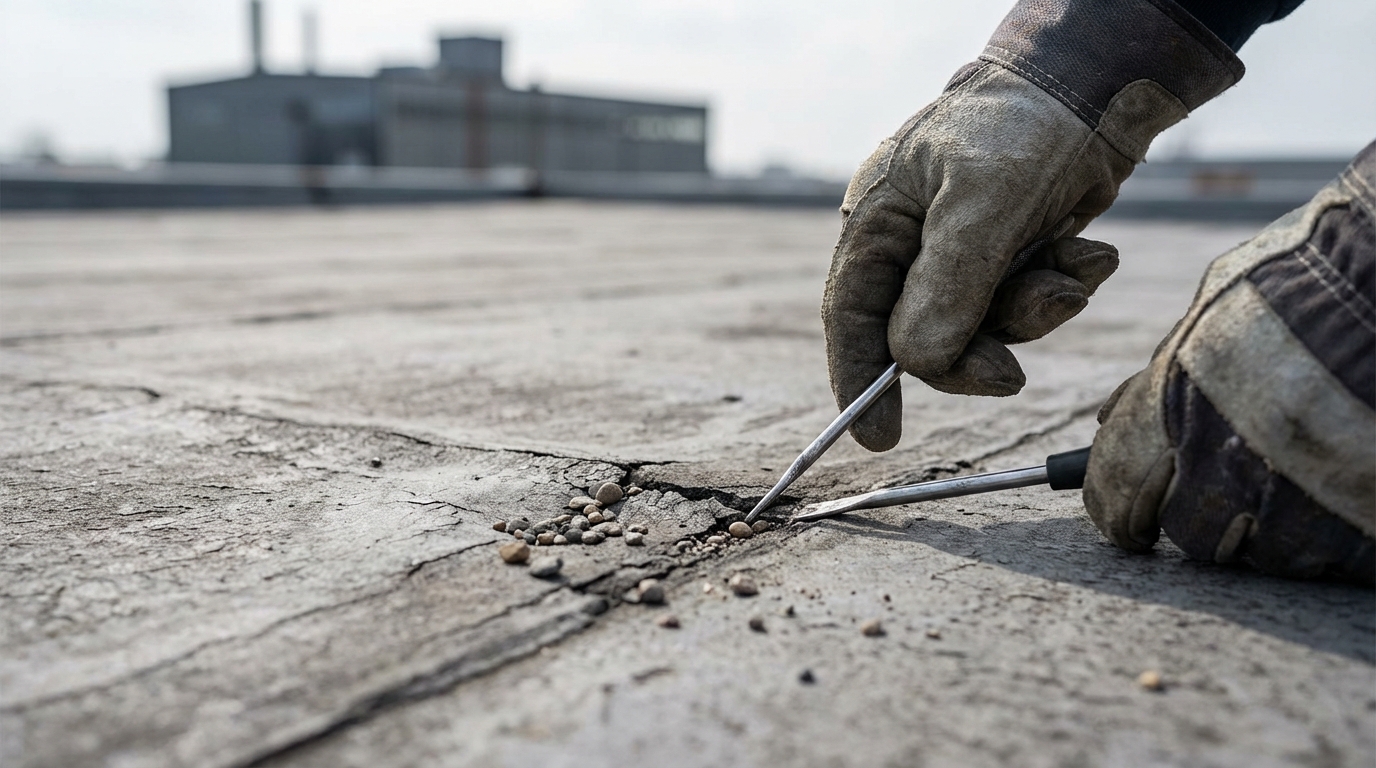
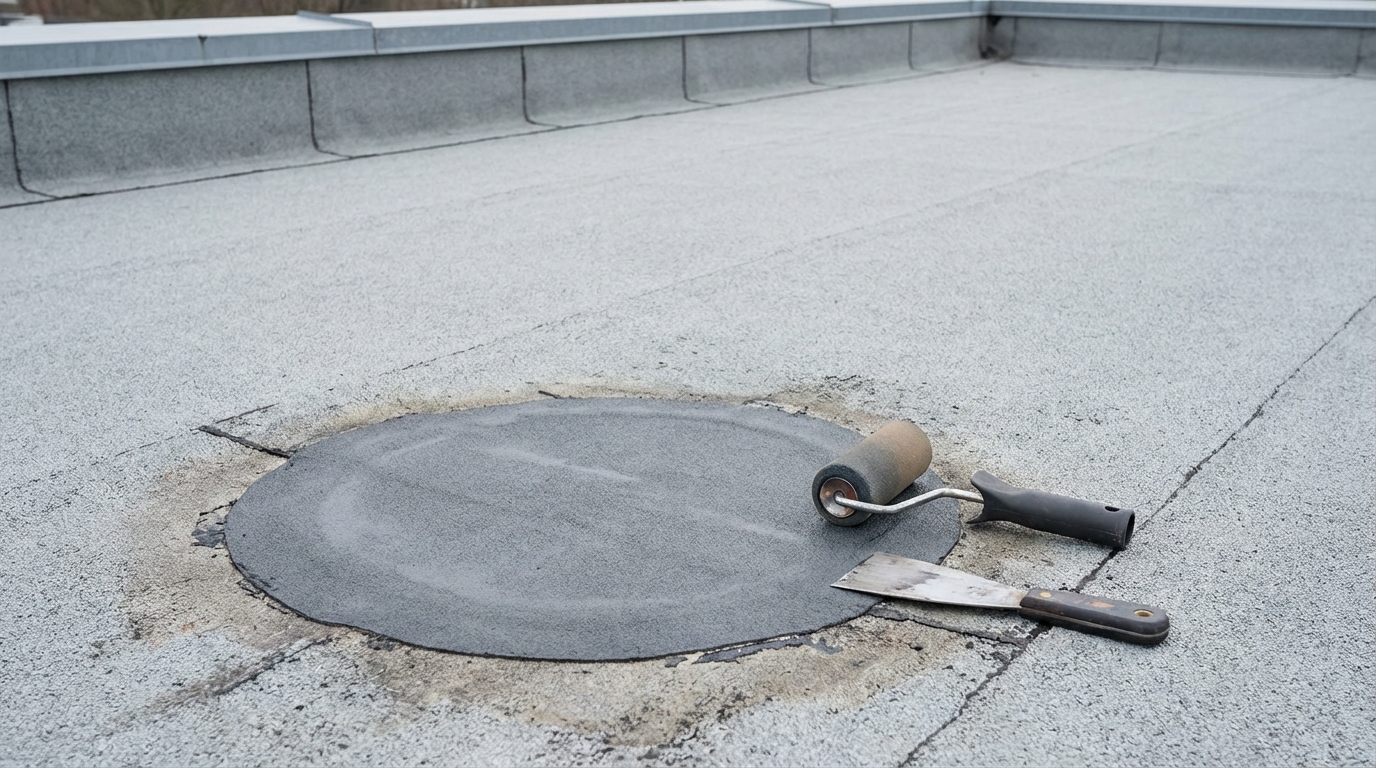
Small problems get fixed immediately during inspections. Loose seams are re-welded, minor punctures are patched, and drain screens are cleaned. These quick fixes cost pennies compared to the damage they prevent.
Emergency flat roof repair becomes unnecessary when minor issues are addressed promptly. A $50 seam repair prevents a $5,000 leak remediation project.
Phase 3: Seasonal Deep Maintenance
Spring and fall maintenance addresses accumulated wear and prepares the roof for extreme weather. This includes thorough cleaning, drain system flushing, sealant renewal, and membrane conditioning treatments.
Deep maintenance also includes structural assessments to identify sagging areas, fastener pull-out, or insulation settlement that could lead to ponding water problems.
Phase 4: Planned Component Replacement
Even well-maintained roofs have components that wear out on predictable schedules. Sealants last 5-7 years, drain assemblies last 10-15 years, and membrane sections may need replacement after 15-20 years while the rest of the roof remains sound.
Planned replacement prevents emergency situations and allows for budget planning. Replacing worn components maintains the integrity of the entire roofing system.
Common Maintenance Mistakes That Shorten Lifespan
Many building owners attempt DIY maintenance or hire unqualified contractors, creating more problems than they solve. Poor maintenance practices can actually reduce roof lifespan below what an unmaintained roof would achieve.
Pressure Washing Damage
High-pressure cleaning removes protective granules from modified bitumen roofs and can damage membrane seams. Professional cleaning uses appropriate pressure settings and techniques that clean without damaging the roofing material.
Improper Sealant Application
Using incompatible sealants or applying them incorrectly creates leak pathways and membrane damage. Different roofing materials require specific sealant types and application methods. Silicone sealants work well on metal but can prevent future TPO repairs.
Walking Damage
Foot traffic on hot membranes causes permanent indentations and stress points. Professional maintenance teams use walkway pads and avoid roof access during peak heat hours.
Drain Blockage Neglect
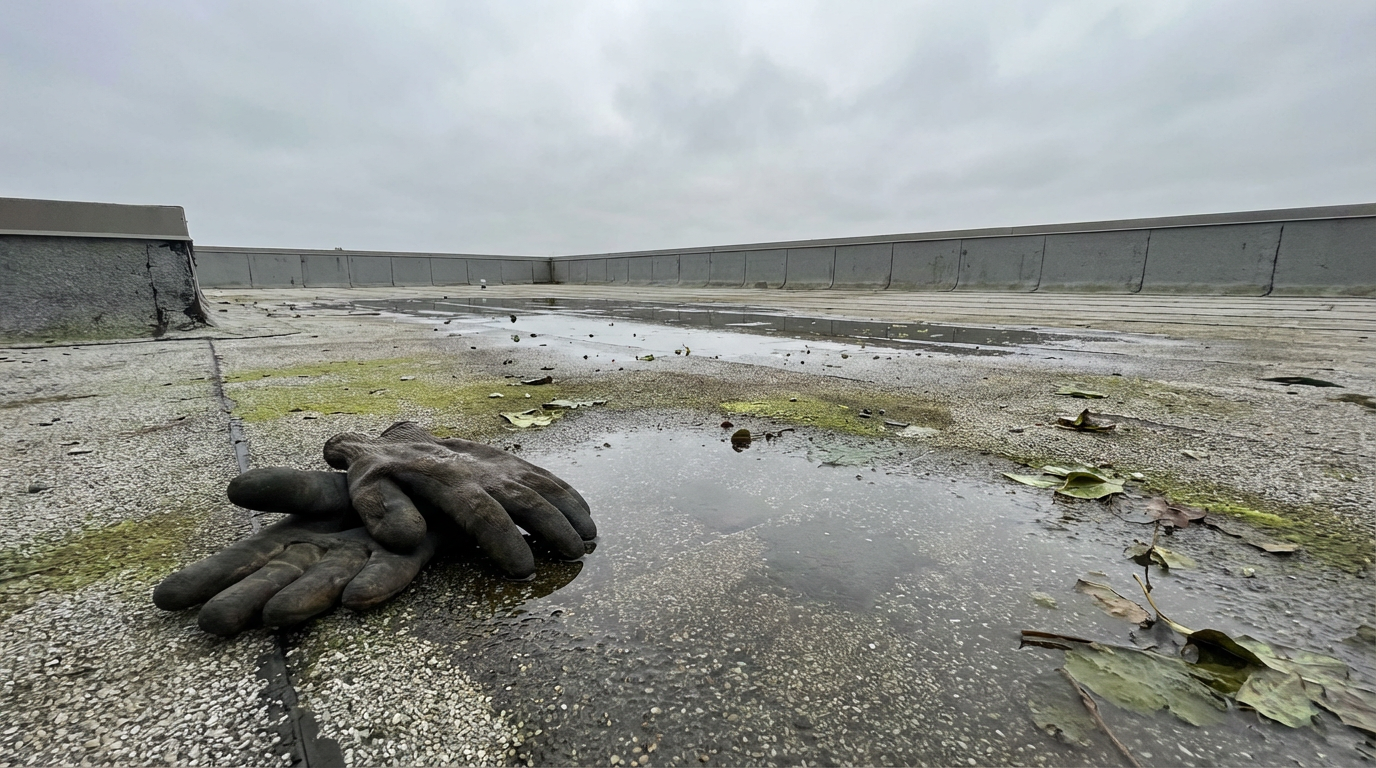
Clogged drains create ponding water that adds thousands of pounds of structural load and accelerates membrane deterioration. Regular drain cleaning prevents catastrophic failures and extends roof life significantly.
Cost Analysis: Maintenance vs. Replacement
The financial case for routine maintenance is overwhelming. Consider a 10,000 square foot commercial flat roof in Elkhart, Indiana:
Maintenance Program Cost: $10,000-15,000 annually for comprehensive four-phase maintenance including quarterly inspections, minor repairs, seasonal deep cleaning, and planned component replacement.
Unmaintained Roof Replacement: $120,000-250,000 every 15-20 years, plus business disruption costs and potential interior damage from leaks.
Maintained Roof Replacement: $120,000-250,000 every 25-30 years with minimal emergency repairs and no unexpected failures.
Over a 30-year period, maintenance saves $100,000-200,000 while eliminating business disruptions from roof failures. The return on investment exceeds 400% for most commercial buildings.
Hidden Costs of Deferred Maintenance
Emergency repairs cost 3-5 times more than planned maintenance. Rush material delivery, overtime labor, and temporary protection measures inflate costs dramatically. Water damage to inventory, equipment, or operations often exceeds the roof repair cost.
Insurance claims for preventable roof damage may increase premiums or reduce coverage. Many commercial policies require documented maintenance programs for full coverage of roof-related claims.
Regional Considerations for Michiana Commercial Roofs
Northern Indiana and Southwest Michigan present unique challenges for flat roofs. Freeze-thaw cycles stress membrane seams and penetrations. Heavy snow loads test structural integrity. Summer storms with high winds and hail require robust maintenance programs.
Industrial Roofing Services Michiana must account for these regional factors. Salt air from Lake Michigan accelerates metal component corrosion. Agricultural dust and pollen create cleaning challenges. Rapid temperature changes stress roofing materials beyond standard specifications.
Local expertise matters for effective maintenance programs. Commercial roofer in Elkhart Indiana contractors understand regional weather patterns, building codes, and material performance characteristics specific to the area.
Seasonal Maintenance Schedule for Michiana
Spring (March-May): Post-winter damage assessment, drain cleaning, membrane conditioning, and storm preparation.
Summer (June-August): Heat stress monitoring, UV protection renewal, and vegetation control around roof perimeter.
Fall (September-November): Leaf and debris removal, drain preparation for winter, and weatherization of penetrations.
Winter (December-February): Snow load monitoring, ice dam prevention, and emergency access preparation.
Technology-Enhanced Maintenance Programs
Modern maintenance programs use technology to improve effectiveness and reduce costs. Thermal imaging identifies membrane defects and insulation problems invisible to visual inspection. Moisture meters detect trapped water in roofing systems before it causes structural damage.
Digital documentation systems track maintenance history, warranty status, and component replacement schedules. Predictive analytics identify optimal timing for major maintenance activities based on weather patterns and building usage.
Drone inspections safely assess large commercial roofs without foot traffic damage. High-resolution cameras capture detailed condition documentation for insurance and planning purposes.
Warranty Considerations and Maintenance Requirements
Most commercial flat roof warranties require documented maintenance programs. Failure to maintain proper care voids warranty coverage and leaves building owners responsible for premature failures.
Manufacturer warranties typically specify inspection frequency, approved maintenance procedures, and documentation requirements. Professional maintenance programs ensure warranty compliance while extending roof life beyond warranty periods.
Some manufacturers offer extended warranties for roofs enrolled in approved maintenance programs. These extended warranties can add 5-10 years of coverage for minimal additional cost.
Frequently Asked Questions
How often should commercial flat roofs be inspected?
Professional inspections should occur quarterly, with additional inspections after severe weather events. Monthly visual checks by facility staff can identify obvious problems between professional inspections.
Can building maintenance staff perform flat roof maintenance?
Basic tasks like drain cleaning and debris removal can be handled by trained staff. However, membrane repairs, sealant application, and structural assessments require professional roofing expertise to avoid warranty violations and ensure proper repairs.
What's the biggest mistake building owners make with flat roof maintenance?
Delaying minor repairs until they become major problems. A $200 seam repair becomes a $20,000 roof replacement when water infiltration damages insulation and decking. Address issues immediately when identified.
How do I know if my current maintenance program is adequate?
Track repair frequency and costs over time. Well-maintained roofs require fewer emergency repairs each year. Increasing repair frequency indicates inadequate maintenance or approaching end-of-life for roofing components.
Is maintenance worth it for older flat roofs?
Maintenance remains cost-effective until roofs reach 80-90% of their expected lifespan. For roofs approaching replacement age, focus maintenance on preventing leaks and planning orderly replacement rather than extending lifespan.
What should be included in a flat roof maintenance contract?
Comprehensive contracts include quarterly inspections, immediate minor repairs, seasonal deep maintenance, emergency response, detailed documentation, and warranty compliance verification. Avoid contracts that only include inspections without repair authorization.
The Bottom Line on Flat Roof Maintenance
Routine maintenance extends flat roof lifespan by 40-60% through systematic care that prevents small problems from becoming expensive failures. The four-phase maintenance system - quarterly inspections, immediate minor repairs, seasonal deep maintenance, and planned component replacement - delivers measurable results for commercial building owners.
The financial benefits are clear: maintenance costs $0.75-1.50 per square foot annually while preventing emergency repairs that cost $8-15 per square foot. Over the life of a commercial roof, proper maintenance saves hundreds of thousands of dollars while eliminating business disruptions.
Regional factors in Michiana require specialized expertise and seasonal maintenance schedules. Working with experienced commercial flat roof repair contractors ensures your maintenance program addresses local weather challenges and building code requirements.
Don't wait for problems to develop. Proactive maintenance protects your investment, reduces operating costs, and ensures reliable protection for your business operations. The longer you delay, the more expensive problems become.