Estimated Reading Time: 9 minutes
The most critical flat roof repairs on commercial buildings fall into five categories: membrane punctures, seam failures, drainage issues, flashing deterioration, and HVAC penetration leaks. Address these proactively, and you'll prevent 90% of the emergency calls that shut down operations and drain maintenance budgets.
Most facility managers wait until water drips through the ceiling to think about their flat roof. That's expensive thinking. A small membrane puncture costs $200 to fix today. Wait six months, and water damage pushes that repair into the thousands—plus lost productivity, damaged inventory, and emergency contractor premiums.
The smart approach? Understand what breaks, why it breaks, and how to catch problems before they cascade into disasters.
Why These Five Repairs Dominate Commercial Flat Roofing
Commercial flat roofs face unique stresses that residential pitched roofs don't encounter. Standing water tests seams constantly. HVAC equipment creates penetration points where water infiltrates. Temperature swings cause materials to expand and contract daily, weakening bonds over time.
Unlike steep roofs where gravity moves water quickly, flat roofs rely entirely on proper drainage and intact membranes to keep water out. When either fails, problems multiply fast.
Here's what breaks most often and why:
Membrane Punctures: The Silent Leak Creators
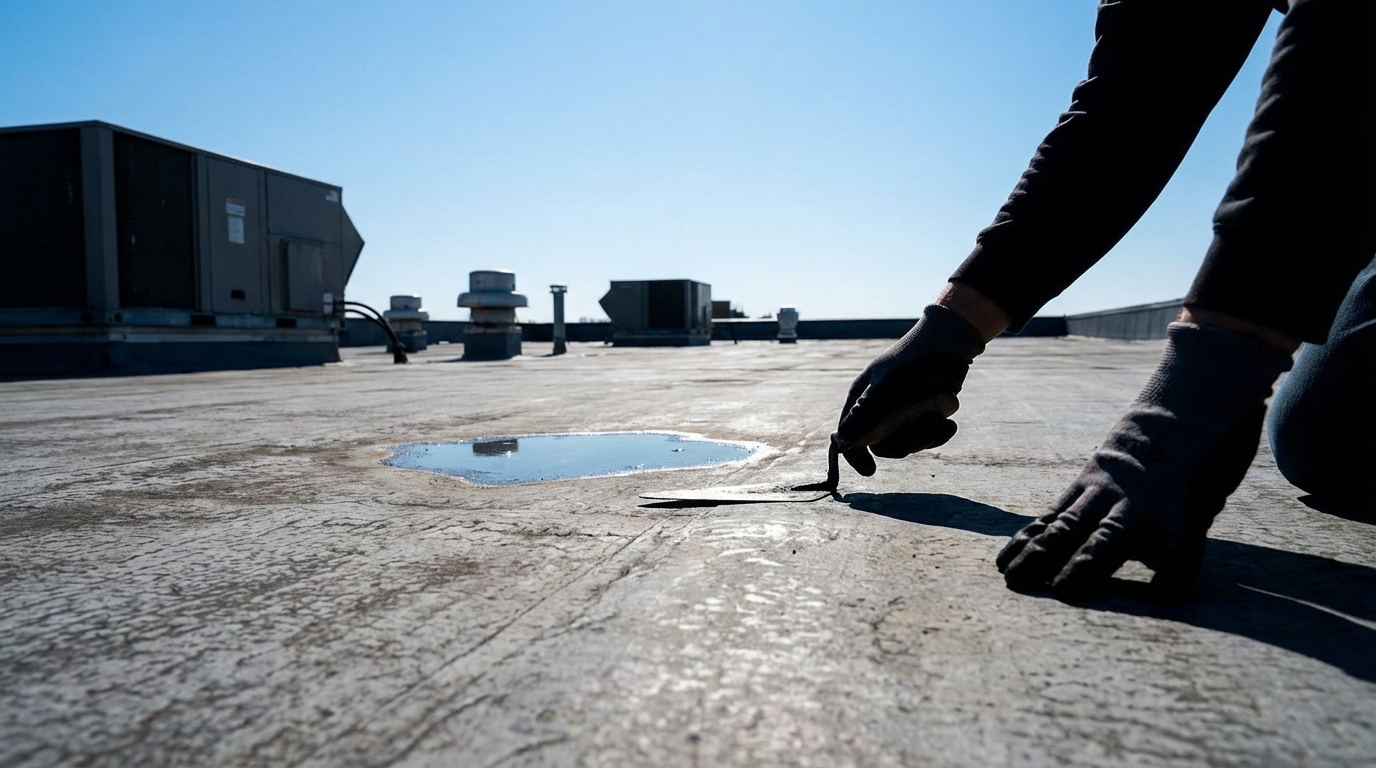
Membrane punctures happen more than any other flat roof failure. HVAC technicians walking on the roof, falling debris, and normal wear create small holes that let water penetrate the roofing system.
What causes punctures:
- Foot traffic from maintenance personnel
- Sharp objects blown by wind
- Equipment installations without proper protection
- Age-related brittleness in older membranes
The problem with punctures isn't their size—it's their invisibility. A quarter-inch hole doesn't create dramatic leaks. Instead, water seeps slowly into insulation, creating hidden damage that compounds for months before you notice interior problems.
How to identify membrane punctures: Look for small, dark spots on the membrane surface, especially around high-traffic areas. Water stains on interior ceilings often appear far from the actual puncture due to water traveling along structural elements.
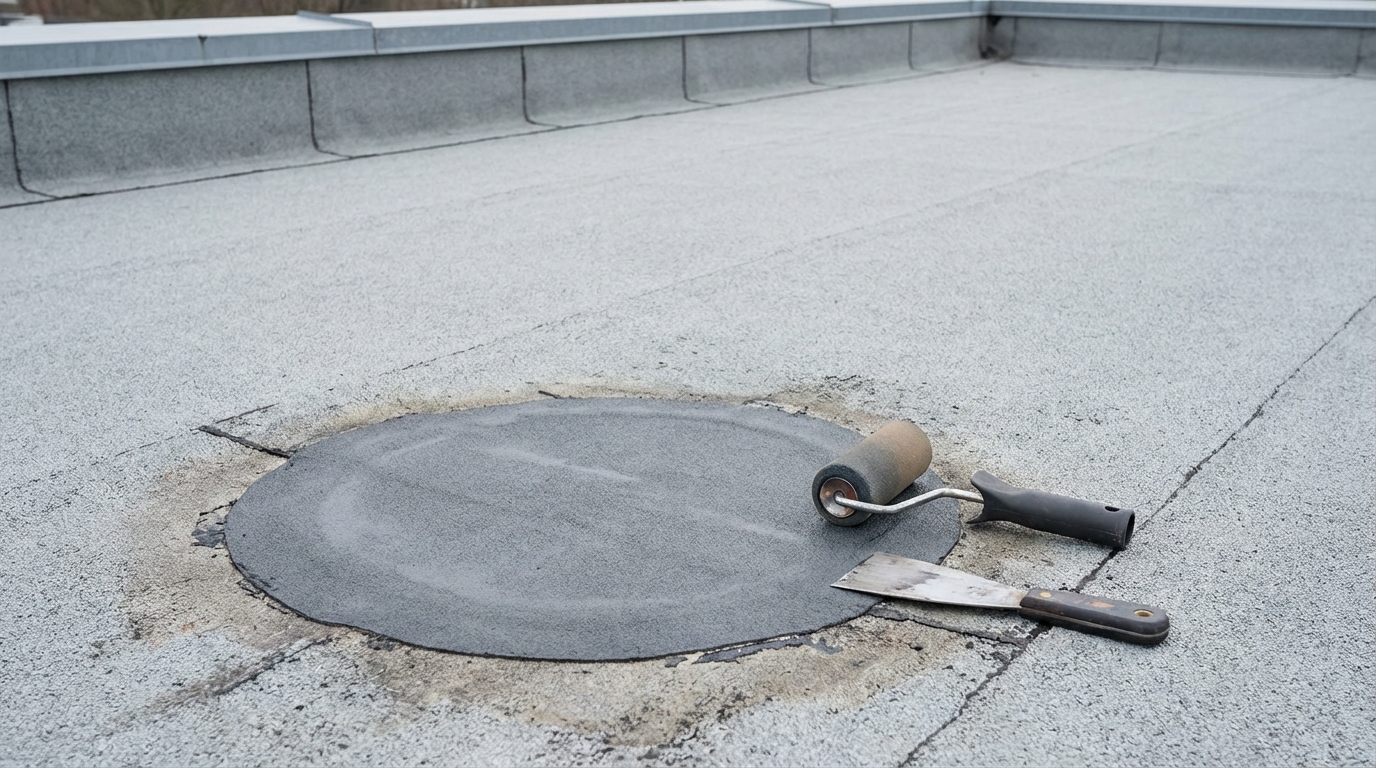
Professional repair approach: Clean the area thoroughly, apply appropriate primer, and patch with compatible membrane material. The patch must extend at least four inches beyond the damage in all directions. For TPO and PVC roofs, heat welding creates the strongest seal. EPDM repairs use specialized adhesives.
Seam Failures: Where Membranes Meet Their Match
Seam failures cause more catastrophic leaks than any other flat roof problem. When seams separate, water pours directly into the building structure, often overwhelming drainage systems and causing immediate operational disruptions.
Commercial flat roof membranes come in large sheets, but no membrane covers an entire roof seamlessly. Where sheets connect, seams create potential failure points. Temperature cycles stress these connections daily. Poor installation techniques compound the problem.
Why seams fail:
- Inadequate cleaning before seam installation
- Incorrect welding temperatures during installation
- Thermal movement exceeding seam flexibility
- Age-related adhesive degradation
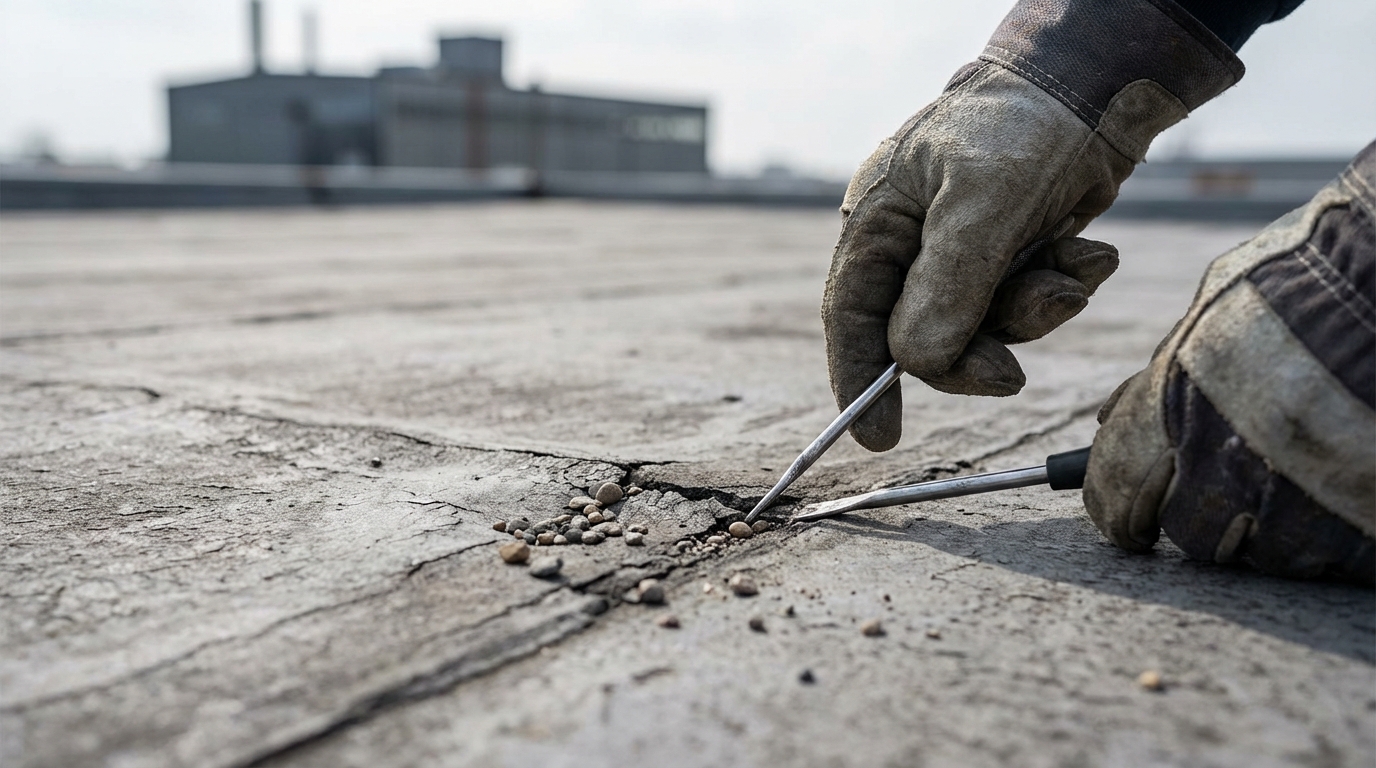
Early seam failure signs include small separations at seam edges, bubbling along seam lines, and water stains directly below seam locations inside the building.
Professional repair strategy: Failed seams require complete re-sealing, not temporary patches. The repair process involves cleaning both membrane edges, applying appropriate primer, and creating a new seam using manufacturer-approved techniques. For welded seams, this means cutting out the failed section and installing a patch that overlaps the existing membrane by at least six inches.
Drainage Problems: When Water Won't Leave
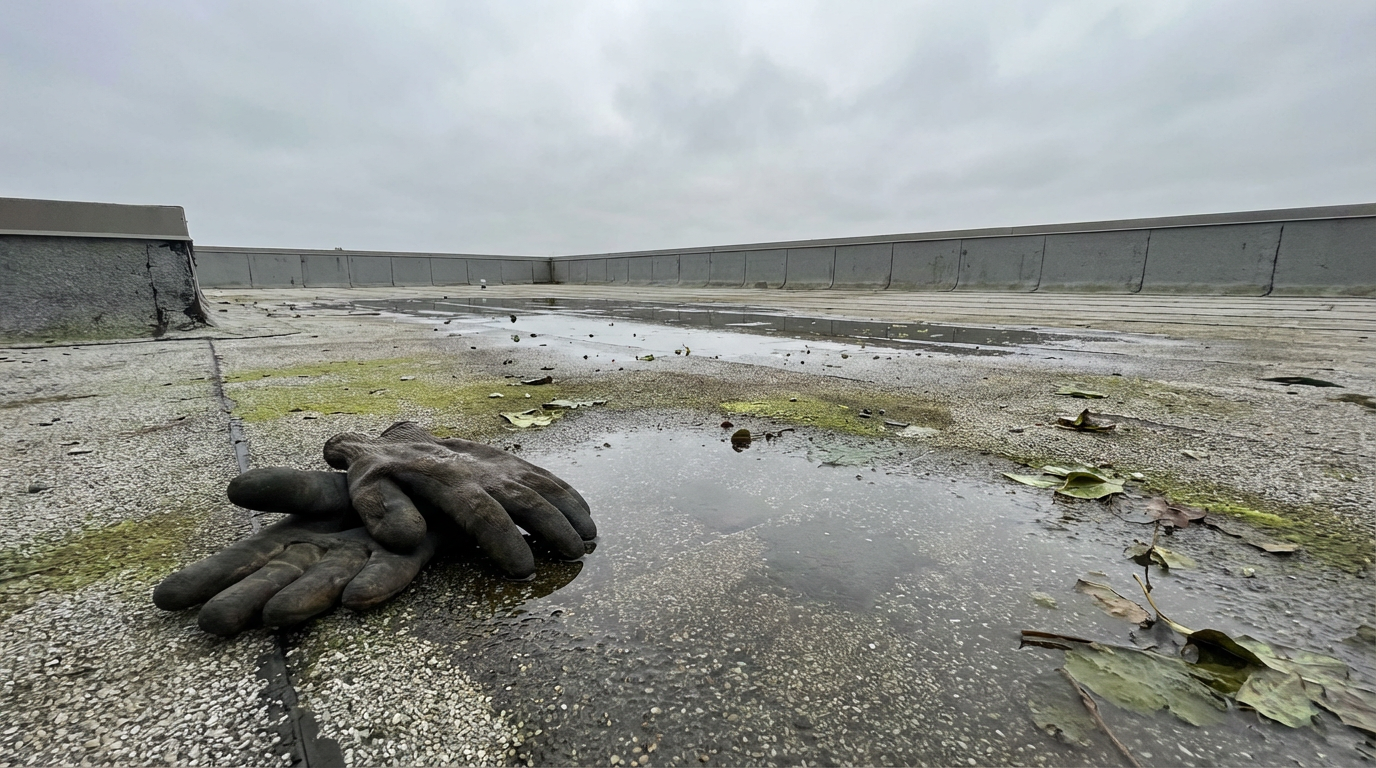
Drainage issues create the conditions that make every other flat roof problem worse. Standing water accelerates membrane degradation, increases the likelihood of leaks, and adds structural stress to the building.
Flat roofs aren't actually flat—they're designed with subtle slopes toward drainage points. When drainage systems fail, water pools in areas never designed to handle standing water long-term.
Common drainage failures:
- Clogged drains and gutters
- Inadequate slope to drainage points
- Damaged or separated drain connections
- Insufficient drainage capacity for roof size
Standing water appears obvious, but subtle drainage problems show up as slow-draining areas that stay wet long after rain stops. These areas develop membrane problems faster than properly drained sections.
Drainage repair priorities: Clear all drains and gutters first—this solves many drainage issues immediately. For slope problems, professional contractors can install tapered insulation systems to redirect water flow. Drain connections require careful sealing with compatible materials to prevent leaks at these critical transition points.
Flashing Deterioration: The Weak Link at Every Transition
Flashing failures account for nearly 40% of flat roof leaks, yet most building owners focus only on the main membrane. Flashing seals the critical transitions where the roof membrane meets walls, equipment, and other structures.
These transition points experience more stress than flat membrane areas. Thermal movement, weather exposure, and installation complexity make flashing the most vulnerable part of any flat roof system.
Where flashing fails first:
- Wall-to-roof connections
- Equipment penetrations
- Roof drain connections
- Expansion joint covers
Deteriorated flashing shows up as cracked sealants, separated metal pieces, and rust stains on vertical surfaces. Interior leaks often occur during wind-driven rain when water forces through compromised flashing details.
Professional flashing repair: Effective flashing repair requires removing failed materials completely and rebuilding the transition properly. This means new base flashing, counter flashing, and proper sealant application. Cutting corners on flashing repairs guarantees repeat failures within two years.
HVAC Penetration Leaks: The Equipment Access Problem
HVAC equipment creates necessary penetrations through flat roof membranes, but these penetrations become leak sources when seals fail. Equipment vibration, thermal cycling, and maintenance access stress these connections constantly.
Commercial buildings typically have multiple HVAC units, electrical conduits, and exhaust fans penetrating the roof membrane. Each penetration represents a potential leak point that requires ongoing maintenance attention.
Why HVAC penetrations leak:
- Equipment vibration loosening seals
- Thermal expansion mismatches
- Improper initial installation
- Maintenance access damage
HVAC penetration leaks often appear as water stains around equipment inside the building. These leaks can be intermittent, occurring only during specific weather conditions when wind drives water into compromised seals.
Penetration repair approach: Remove all old sealants and flashing materials around the penetration. Install new base flashing that integrates with the roof membrane system. Apply compatible sealants in a two-step process: structural sealant first, then weather sealant as the final barrier.
The Cost of Reactive vs. Proactive Repair
Emergency flat roof repairs cost three to five times more than planned maintenance repairs. When water pours through your ceiling during business hours, you pay premium rates for immediate service, often accepting temporary solutions that require additional work later.
Proactive repair scheduling allows contractors to source materials efficiently, plan work during favorable weather, and complete repairs properly the first time. You also avoid the operational disruptions that come with emergency roof failures.
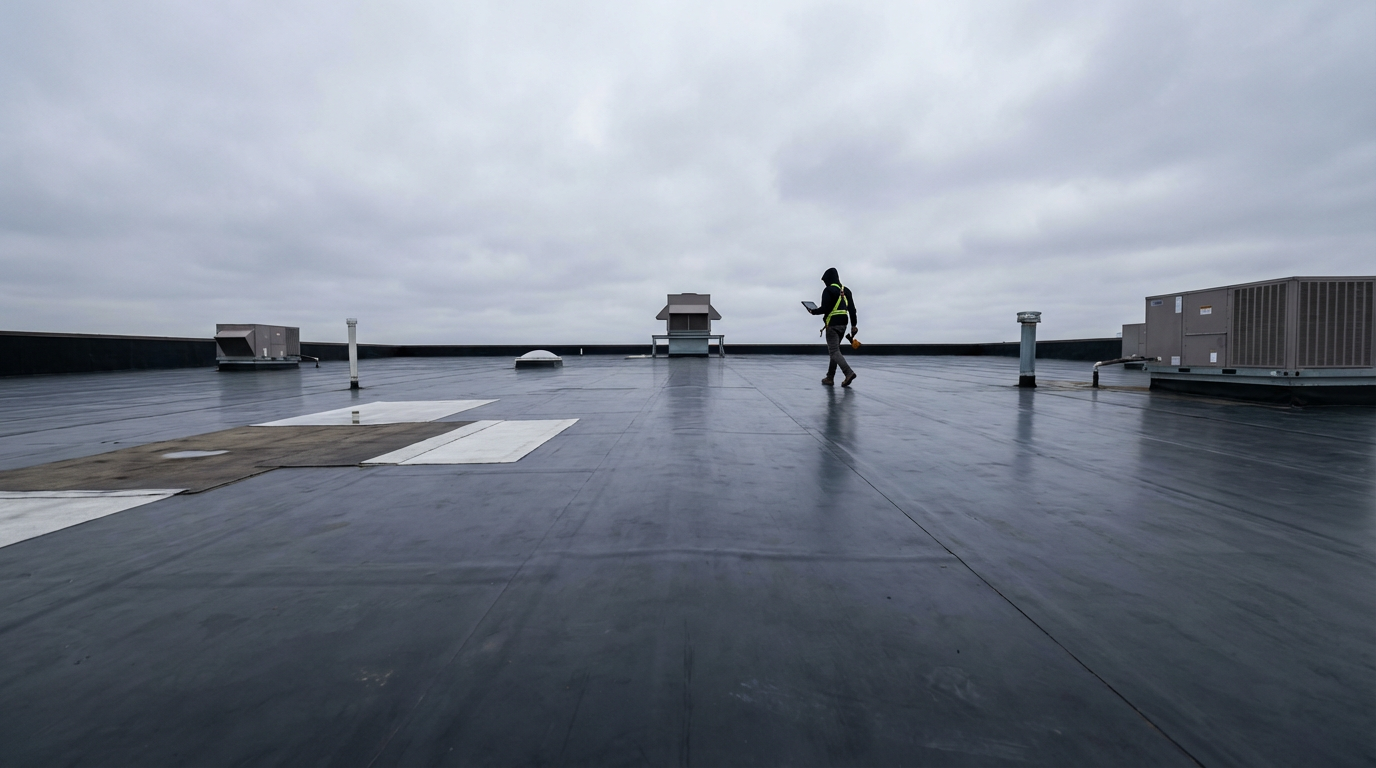
Smart maintenance timing: Schedule roof inspections twice yearly—spring and fall. Address minor issues immediately rather than waiting for convenient timing. Small repairs completed promptly prevent major problems that force emergency responses.
When DIY Repairs Make Problems Worse
Temporary roof sealants and patch kits seem like cost-effective solutions, but they often create bigger problems. Incompatible materials can damage existing membranes. Poor surface preparation causes patches to fail quickly. Inadequate repairs give false confidence while damage continues underneath.
Commercial flat roof repair requires specific materials matched to your existing roof system. TPO repairs need TPO-compatible materials. EPDM systems require EPDM-specific products. Using the wrong materials voids warranties and creates adhesion failures.
Professional repair advantages: Certified contractors have access to manufacturer-approved materials, proper installation tools, and warranty backing. They understand substrate preparation, primer requirements, and curing conditions that determine repair longevity.
Industrial Roofing Services Michiana: Regional Considerations
Northern Indiana and Southwest Michigan weather patterns create specific challenges for commercial flat roofs. Freeze-thaw cycles stress membrane seams. Ice dams can overwhelm drainage systems. High winds drive water into small openings that might not leak during calm weather.
Local building codes and climate considerations affect repair specifications. Contractors familiar with Michiana conditions understand these regional factors and specify repairs accordingly.
Climate-specific repair considerations:
- Enhanced seam sealing for thermal cycling
- Improved drainage capacity for snow loads
- Wind-resistant flashing details
- Cold-weather installation procedures
Frequently Asked Questions
How long do flat roof repairs typically last?
Professional flat roof repairs using manufacturer-approved materials last 10-15 years when properly installed. Temporary patch repairs may last 1-3 years depending on weather exposure and roof traffic.
Can I repair my commercial flat roof during winter?
Emergency repairs can be completed year-round, but optimal conditions exist when temperatures stay above 45°F for 24 hours after installation. Cold weather affects adhesive curing and membrane flexibility.
How do I know if my flat roof repair needs immediate attention?
Active leaks, standing water after 48 hours, visible membrane separation, and interior water damage require immediate professional attention. Delaying these repairs typically multiplies repair costs.
What's the difference between temporary and permanent flat roof repairs?
Temporary repairs use quick-application products to stop immediate leaks but aren't designed for long-term durability. Permanent repairs involve proper surface preparation, compatible materials, and manufacturer-approved installation procedures.
Should I repair or replace my commercial flat roof?
If repairs exceed 25% of replacement cost, or if multiple systems are failing simultaneously, replacement becomes more cost-effective. A professional assessment can determine the most economical long-term solution.
How often should commercial flat roofs be inspected for repair needs?
Professional inspections twice yearly catch problems early. Monthly visual checks by facility staff can identify obvious issues between professional inspections. Post-storm inspections help identify weather-related damage quickly.
Smart facility management means addressing flat roof repairs before they become emergencies. The five repair categories outlined here—membrane punctures, seam failures, drainage issues, flashing deterioration, and HVAC penetration leaks—cause most commercial flat roof problems. Understanding what to watch for and acting quickly when problems appear protects your building investment and prevents operational disruptions.
Professional commercial flat roof repair ensures proper materials, correct installation procedures, and warranty protection. When your building's protection depends on roof integrity, expert assessment and repair make the difference between minor maintenance and major reconstruction.