Estimated Reading Time: 8 minutes
The best response time for flat roof failures is within 2-4 hours of discovery. Every hour you wait after spotting a leak multiplies damage costs by an average of 15-20%. Commercial building owners who implement emergency response protocols save an average of $12,000 per incident compared to those who delay repairs.
Your flat roof doesn't fail gradually—it fails suddenly. One minute you have a functioning roof, the next you have water pouring into your warehouse, retail space, or office building. The difference between a $2,000 repair and a $25,000 disaster often comes down to how fast you respond in those critical first hours.
Why Speed Matters More Than Perfect Solutions
Most building owners think they need the "perfect" permanent fix immediately. Wrong. You need to stop the bleeding first, then plan the surgery.
Water damage follows a predictable timeline:
0-2 hours: Surface water accumulation
2-6 hours: Water penetrates building materials
6-24 hours: Structural damage begins, mold conditions develop
24-48 hours: Electrical systems at risk, inventory damage accelerates
48+ hours: Major structural compromise, complete inventory loss possible
A facility manager at a 50,000 square foot distribution center in Elkhart learned this the hard way. When they discovered a leak Friday evening, they decided to "wait until Monday" to call a contractor. By Monday morning, what started as a small membrane puncture had caused $18,000 in inventory damage and required a complete roof section replacement instead of a simple patch.
Fast response isn't just about fixing the immediate problem—it's about preventing the cascade of secondary damage that turns minor issues into major headaches.
The 2-4 Hour Response Protocol That Works
Professional emergency flat roof repair follows a specific sequence designed to minimize damage while setting up proper long-term solutions.
Hour 1: Immediate Assessment and Containment
The first priority is stopping active water intrusion. This means:
Identifying the exact source of the leak
Placing temporary barriers or tarps to redirect water
Documenting damage with photos for insurance purposes
Removing or protecting valuable equipment and inventory
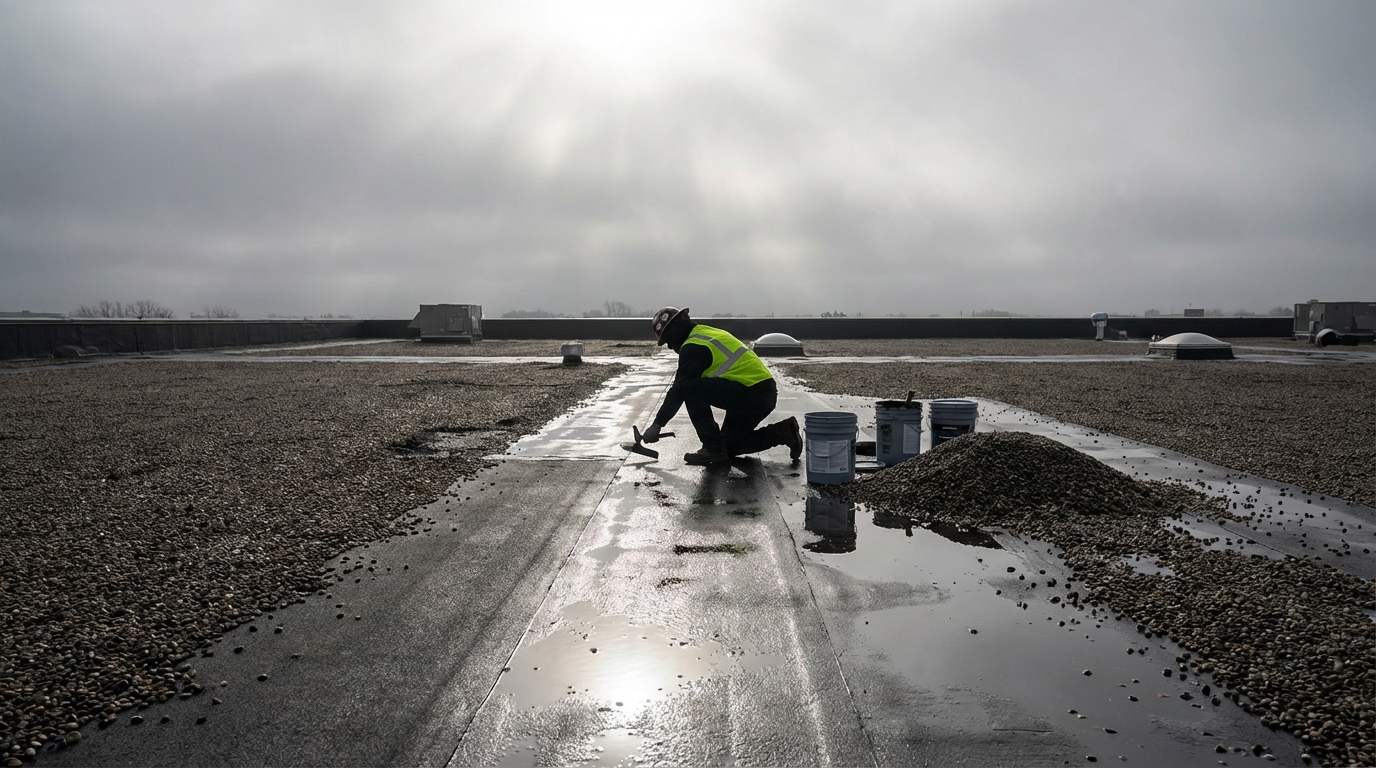
Professional contractors arrive with emergency repair materials specifically designed for immediate deployment. These aren't permanent fixes—they're medical tourniquets for your building.
Hours 2-4: Temporary Repair Implementation
Once the immediate crisis is controlled, qualified commercial flat roof repair teams implement temporary solutions that can hold for days or weeks while permanent repairs are planned:
Emergency membrane patches using compatible materials
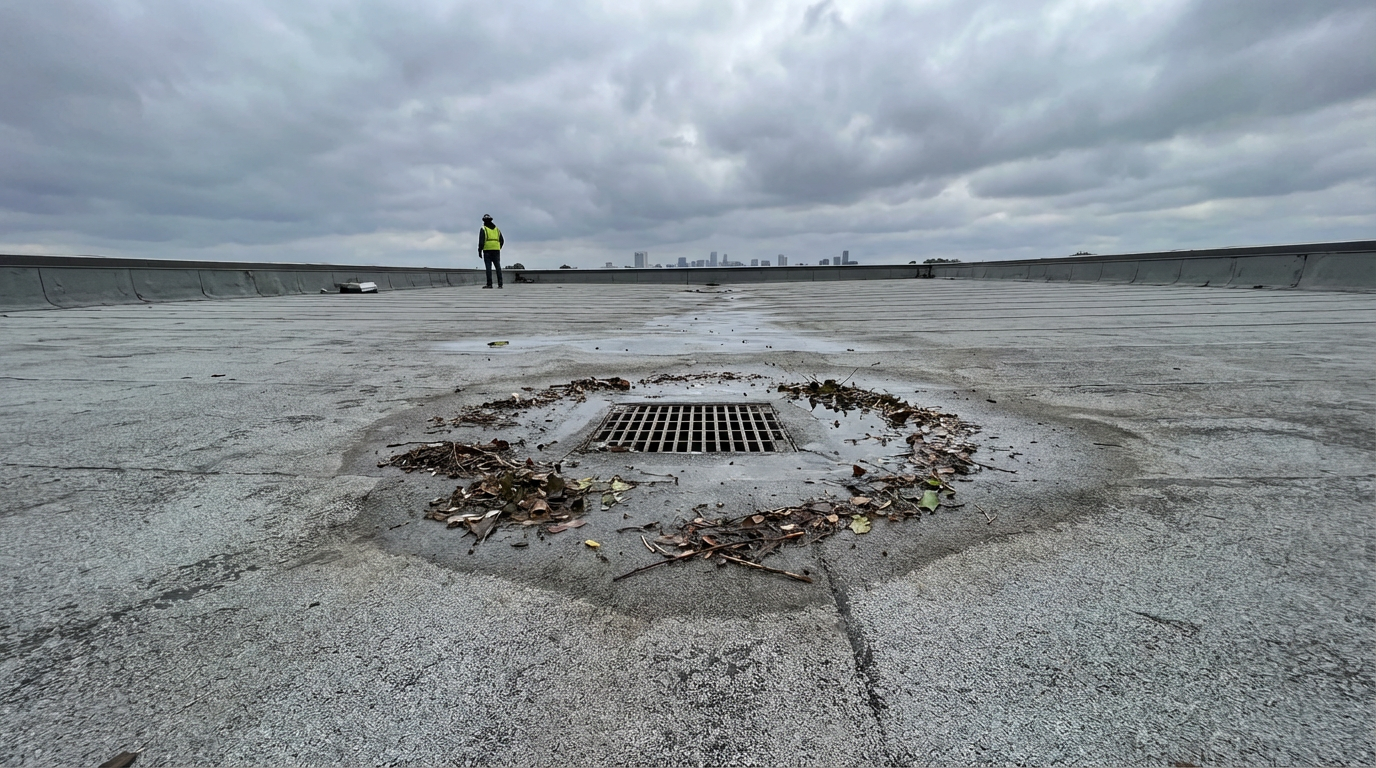
Temporary drainage improvements to prevent water pooling
Structural assessment to ensure safety
Detailed repair plan development
The key is using materials that won't interfere with permanent repairs. Cheap fixes often create bigger problems later when they prevent proper membrane adhesion or create incompatible material layers.
Why "Wait and See" Always Costs More
Building owners often hesitate to call for emergency repairs because they worry about cost. This thinking is backwards.
Consider the real math on a typical commercial building leak:
Immediate response (2-4 hours): $800-2,500 emergency repair + $3,000-8,000 permanent fix = $3,800-10,500 total
Delayed response (24-48 hours): $5,000-15,000 structural damage + $10,000-25,000 expanded repair + inventory loss = $15,000-50,000+ total
The emergency service call fee—usually $200-500—is the cheapest insurance you'll ever buy. One major inventory loss or structural damage claim will cost more than years of emergency service calls.
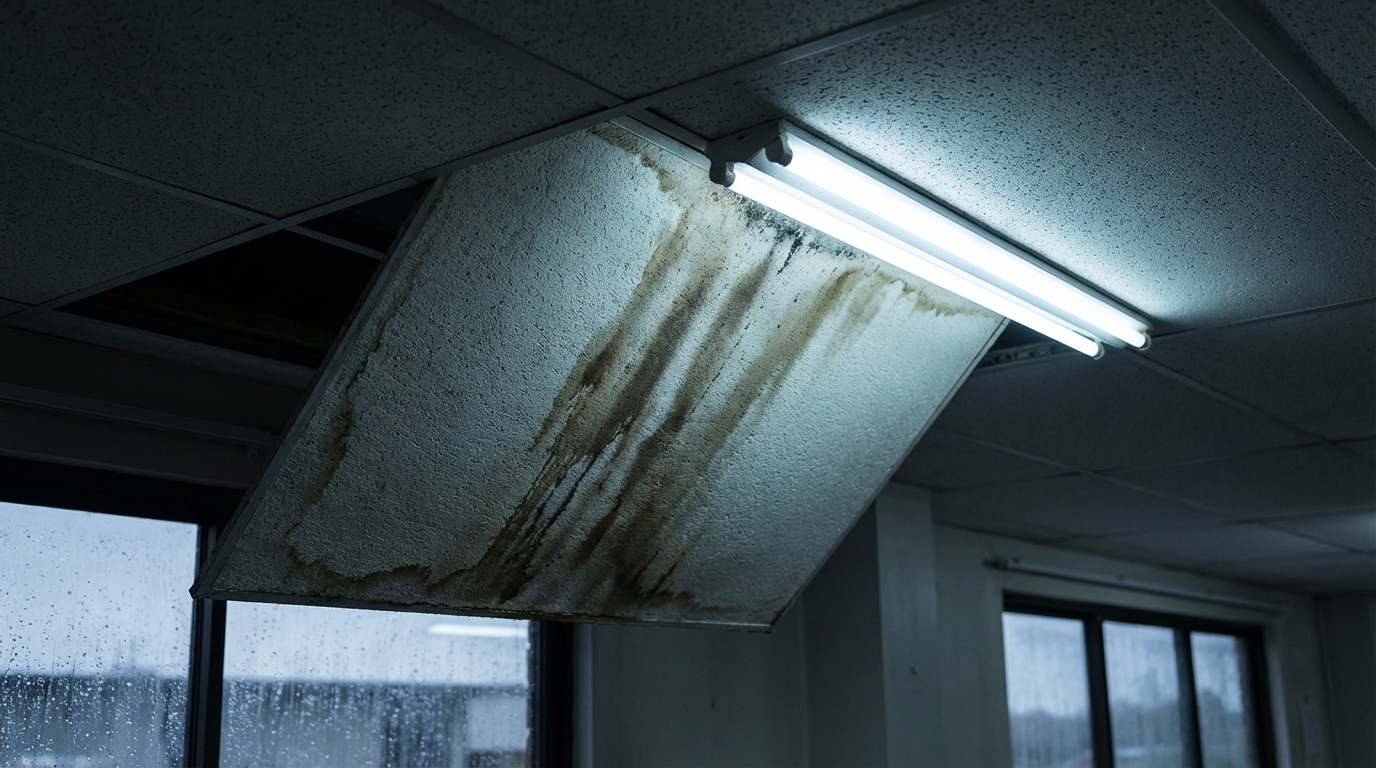
A church in South Bend discovered this when they delayed calling for help on a Sunday morning leak. By Tuesday, water had damaged their sound system, flooring, and ceiling tiles. What could have been a $1,200 emergency patch became a $23,000 renovation project.
What Separates Professional Emergency Response from Handyman Fixes
Not all emergency repairs are created equal. Professional Industrial Roofing Services Michiana contractors bring specific advantages that DIY or general handyman approaches can't match.
Proper Materials and Compatibility
Professional contractors stock emergency repair materials that are compatible with your existing roof system. Using the wrong materials—even temporarily—can void warranties or prevent proper permanent repairs.
For example, using standard roofing cement on a TPO membrane can make permanent heat-welded repairs impossible in that area. You end up needing a larger patch or complete section replacement.
Safety Protocols and Insurance
Flat roof emergencies often happen during storms or in dangerous conditions. Professional contractors have:
Safety equipment rated for wet roof conditions
Insurance coverage for emergency work
Experience working in challenging weather
Proper fall protection systems
The last thing you need during a roofing emergency is a liability claim from someone getting hurt trying to help.
Diagnostic Capabilities
Experienced contractors can quickly identify whether a leak is an isolated incident or a symptom of broader roof system failure. This determines whether you need a simple patch or should prepare for larger repairs.
They also understand how different roof systems fail and can predict where problems might develop next, allowing you to plan proactively instead of reactively.
Building Your Emergency Response Plan
The time to plan for roof emergencies is before they happen. Smart facility managers have protocols in place that eliminate decision-making delays when every minute counts.
Pre-Approved Contractor Relationships
Establish relationships with qualified commercial roofer in Elkhart Indiana contractors before you need them. This means:
Vetting contractors during non-emergency periods
Understanding their emergency response capabilities
Having contact information readily available
Pre-authorizing emergency work up to specific dollar amounts
During a 3 AM emergency, you don't want to be researching contractors or waiting for quotes. You want to make one phone call and know help is coming.
Internal Response Protocols
Your team should know exactly what to do when they discover a leak:
Who to call internally and externally
How to document damage for insurance
Where emergency supplies are stored
How to safely access the roof if needed
Which areas to evacuate or protect first
A manufacturing facility in Mishawaka saved thousands by having employees trained to immediately move inventory away from leak areas while waiting for contractors to arrive. Their 30-minute response prevented product damage that would have exceeded their emergency repair costs.
The Technology Advantage in Emergency Response
Modern emergency response leverages technology to minimize response times and improve outcomes.
Thermal Imaging for Accurate Diagnosis
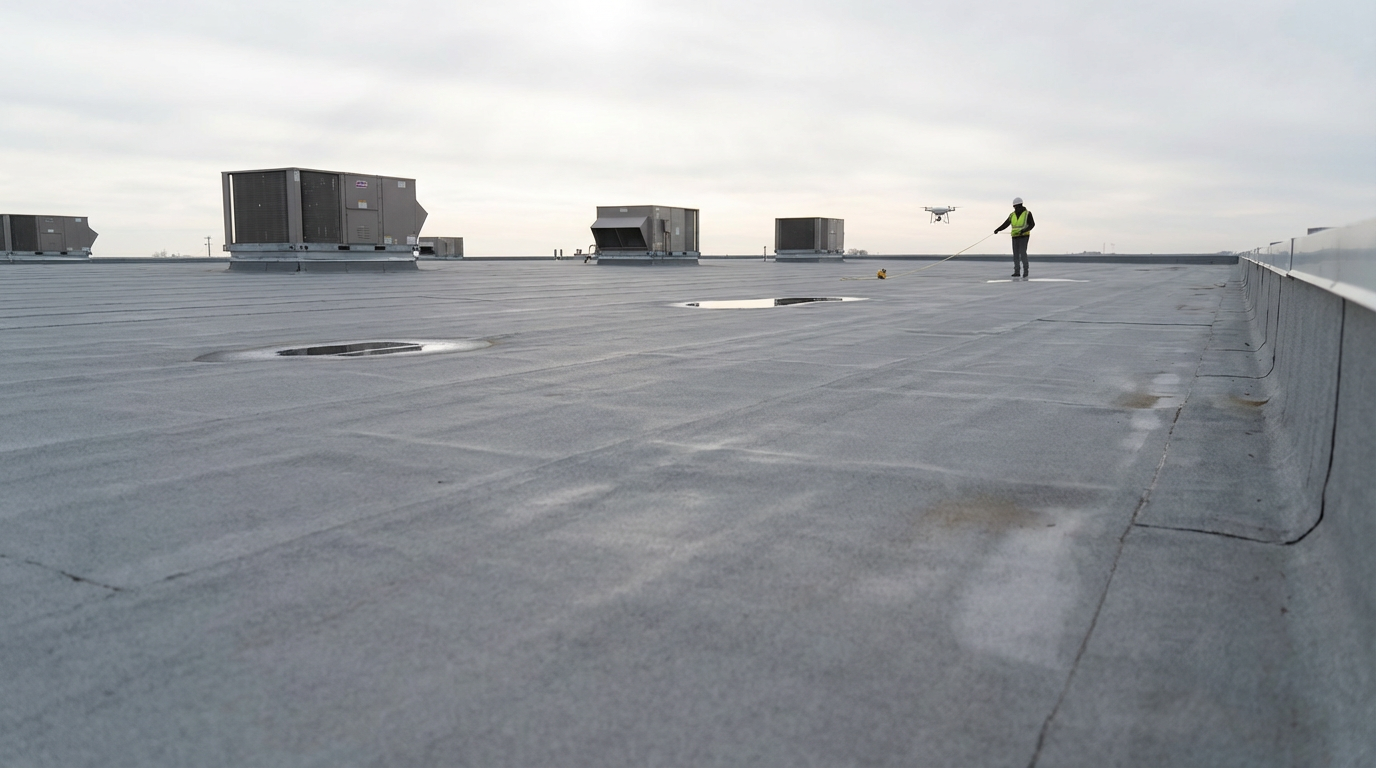
Professional contractors use thermal imaging cameras to quickly identify the exact source of leaks, even in challenging conditions. This prevents the "patch and pray" approach that often leads to recurring problems.
Thermal imaging can also reveal hidden water damage that isn't visible to the naked eye, allowing for comprehensive repairs instead of surface fixes.
Weather Monitoring and Predictive Response
Advanced contractors monitor weather patterns and can predict when emergency calls are likely. This allows them to pre-position crews and materials in high-risk areas.
Some contractors offer proactive inspections before major storms, identifying potential failure points before they become emergencies.
When Emergency Response Isn't Enough
Sometimes fast response reveals that your roof system has reached the end of its useful life. Professional contractors will be honest about when emergency repairs are just delaying inevitable replacement.
Signs that emergency repairs won't solve your problem:
Multiple leak points appearing simultaneously
Membrane shrinkage causing systematic failure
Structural issues affecting roof stability
Repeated failures in the same areas
In these cases, the emergency response should focus on damage control while you plan for complete roof replacement. Trying to patch a failing system often wastes money that could be invested in a permanent solution.
Frequently Asked Questions
How much does emergency flat roof repair cost?
Emergency repairs typically cost $800-2,500 for temporary fixes, plus $3,000-8,000 for permanent repairs. This is significantly less than the $15,000-50,000+ cost of delayed response damage.
Should I try to fix a roof leak myself while waiting for contractors?
Only attempt temporary measures from inside the building, like placing buckets or moving inventory. Roof work during emergencies requires proper safety equipment and can be dangerous for untrained individuals.
Will emergency repairs void my roof warranty?
Professional emergency repairs using compatible materials typically don't void warranties. However, DIY fixes or improper materials can void warranties and prevent proper permanent repairs.
How do I know if a leak requires emergency response or can wait?
Any active water intrusion into your building requires immediate response. Even small leaks can cause major damage within hours, especially to inventory, equipment, or building materials.
Do emergency roofing contractors work in all weather conditions?
Professional contractors work in most conditions but prioritize safety. They may implement temporary measures from inside the building during severe weather and complete external repairs when conditions improve.
How can I prevent needing emergency roof repairs?
Regular inspections, preventive maintenance, and addressing minor issues before they become major problems significantly reduce emergency repair needs. Most emergency situations develop from neglected maintenance issues.
Your Response Time Determines Your Total Cost
Fast response during flat roof failures isn't just about fixing the immediate problem—it's about preventing the cascade of damage that turns manageable repairs into major renovations. The 2-4 hour response window gives you the best chance of minimizing both immediate damage and long-term costs.
Professional emergency flat roof repair contractors bring the materials, expertise, and safety protocols needed to stop damage quickly while setting up proper permanent solutions. The cost of emergency response is always less than the cost of delayed response.
Don't wait for the next leak to develop your emergency plan. Establish contractor relationships now, train your team on response protocols, and remember that the fastest call you make after discovering a leak is often the most important decision you'll make as a building owner.