Estimated Reading Time: 10 minutes
The CARE Framework is the simplest way to triple your flat roof's lifespan through strategic repairs. It has 4 steps, and you can start implementing it today to turn your biggest maintenance headache into a predictable, manageable asset.
Most commercial building owners treat flat roof repairs like emergency room visits—waiting until something breaks, then scrambling for the cheapest quick fix. That's exactly backwards. The smartest facility managers in Northern Indiana and Southwest Michigan use the CARE Framework to catch problems early, extend roof life from 15 years to 30+ years, and slash their total roofing costs by 60%.
Here's what that means for your bottom line: Instead of replacing a 20,000 square foot warehouse roof for $200,000 every 15 years, you spend $40,000 on strategic repairs over 30 years. The math isn't even close.
Why Most Flat Roof "Repairs" Actually Shorten Roof Life
The problem isn't that repairs don't work—it's that most building owners approach them completely wrong. They wait for leaks, then patch the symptom instead of fixing the cause. This creates a cascade of failures that destroys the entire roofing system faster than if they'd done nothing at all.
Think about it: When you patch a leak without addressing why it happened, you're creating a weak point that redirects water to adjacent areas. Those areas weren't designed to handle extra water flow, so they fail next. Now you have two leaks instead of one, and the cycle accelerates.
The CARE Framework breaks this cycle by treating your flat roof as a system, not a collection of individual problems. Each step builds on the previous one to create a roof that actually gets stronger over time, not weaker.
The CARE Framework: 4 Steps to Maximum Roof Life
CARE stands for Catch, Analyze, Repair, and Extend. Each step serves a specific purpose in the system, and skipping any one of them cuts your results in half.
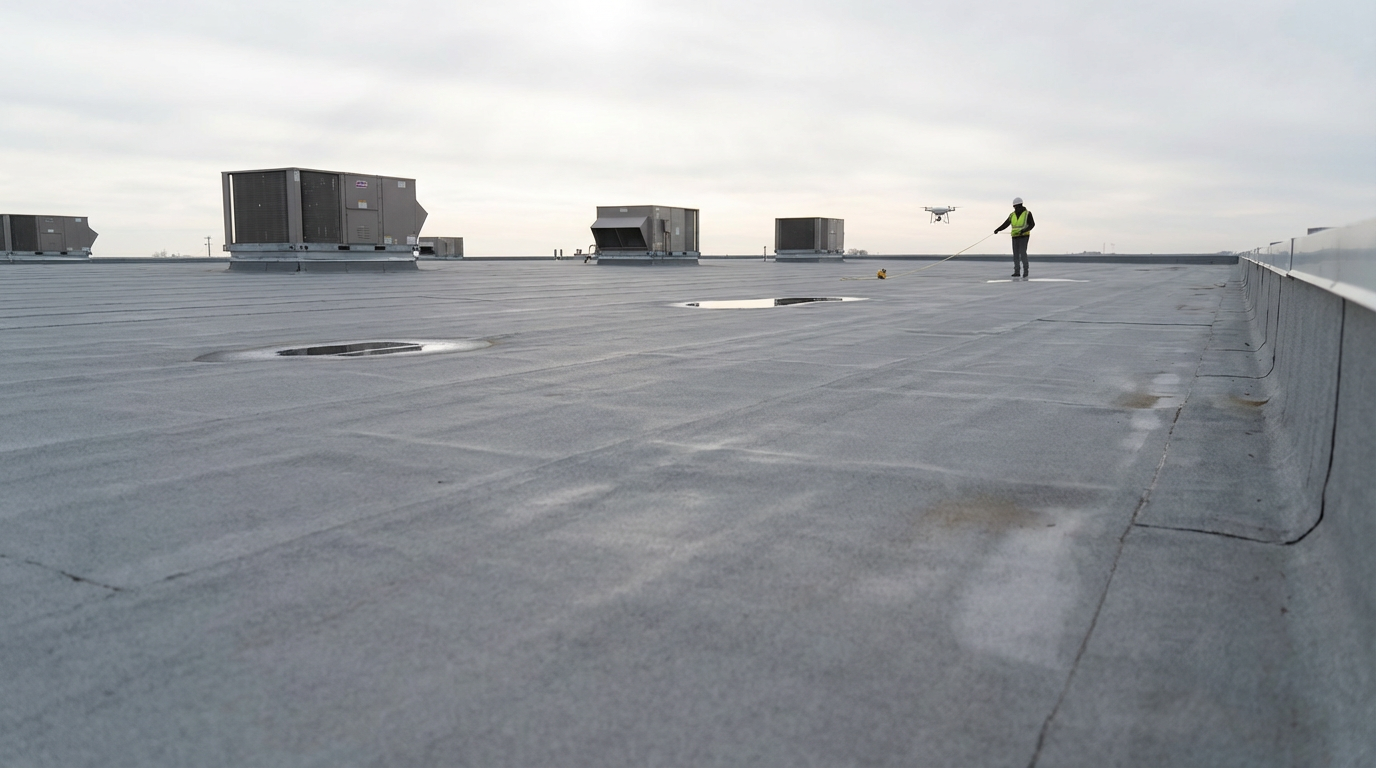
Step 1: Catch (Proactive Inspection)
Most flat roof problems start 18 months before they become visible leaks. The Catch phase finds these problems when they're still $200 fixes instead of $2,000 emergencies.
Your inspection schedule depends on your roof type and age:
New roofs (0-5 years): Annual inspections
Mature roofs (5-15 years): Bi-annual inspections
Aging roofs (15+ years): Quarterly inspections
During each inspection, you're looking for five critical warning signs:
Membrane shrinkage or pulling at seams
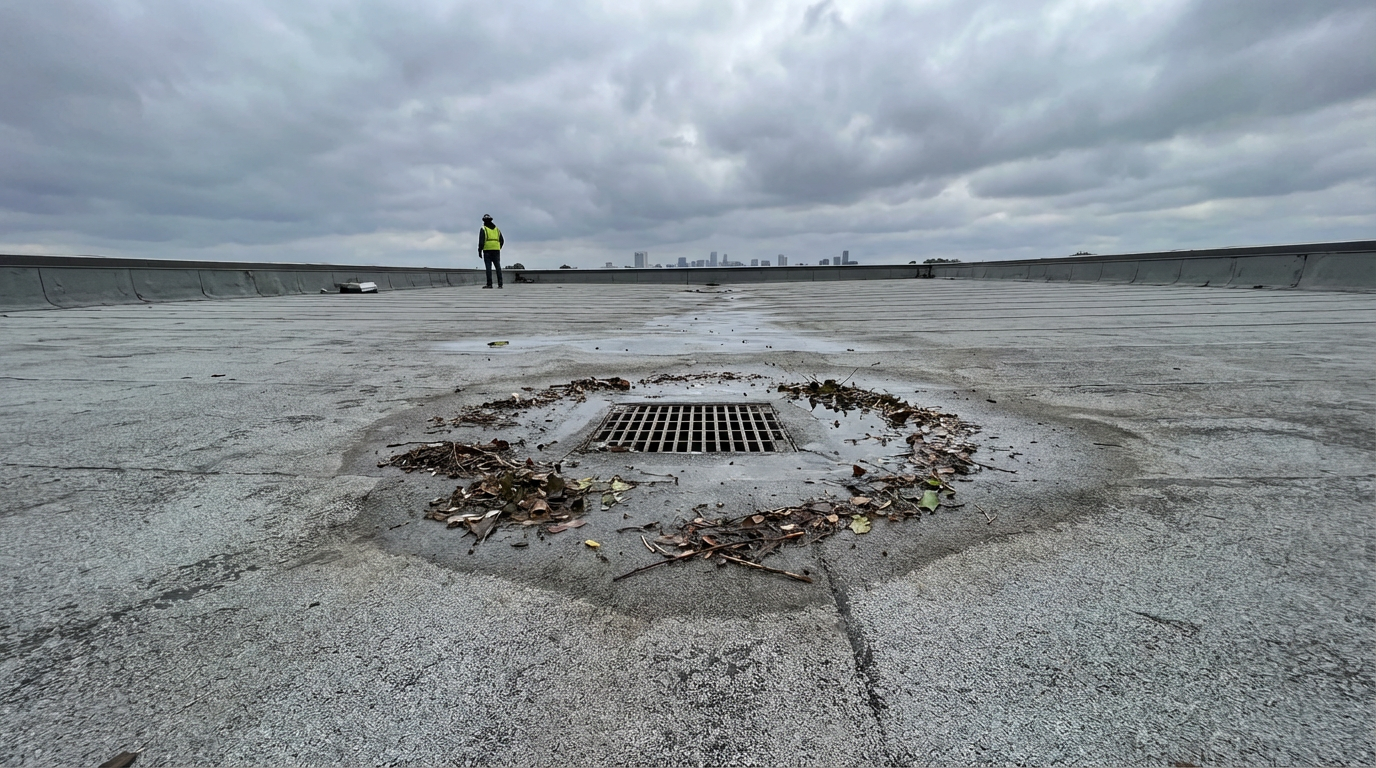
Ponding water that doesn't drain within 48 hours
Loose or damaged flashing around penetrations
Granule loss on modified bitumen systems
Cracking or splitting in any membrane material
Common Mistake: Building owners often skip inspections when the roof "looks fine" from the ground. Flat roof problems happen at the membrane level, which you can't see from 30 feet below. A $300 inspection catches problems that cost $3,000 to fix later.
Step 2: Analyze (Root Cause Assessment)
Finding a problem isn't enough—you need to understand why it happened. The Analyze phase prevents the same problem from recurring in a different spot six months later.
For each issue you find, ask three questions:
What caused this specific failure? (Poor installation, material defect, weather damage, normal wear)
Are there other areas with the same vulnerability? (Similar age, installation method, or exposure)
What system-level changes prevent recurrence? (Drainage improvements, material upgrades, maintenance protocols)
For example: You find a split seam in your EPDM membrane. The immediate cause might be thermal expansion, but the root cause could be inadequate fastening during installation. That means every seam installed the same way is at risk, not just the one that failed.
Common Mistake: Rushing straight to repairs without analysis. This leads to "whack-a-mole" maintenance where you're constantly fixing new versions of the same problem. Spend an extra hour analyzing each issue to save dozens of hours on future repairs.
Step 3: Repair (Strategic Fix Implementation)
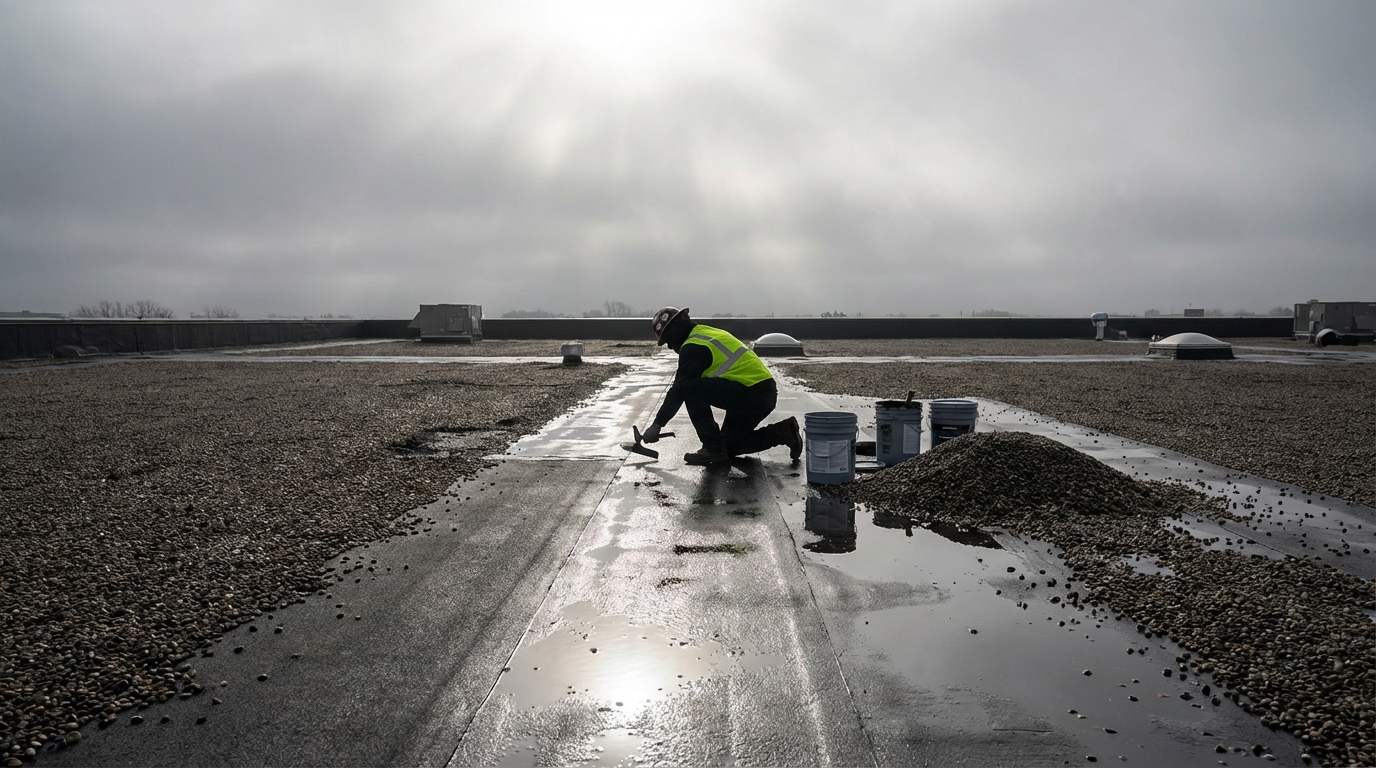
The Repair phase isn't about quick patches—it's about making targeted improvements that strengthen the entire roofing system. Every repair should either solve multiple problems or prevent future ones.
Your repair strategy depends on the problem type:
Membrane Repairs: Use permanent patches that exceed the original material specifications. For a $500 TPO repair, use reinforced material that's 20% stronger than the original membrane. The repair becomes the strongest point on your roof, not the weakest.
Drainage Repairs: Don't just clear blocked drains—upgrade the drainage capacity. Add overflow drains, improve slope, or install larger downspouts. Water is your roof's biggest enemy, so over-engineer your drainage by 25%.
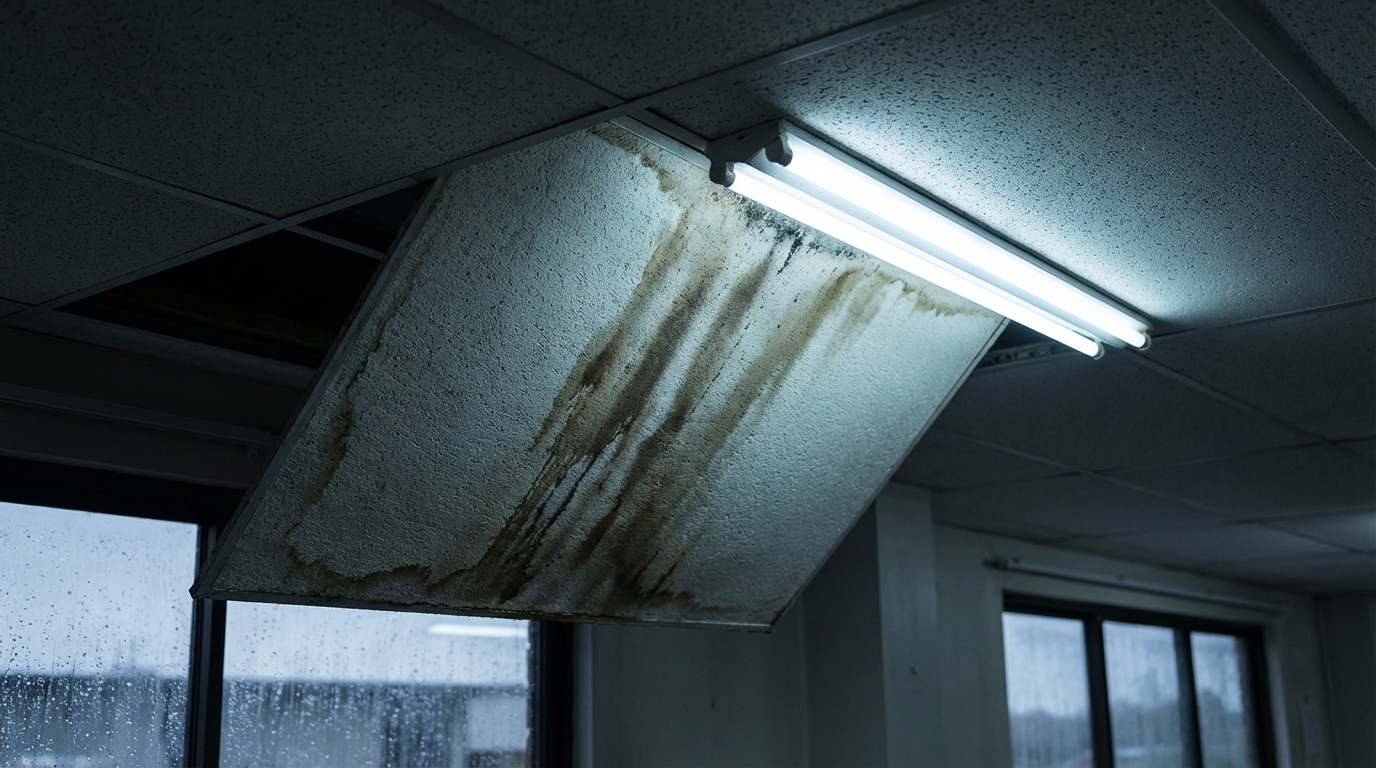
Flashing Repairs: Replace, don't patch. Flashing failures cascade faster than membrane problems because they affect multiple building systems. A $200 flashing replacement prevents $5,000 in interior damage.
Penetration Repairs: Seal and reinforce every penetration within 10 feet of a repair. HVAC units, vents, and electrical penetrations create stress points that fail in clusters. Fix the neighborhood, not just the house.
Common Mistake: Using temporary materials for permanent problems. Roof cement and patch tape might stop a leak for six months, but they create bigger problems when they fail. Invest in permanent repairs that last as long as your original roof.
Step 4: Extend (Proactive Enhancement)
The Extend phase turns your repair investment into long-term value by upgrading adjacent areas and improving overall system performance. This is where good roofs become great roofs.
After every repair, look for three enhancement opportunities:
Material Upgrades: When replacing a section of 45-mil EPDM, upgrade to 60-mil in high-stress areas. The marginal cost is minimal, but the performance gain is substantial.
System Improvements: Add insulation during membrane repairs to improve energy efficiency. Install walkway pads around frequently accessed equipment. Upgrade fastening patterns in areas that show stress.
Preventive Treatments: Apply protective coatings to areas showing early wear. Install additional flashings at vulnerable transitions. Add overflow drains in areas prone to ponding.
The key is bundling enhancements with necessary repairs. A $2,000 repair becomes a $3,000 upgrade that adds 10 years of life to surrounding areas. Your cost per square foot drops, and your roof performance increases.
Common Mistake: Treating each repair as an isolated incident. Smart building owners use every repair as an opportunity to strengthen the entire system. Your roof should be better after the repair than it was before the problem.
How to Measure CARE Framework Success
The CARE Framework works, but you need metrics to prove it's working for your specific building. Track these four numbers quarterly:
Emergency Repair Frequency: Count unplanned repairs per year. The CARE Framework should reduce emergencies by 75% within two years. If you're still getting surprised by leaks, you're not catching problems early enough.
Cost Per Square Foot Per Year: Divide your annual roofing costs by total roof area. Well-maintained flat roofs should cost $0.15-$0.25 per square foot annually, including repairs and maintenance. Higher costs indicate you're being reactive instead of proactive.
Repair Recurrence Rate: Track whether the same areas keep having problems. Properly analyzed and repaired areas shouldn't fail again within five years. High recurrence means you're fixing symptoms, not causes.
System Enhancement Ratio: Measure how many enhancements you complete per repair. Target at least one enhancement for every two repairs. This ensures your roof is improving over time, not just maintaining status quo.
The Real ROI of Strategic Flat Roof Repairs
Let's run the numbers on a typical 25,000 square foot warehouse in Elkhart, Indiana. Without the CARE Framework, you're looking at:
$3,000-$5,000 annually in emergency repairs
Full roof replacement every 15-18 years at $250,000
2-3 days of business disruption per major leak
Total 30-year cost: $400,000+
With the CARE Framework:
$2,000 annually in planned maintenance and strategic repairs
Roof replacement every 25-30 years at $275,000 (prices rise, but you delay longer)
Zero emergency shutdowns
Total 30-year cost: $235,000
That's $165,000 in savings over 30 years, plus the value of avoiding business disruptions. For most commercial buildings, the CARE Framework pays for itself within 18 months and keeps paying dividends for decades.
Common CARE Framework Implementation Mistakes
Even building owners who understand the framework often stumble during implementation. Avoid these four mistakes that kill 60% of proactive maintenance programs:
Mistake #1: Inconsistent Inspection Scheduling
You can't "catch up" on missed inspections. A problem that would have been $200 in March becomes $2,000 in September. Set inspection reminders in your calendar and treat them like any other critical business appointment.
Mistake #2: Using Unqualified Inspectors
Your maintenance team can spot obvious problems, but flat roof assessment requires specialized knowledge. A qualified commercial roofer in Elkhart Indiana knows the difference between normal weathering and early failure signs. The wrong diagnosis leads to the wrong repairs.
Mistake #3: Delaying Repairs for Budget Cycles
Flat roof problems don't wait for your fiscal year. A $500 repair in October becomes a $3,000 emergency in January. Build a rolling repair budget that lets you act immediately when problems are found.
Mistake #4: Skipping Documentation
Every inspection, repair, and enhancement should be documented with photos and detailed notes. This creates a maintenance history that helps predict future problems and proves proactive care for warranty claims.
Frequently Asked Questions
How long does it take to see results from the CARE Framework?
You'll reduce emergency repairs within 6 months and see significant cost savings within 18 months. The full lifespan extension becomes apparent after 5-7 years of consistent implementation.
Can I implement the CARE Framework on an older roof that's already showing problems?
Absolutely. Older roofs benefit most from strategic repairs because they have the most room for improvement. Focus on drainage and flashing first, then work on membrane issues systematically.
What's the difference between the CARE Framework and regular maintenance?
Regular maintenance is reactive—fixing problems after they appear. The CARE Framework is proactive—preventing problems before they start and using each intervention to strengthen the entire system.
How do I know if a repair contractor understands the CARE approach?
Ask about their inspection process and whether they analyze root causes before recommending repairs. Contractors who only fix immediate problems without addressing underlying issues don't understand systematic roof care.
Is the CARE Framework worth it for smaller commercial buildings?
Yes, but scale the inspection frequency to your roof size and complexity. A simple 5,000 square foot retail building might only need annual inspections, while a complex manufacturing facility needs quarterly assessments.
What happens if I find problems but can't afford all the repairs immediately?
Prioritize based on risk and cost. Fix anything affecting building integrity first, then address problems that will cascade into bigger issues. Create a repair schedule that spreads costs over 12-18 months while preventing emergency failures.
Your First Step: Implement CARE Today
The CARE Framework isn't theory—it's a proven system that extends flat roof life and cuts maintenance costs for commercial buildings throughout Northern Indiana and Southwest Michigan. The question isn't whether it works, but whether you'll implement it before your next expensive emergency.
Start with Step 1: Schedule your next inspection within 30 days. Don't wait for the next leak, the next budget cycle, or the next convenient time. Every month you delay is another month of hidden damage accumulating in your roofing system.
If your current maintenance approach isn't delivering predictable results and manageable costs, you need partners who understand systematic roof care. The best industrial roofing services in Michiana don't just fix problems—they prevent them using frameworks like CARE that treat your roof as the critical business asset it is.