Estimated Reading Time: 10 minutes
The 4-Zone Drainage Protection System is the most reliable way to prevent flat roof failures before they happen. It has four inspection zones, takes 30 minutes to complete monthly, and can extend your roof's life by 10-15 years while preventing 90% of emergency repairs.
Most commercial building owners wait until water starts pooling on their flat roof—or worse, leaking through the ceiling—before thinking about drainage. That's like waiting for your car engine to seize before checking the oil. By then, you're looking at thousands in emergency repairs instead of hundreds in preventive maintenance.
Your flat roof's drainage system is its lifeline. When it fails, everything else fails fast. Standing water weighs 62 pounds per cubic foot, creating stress your roof wasn't designed to handle long-term. More critically, it finds every tiny crack and turns minor issues into major structural problems.
Why Most Flat Roof Drainage Fails
The problem isn't that building owners don't care about their roofs. It's that they don't have a systematic approach to drainage maintenance. They react to problems instead of preventing them.
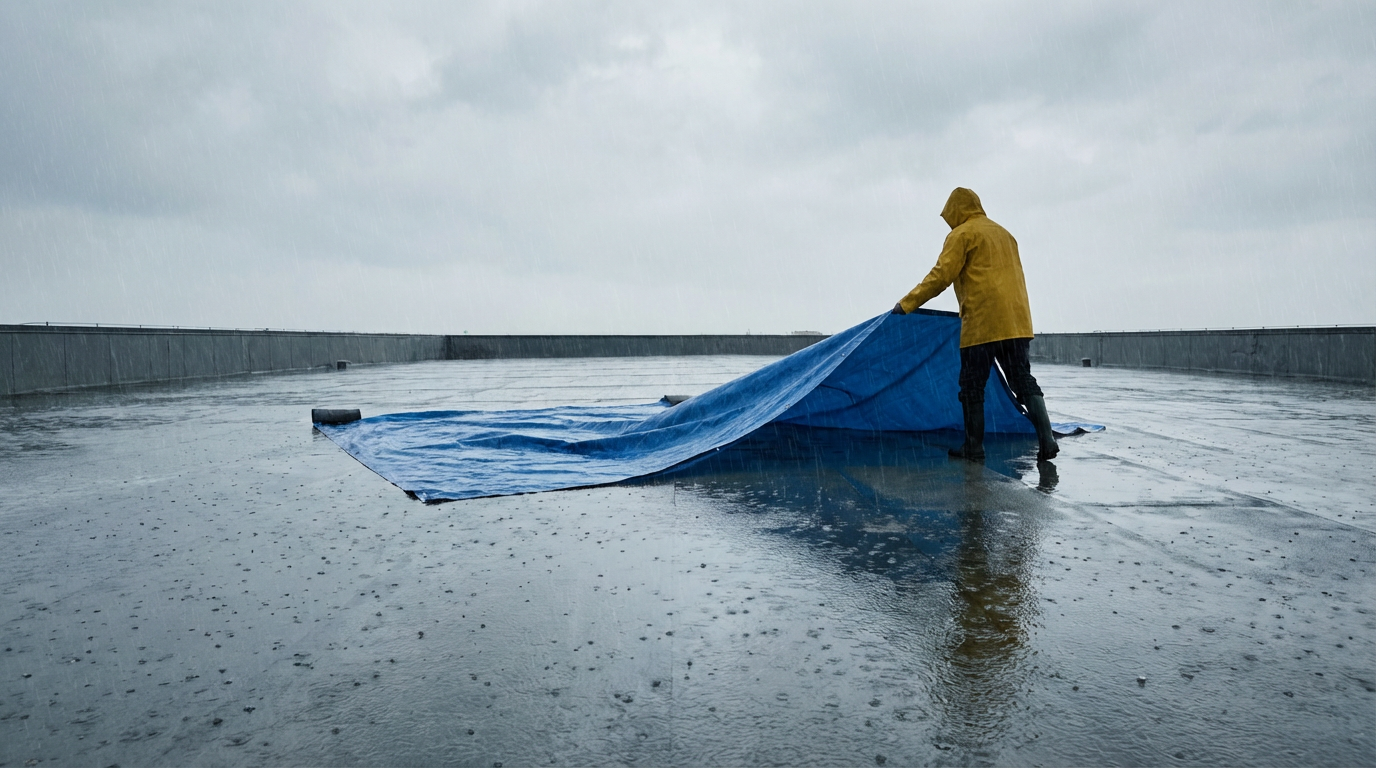
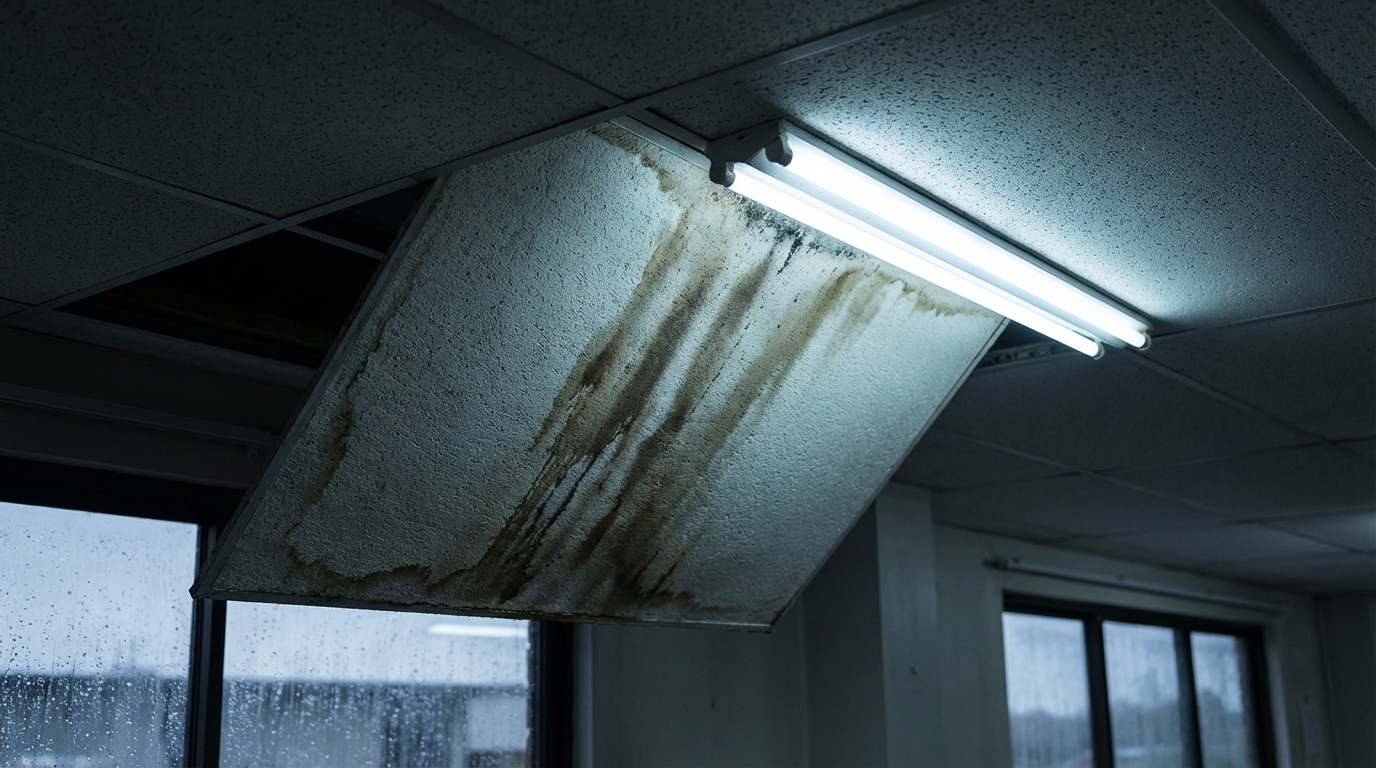
Here's what typically happens: debris accumulates gradually in drains and gutters. You don't notice because it builds up slowly over months. Then a heavy rain hits, water can't drain properly, and suddenly you have ponding that damages your roof membrane. Within weeks, that standing water penetrates the roofing system, and you're dealing with interior leaks, damaged inventory, and emergency flat roof repair calls.
The worst part? This entire cascade could have been prevented with a 30-minute monthly inspection and basic maintenance.
The 4-Zone Drainage Protection System
This framework divides your flat roof into four critical drainage zones, each requiring specific attention. Instead of wandering around your roof hoping you'll spot problems, you systematically check each zone for specific issues that cause drainage failures.
Zone 1: Primary Drains - Your roof's main water evacuation points
Zone 2: Scuppers and Overflow - Secondary drainage when primaries are overwhelmed
Zone 3: Gutters and Downspouts - Perimeter water collection and removal
Zone 4: Membrane Integrity - The surface that channels water to drains
Each zone has specific failure points, warning signs, and maintenance requirements. By checking all four zones monthly, you catch problems while they're still minor maintenance issues rather than major repair emergencies.
Zone 1: Primary Drain Inspection and Maintenance
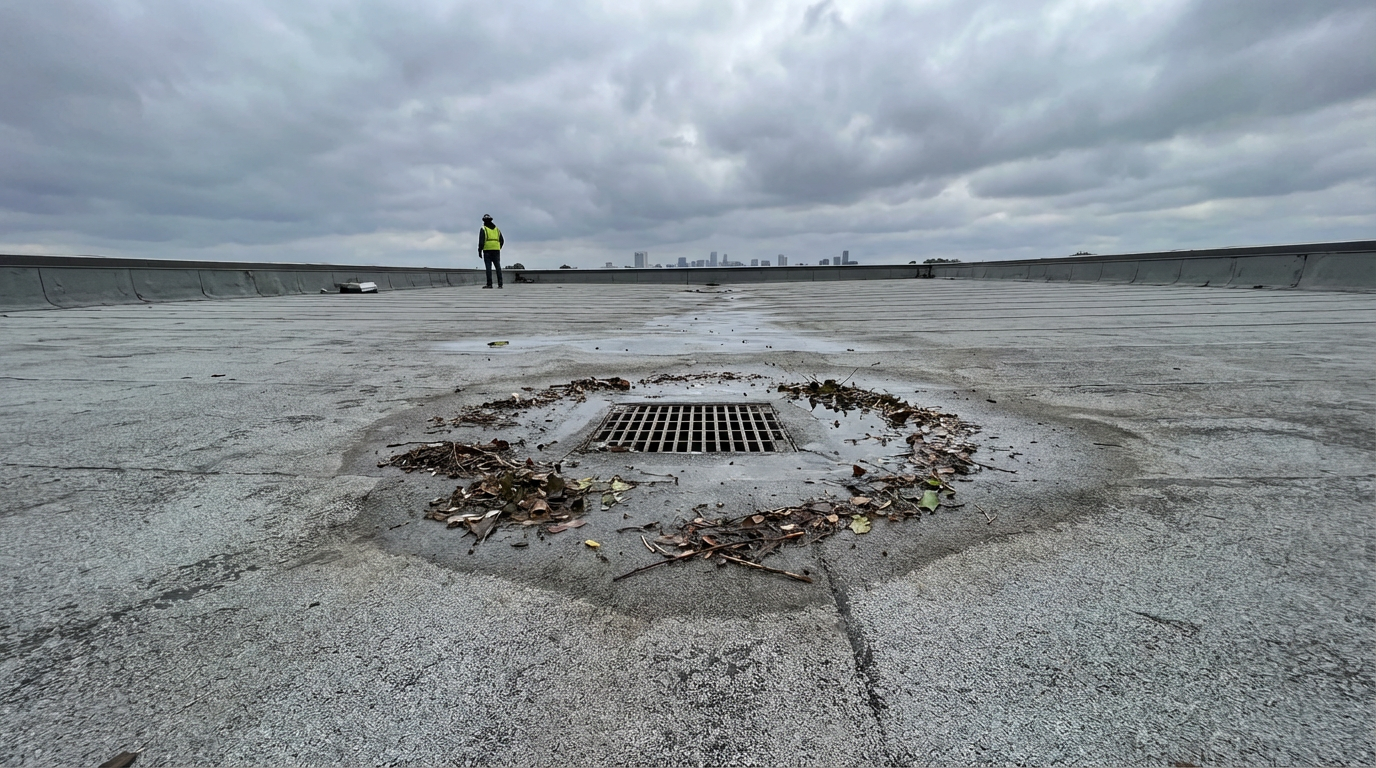
Primary drains are your roof's workhorses. They handle 80% of water removal during normal rainfall. When they fail, everything else gets overwhelmed quickly.
What to Check:
Drain strainer baskets for debris accumulation
Water flow during light rain (should drain within 2-3 hours after rain stops)
Cracks or separation around drain flanges
Proper slope toward drains (water should flow, not pool)
Monthly Action Steps:
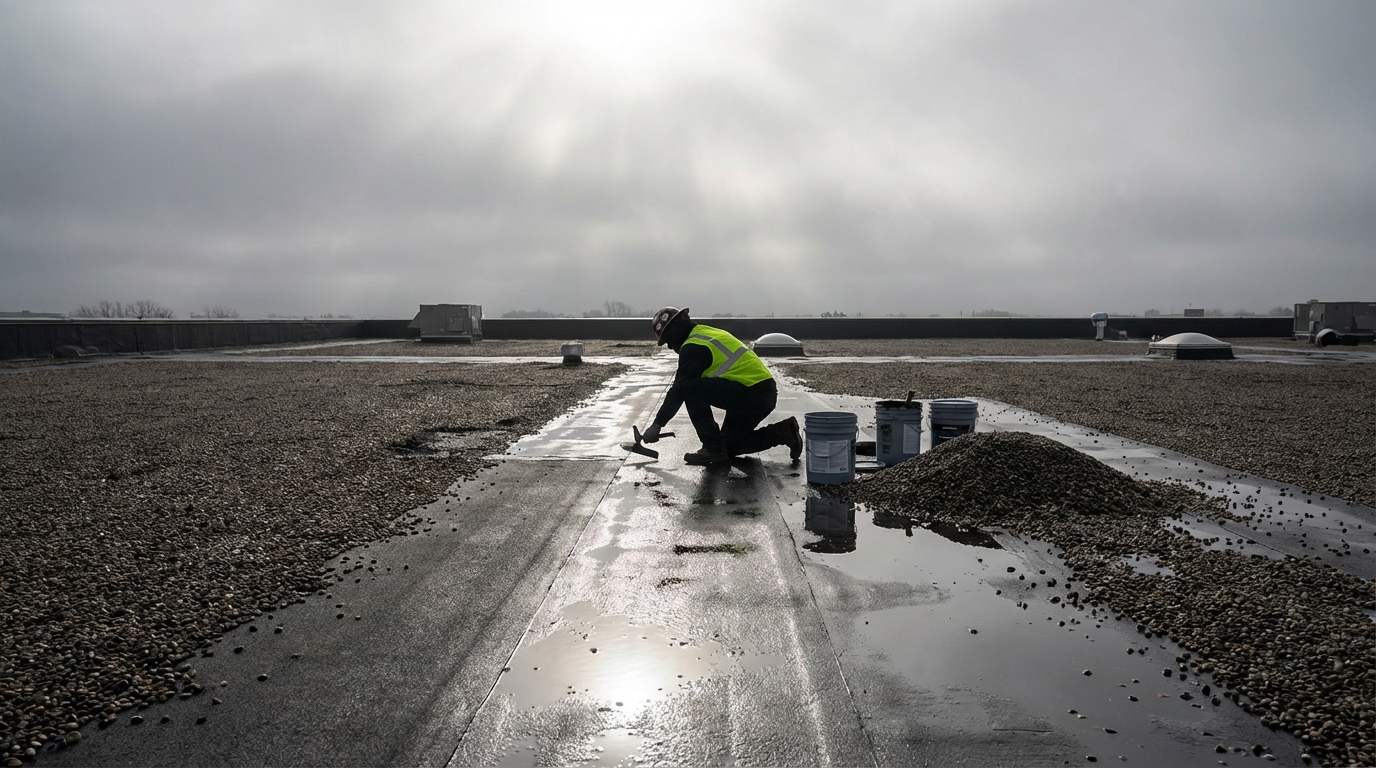
Remove leaves, paper, and debris from strainer baskets
Pour a bucket of water down each drain to test flow
Check for standing water 24 hours after rain
Document any slow-draining areas with photos
The most common mistake here is assuming drains work because water eventually disappears. If water sits for more than 48 hours after rain stops, your drain capacity is compromised. This seemingly minor issue accelerates membrane aging and creates leak entry points.
Zone 2: Scupper and Overflow System Check
Scuppers are your backup system when primary drains can't handle heavy rainfall. Many building owners ignore them because they're not used daily, but they're critical during severe weather events.
What to Inspect:
Scupper openings for blockages or damage
Proper height relationship to primary drains (scuppers should be 1-2 inches higher)
Downspout connections and mounting
Emergency overflow paths are clear
Maintenance Actions:
Clear any vegetation growing in or around scuppers
Test water flow by running hose water through the system
Tighten loose downspout connections
Verify overflow water won't damage building exterior or foundation
The critical error most facilities make is treating scuppers as "set and forget" systems. During heavy storms, clogged scuppers can cause water to back up and find alternative exit routes—often through your building's interior.
Zone 3: Gutter and Downspout Maintenance
Perimeter drainage removes water that flows off your roof's edges. When this system fails, water cascades down building walls, potentially damaging facades and creating foundation issues.
Inspection Points:
Gutter alignment and proper slope toward downspouts
Joint integrity—no separation or leaking connections
Downspout anchoring and proper water discharge location
Debris accumulation levels
Monthly Tasks:
Remove leaves and debris from gutter channels
Check that water flows toward downspouts, not pooling in gutter sections
Verify downspouts discharge water at least 6 feet from building foundation
Look for rust, corrosion, or loose fasteners
The biggest mistake here is cleaning gutters only in spring and fall. Commercial buildings with flat roofs need monthly attention because debris accumulates faster and the consequences of overflow are more severe than on sloped residential roofs.
Zone 4: Membrane Surface and Slope Analysis
Your roof membrane is the foundation of effective drainage. Even perfect drains can't help if water can't reach them due to membrane problems or inadequate slope.
Key Inspection Areas:
Ponding areas that don't drain within 48 hours
Membrane bubbles, cracks, or punctures that disrupt water flow
Proper slope toward drains (minimum 1/4 inch per foot)
Seam integrity where water might penetrate
Assessment Actions:
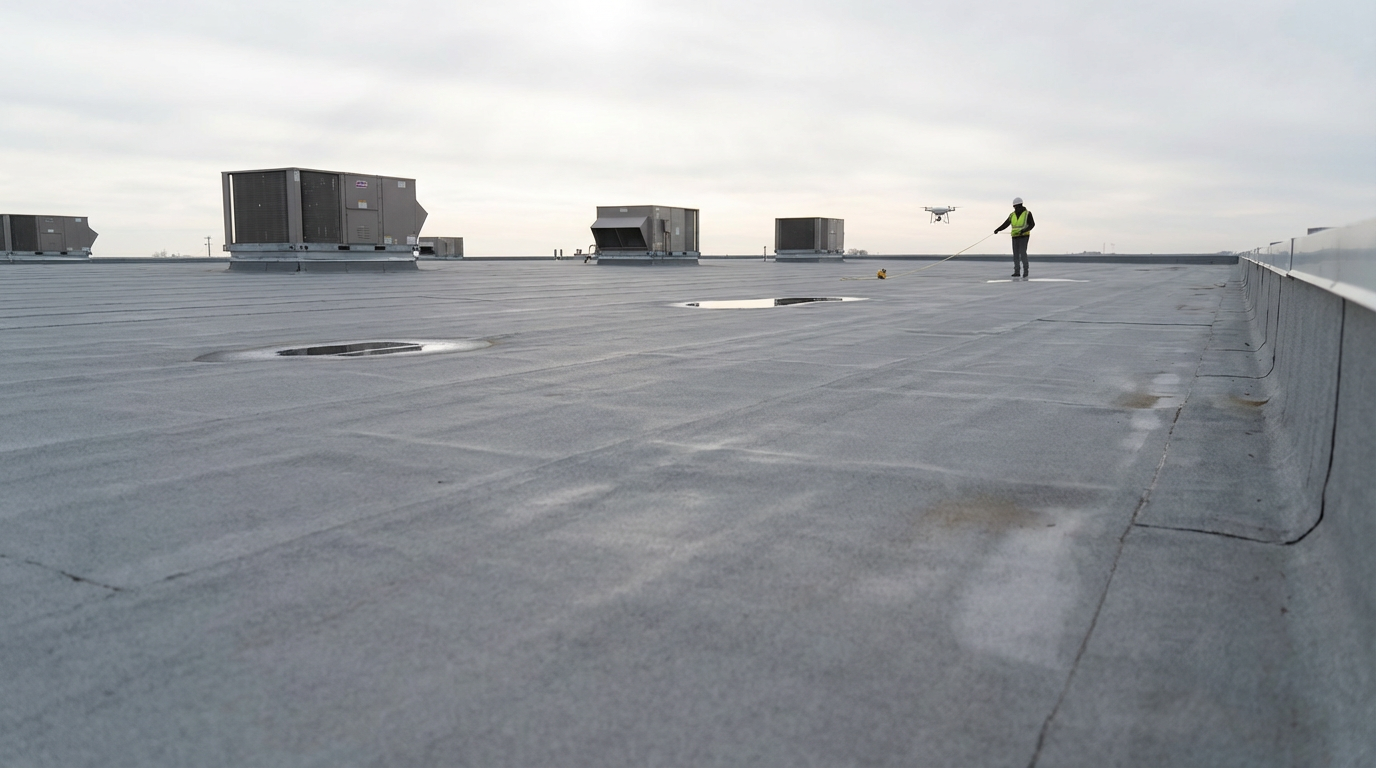
Walk the roof after rain to identify persistent ponding
Mark problem areas with chalk for tracking over time
Document membrane condition with photos
Test questionable areas by pouring water to observe flow patterns
The most dangerous assumption is that slight ponding is normal. Any water that remains on your roof more than 48 hours after rain indicates a drainage or slope problem that will worsen over time. These areas become entry points for leaks and accelerate membrane deterioration.
Common Implementation Mistakes That Waste Time and Money
Mistake #1: Inconsistent Inspection Schedule
Checking your roof "when you remember" or only after problems appear defeats the purpose of preventive maintenance. Set a specific day each month and stick to it. Weather delays are acceptable, but skipping months isn't.
Mistake #2: Focusing Only on Obvious Problems
The 4-Zone system works because it catches problems before they're obvious. If you only fix what's clearly broken, you're still in reactive mode. Document minor issues and track their progression.
Mistake #3: DIY Repairs Beyond Basic Maintenance
Clearing debris and tightening loose connections are appropriate for facility staff. Membrane repairs, drain modifications, or structural issues require commercial roofer in Elkhart Indiana expertise. Attempting complex repairs often creates larger problems.
Mistake #4: Ignoring Seasonal Patterns
Your drainage needs change with seasons. Spring brings debris from winter storms. Summer creates thermal expansion issues. Fall means leaf accumulation. Winter adds ice and snow load considerations. Adjust your inspection focus accordingly.
Mistake #5: No Documentation System
Without photos and notes tracking changes over time, you can't distinguish between normal wear and developing problems. Use a simple smartphone app or paper checklist to record findings each month.
How to Measure System Effectiveness
The 4-Zone Drainage Protection System works when you can measure its impact. Here are the key performance indicators that prove your drainage maintenance is effective:
Immediate Indicators (Within 3 Months):
Zero standing water 48 hours after rainfall
No emergency drain cleaning calls
Reduced debris accumulation between inspections
Faster water evacuation during rain events
Long-term Success Metrics (6-12 Months):
No interior leaks related to drainage failures
Extended intervals between professional roof maintenance
Stable roof membrane condition assessments
Lower annual roofing maintenance costs
Track these metrics monthly. If you're not seeing improvement within three months, either your inspection technique needs adjustment or you have underlying structural issues requiring professional assessment.
Integration with Professional Roof Maintenance
The 4-Zone system complements, but doesn't replace, professional roof inspections. Your monthly checks catch developing problems and keep drainage systems functioning between professional visits.
Schedule professional flat roof inspection services twice yearly—spring and fall. Share your monthly documentation with your roofing contractor. This helps them focus on areas showing change patterns and provides valuable data for warranty claims if needed.
Professional roofers can address issues beyond basic maintenance: membrane repairs, drain modifications, slope corrections, and structural problems. Your systematic documentation helps them work more efficiently and accurately.
Seasonal Adaptations for Maximum Protection
Spring Focus: Clear winter debris accumulation, check for ice damage, verify thermal expansion hasn't affected drain connections.
Summer Priorities: Monitor for thermal stress cracks, ensure adequate drainage during thunderstorm season, check that membrane expansion hasn't created ponding areas.
Fall Preparation: Intensive debris removal before leaf drop, verify overflow systems work before winter precipitation, check gutter capacity for increased runoff.
Winter Monitoring: Ensure drains remain unfrozen, monitor ice dam formation, verify snow load isn't overwhelming drainage capacity.
Each season presents specific challenges to flat roof drainage. Adapting your 4-Zone inspections to seasonal priorities catches problems before they become weather-related emergencies.
Frequently Asked Questions
How often should I inspect my flat roof drainage system?
Monthly inspections using the 4-Zone system provide optimal protection. More frequent checks during heavy weather seasons help catch storm-related issues quickly. Never go longer than 45 days between inspections.
What tools do I need for effective drainage inspection?
Basic tools include a garden hose, measuring tape, smartphone camera, chalk for marking, and a small hand tool for debris removal. Avoid power tools or complex equipment that requires professional expertise.
Can I perform drainage maintenance on my own, or do I need professionals?
Basic maintenance like debris removal and visual inspections are appropriate for facility staff. However, membrane repairs, drain modifications, or structural issues require Industrial Roofing Services Michiana expertise to avoid creating larger problems.
How do I know if ponding water is a serious problem?
Any water remaining on your roof longer than 48 hours after rain stops indicates a drainage issue requiring attention. Document the location and depth, then consult with roofing professionals if the problem persists after basic drain cleaning.
What's the difference between emergency drainage issues and routine maintenance needs?
Emergency issues include active interior leaks, complete drain blockages during rain, or structural damage affecting drainage. Routine maintenance covers debris removal, minor adjustments, and gradual wear monitoring. When in doubt, treat it as urgent.
How much money can proper drainage maintenance save me?
Preventive drainage maintenance typically costs $200-500 annually but can prevent $5,000-15,000 in emergency repairs and membrane replacement. The 4-Zone system pays for itself by preventing just one major drainage failure.
Your Next Step: Implement Zone 1 This Week
Don't try to implement the entire 4-Zone Drainage Protection System at once. Start with Zone 1—your primary drains—this week. Clear all strainer baskets, test flow with a garden hose, and document current conditions with photos.
This single action will immediately improve your roof's drainage capacity and give you baseline data for tracking improvements. Once Zone 1 becomes routine, add the other zones over the following months.
The most important step is starting. Every day you delay drainage maintenance increases the risk of preventable roof damage. Your building's protection depends on systematic attention to these critical systems.
For complex drainage issues, membrane problems, or professional assessment of your flat roof system, experienced commercial flat roof contractors provide the expertise needed to keep your building protected. The 4-Zone system helps you maintain what professionals install and repair.