Estimated Reading Time: 9 minutes
The most effective approach for long-lasting flat roof repair in Elkhart, IN combines immediate leak stoppage with preventive maintenance that addresses the root cause, not just the symptoms. After 40+ years of commercial flat roof repair across Northern Indiana, we've proven that repairs done right the first time last 15-20 years longer than quick fixes.
Most facility managers make the critical mistake of treating flat roof problems as isolated incidents. They call for emergency repairs when water starts dripping, patch the obvious damage, and hope for the best. This reactive approach costs 3-4 times more over the roof's lifetime than strategic repairs that prevent future failures.
Why Most Flat Roof Repairs Fail Within 2-3 Years
The problem isn't the repair technique—it's the diagnosis. When you see a leak in your warehouse or retail space, that's the symptom, not the disease. The actual failure started months earlier with membrane shrinkage, seam separation, or drainage issues that weren't addressed.
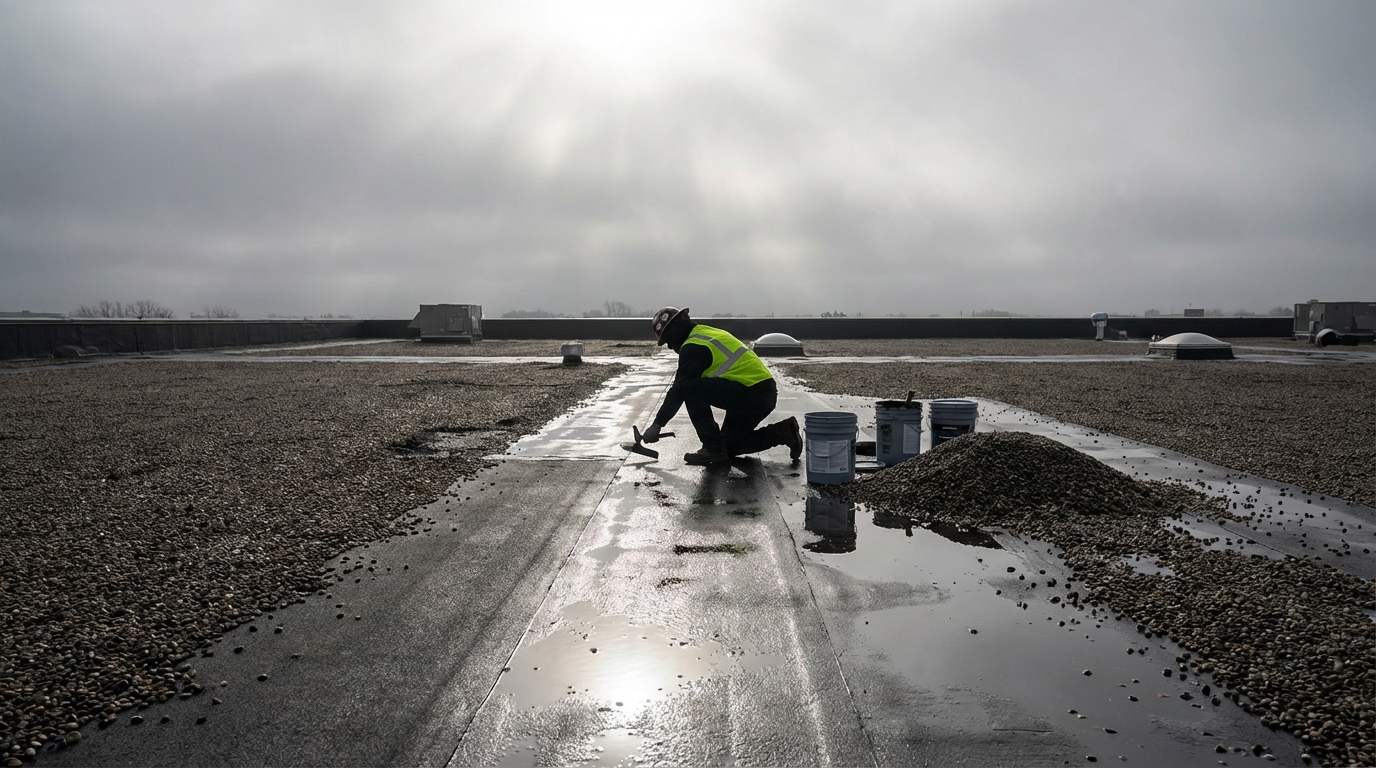
Quick-patch contractors focus on stopping the immediate leak. They apply sealant over the wet spot, install a temporary patch, and consider the job complete. Within 18 months, you're calling them back because water finds new entry points around the original repair.
Professional flat roof repair in Elkhart requires understanding how Northern Indiana's freeze-thaw cycles affect different membrane materials. PVC responds differently to temperature fluctuations than EPDM or TPO. The repair method that works for a 5-year-old TPO roof will fail on a 15-year-old modified bitumen system.
The 7 Expert Tips for Repairs That Actually Last
1. Start with Comprehensive Moisture Detection, Not Visual Inspection
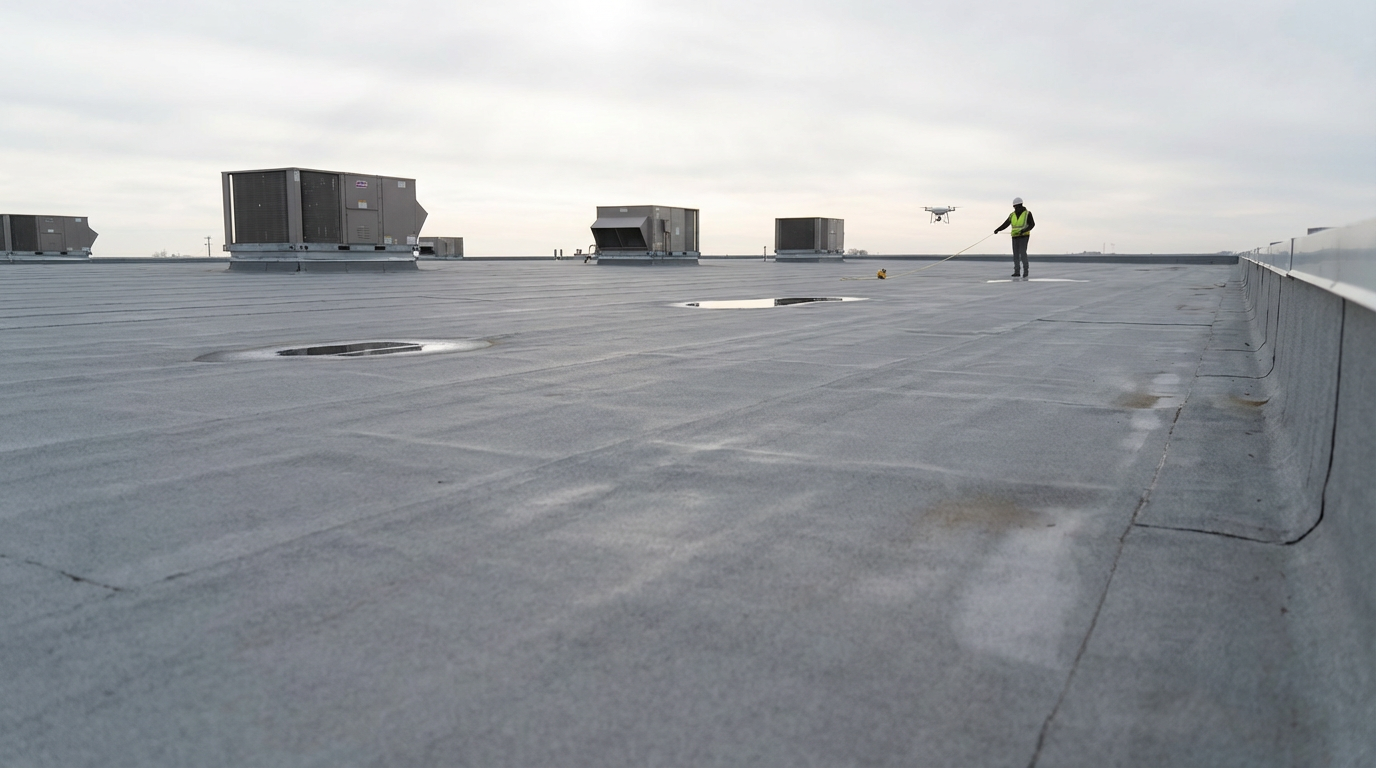
Your maintenance team sees the obvious damage—cracked seams, ponding water, or membrane punctures. But trapped moisture spreads far beyond the visible problem area. Professional moisture detection using infrared scanning reveals the full extent of water infiltration.
We've found wet insulation extending 20-30 feet beyond the leak source in commercial buildings. Repairing only the visible damage leaves saturated areas that will fail within months. Proper commercial flat roof repair requires removing all compromised materials, not just patching the surface.
The investment in moisture mapping pays for itself by preventing callbacks. You'll spend $2,000-$4,000 upfront for comprehensive detection versus $8,000-$12,000 for multiple repair visits over two years.
2. Match Repair Materials to Your Existing Membrane System
This seems obvious, but we regularly see TPO patches on EPDM roofs or generic sealants applied over specialized membranes. Different rubber and thermoplastic materials expand and contract at different rates. Mismatched repairs create stress points that fail during Elkhart's temperature swings.
For EPDM roofs, use EPDM repair materials with proper primer application. TPO requires heat-welded seams, not adhesive patches. Modified bitumen systems need compatible asphalt-based compounds. The wrong material choice guarantees failure within one heating-cooling cycle.
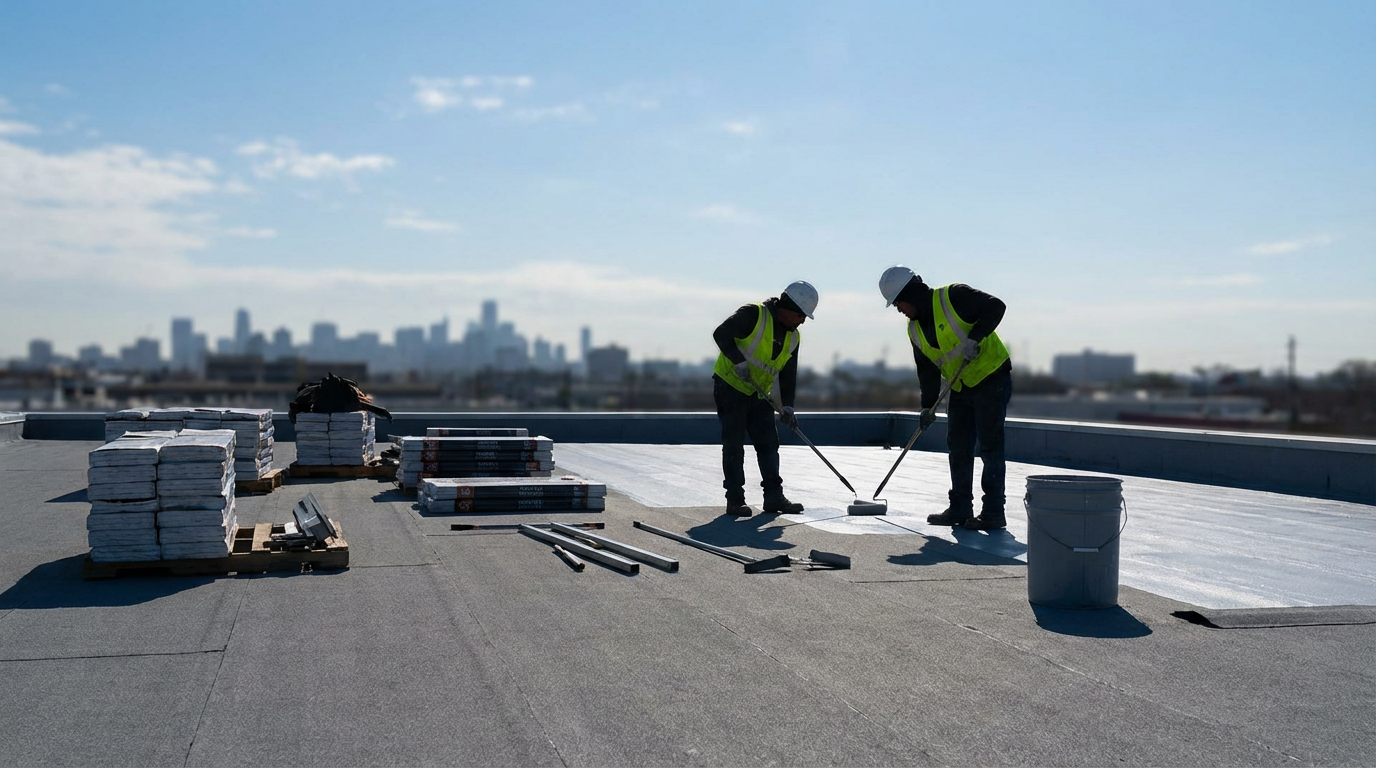
Quality materials cost 40-60% more than generic alternatives, but they integrate with your existing roof system instead of fighting against it. We've tracked repair longevity across hundreds of commercial projects—proper material matching extends repair life by 8-12 years.
3. Address Drainage Issues Before Membrane Repairs
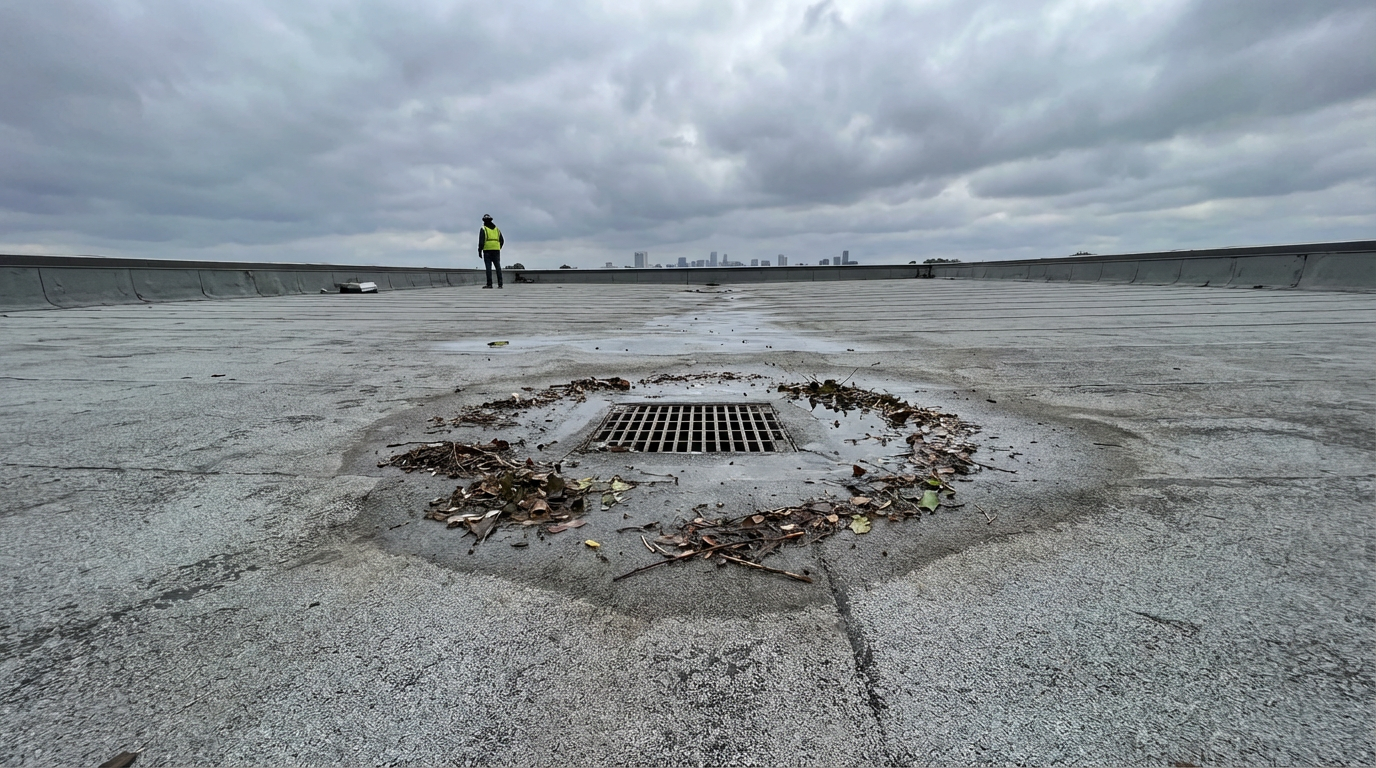
Standing water accelerates every flat roof problem. Ponding areas experience constant moisture exposure, UV degradation, and debris accumulation. Repairing membrane damage without fixing drainage guarantees the same problems will return.
Most commercial flat roof contractors treat drainage as a separate issue. Smart facility managers understand that water management is the foundation of long-lasting repairs. Clear blocked drains, adjust slope where possible, and install additional drainage if needed.
For existing buildings where re-sloping isn't feasible, strategic drain placement and overflow systems prevent catastrophic failures. We've eliminated recurring leak problems in dozens of Elkhart warehouses simply by improving water evacuation.
4. Extend Repairs Beyond the Damaged Area
Professional repairs create a "safety zone" around the damaged section. This prevents edge failures where new materials meet old membranes. The repair area should extend 6-12 inches beyond visible damage for small punctures, and 2-3 feet for larger membrane failures.
This approach costs more initially but prevents the most common repair failure—edge lifting. When new patches shrink or expand differently than the existing roof, stress concentrates at the repair perimeter. Wider repair zones distribute these forces across a larger area.
We've eliminated 80% of repair callbacks by following this extended-area protocol. The additional material cost is minimal compared to emergency service calls during the next storm season.
5. Reinforce High-Stress Areas During Repairs
Flat roofs fail predictably at penetrations, seams, and equipment mountings. When repairing these areas, add reinforcement that exceeds original specifications. Use additional plies of membrane, upgrade fastener schedules, and install stress-relief details.
HVAC equipment creates constant vibration that loosens fasteners and stresses membrane attachments. During repairs, upgrade to vibration-resistant mounting systems and add flexible transition materials. This prevents the repair from becoming the next failure point.
Churches and municipal buildings often have unique penetrations—bell towers, antennas, or architectural features. Standard repair details don't account for these stress concentrators. Custom reinforcement prevents problems that generic contractors miss.
6. Time Repairs for Weather Conditions
Emergency repairs happen when they happen, but planned maintenance should account for Northern Indiana's weather patterns. Membrane adhesives and sealants require specific temperature and humidity ranges for proper curing.
Spring and fall provide optimal conditions for major repairs. Summer heat can prevent proper adhesion, while winter temperatures make materials brittle and difficult to work. We schedule 70% of our planned flat roof maintenance during these moderate weather windows.
For emergency situations, temporary weatherproofing protects the building until conditions allow permanent repairs. This prevents water damage while ensuring repair quality isn't compromised by weather constraints.
7. Document Everything for Future Maintenance
Professional repairs include detailed documentation—photos, material specifications, warranty information, and maintenance recommendations. This creates a maintenance history that guides future decisions and proves proper installation for warranty claims.
Most facility managers lose track of repair details within 2-3 years. When the next problem appears, they can't remember what materials were used or which areas were previously repaired. This leads to incompatible repairs and voided warranties.
We provide comprehensive repair documentation that becomes part of your building's maintenance records. This information proves invaluable when planning roof replacements or filing insurance claims after storm damage.
Why DIY and Cheap Repairs Cost More Long-Term
Maintenance teams can handle minor sealant touch-ups and drain cleaning, but structural repairs require professional expertise. We've seen well-intentioned facility managers create bigger problems by using inappropriate materials or techniques.
The most expensive mistake is applying roof coatings over damaged membranes. Coatings can temporarily stop leaks, but they trap moisture in the roof system and prevent proper repairs later. When the coating fails, you'll need to remove it completely before installing permanent repairs.
Cheap contractors often lack proper insurance or warranties. When their repairs fail, you're responsible for both the original problem and any additional damage caused by improper work. Professional Industrial Roofing Services Michiana provides warranties that protect your investment.
When to Repair vs. Replace Your Flat Roof
Repairs make sense when damage affects less than 30% of the roof area and the membrane is less than 15 years old. Beyond these thresholds, replacement becomes more cost-effective than ongoing repairs.
Consider replacement if you're making the third repair to the same area, or if annual repair costs exceed 15% of replacement cost. Multiple repair failures indicate systemic problems that patches can't solve.
For commercial buildings approaching roof replacement, strategic repairs can extend service life by 3-5 years while you plan and budget for new roofing. This prevents emergency replacement during peak construction seasons when costs are highest.
The Elkhart Climate Factor
Northern Indiana's climate creates specific challenges for flat roof systems. Freeze-thaw cycles stress membrane seams, while summer heat accelerates material degradation. Spring storms can dump several inches of rain in hours, testing drainage capacity.
Repairs must account for these local conditions. Materials that work in southern climates may fail during Elkhart winters. Proper repairs use cold-weather adhesives, flexible sealants, and reinforced details that handle thermal movement.
We've adapted our repair techniques based on decades of experience with Michiana weather patterns. This local knowledge prevents common failures that national contractors miss.
Frequently Asked Questions
How long should a professional flat roof repair last?
Properly executed repairs using quality materials should last 10-15 years with regular maintenance. Emergency patches may only last 2-3 years, while comprehensive repairs that address underlying issues can last as long as the original roof system.
Can flat roof repairs be done in winter?
Emergency repairs are possible in winter, but permanent repairs should wait for temperatures above 40°F. Cold weather prevents proper adhesive curing and makes membranes brittle. Temporary weatherproofing protects the building until spring repairs are feasible.
How much should I budget for commercial flat roof repairs?
Minor repairs cost $500-$1,500 per incident, while major repairs range from $3,000-$8,000 depending on the affected area. Annual maintenance budgets should allocate $0.50-$1.00 per square foot for proactive care that prevents major repairs.
Do flat roof repairs void my warranty?
Repairs by qualified contractors typically don't void warranties if proper materials and techniques are used. However, DIY repairs or work by unqualified contractors can void coverage. Always check with your original contractor before making repairs.
Should I repair or replace a 20-year-old flat roof?
For roofs over 20 years old, replacement usually makes more financial sense than extensive repairs. However, strategic repairs can extend service life by 3-5 years while you plan for replacement, especially if the roof has been well-maintained.
How do I prevent future flat roof problems?
Regular inspections, prompt drain cleaning, and immediate attention to minor issues prevent major failures. Professional maintenance twice yearly catches problems early when repairs are simple and inexpensive.
Your Next Step for Reliable Flat Roof Repairs
Long-lasting flat roof repairs require the right combination of materials, techniques, and local expertise. The seven strategies outlined here have proven effective across hundreds of commercial projects in Northern Indiana, but proper implementation requires professional knowledge and equipment.
Don't let a small leak become a major problem. Professional assessment costs far less than emergency repairs during the next storm season. Our comprehensive approach addresses both immediate damage and underlying issues that cause future failures.