Estimated Reading Time: 10 minutes
The biggest mistake commercial building owners make with flat roof repair is treating every leak as an emergency patch job. It's also the most expensive way to maintain your roof.
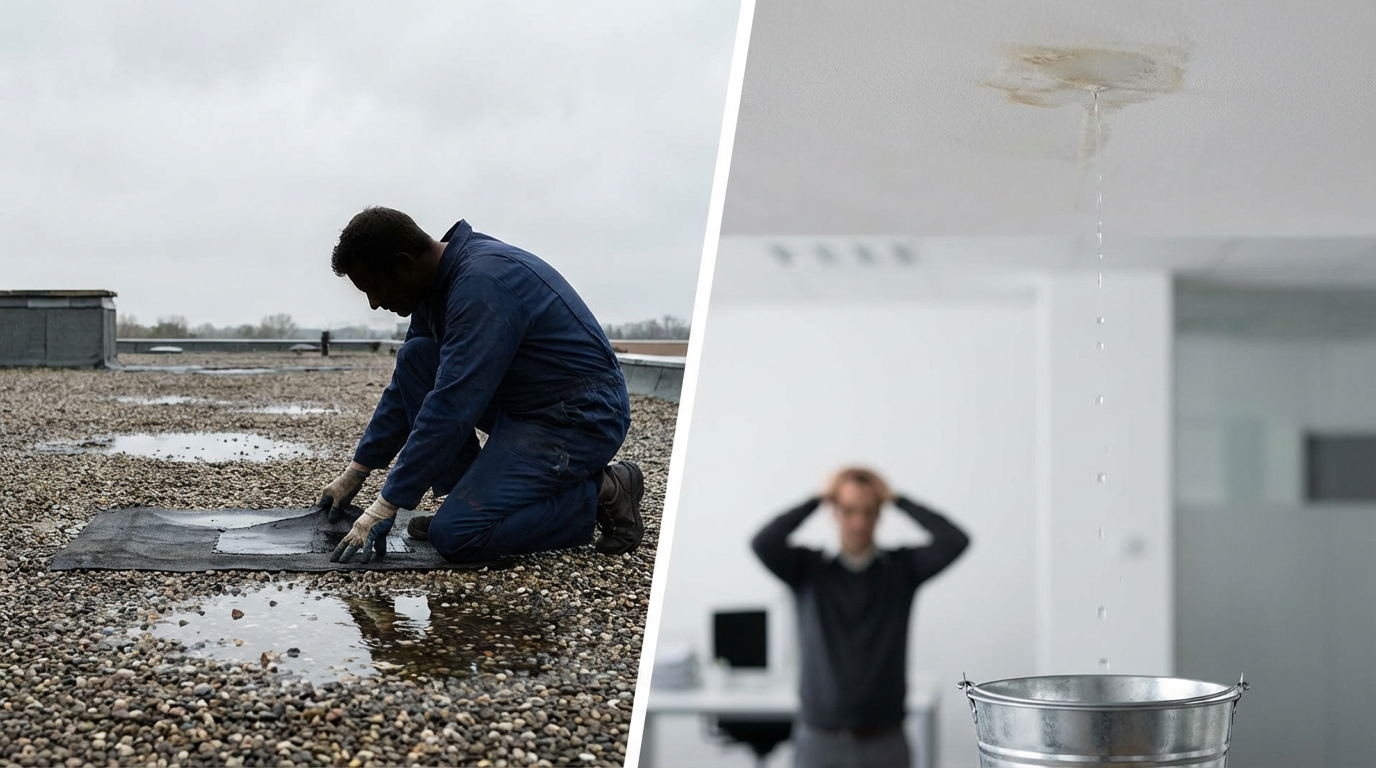
When water starts dripping through your warehouse ceiling or pooling in your retail space, the natural reaction is to call the first roofer who can show up today. But this "band-aid" approach typically costs 3-5 times more over five years than addressing the root cause properly from the start.
After 40+ years of industrial roofing services in Michiana, we've seen the same seven mistakes destroy otherwise salvageable flat roofs. More importantly, we've learned that every one of these mistakes is completely preventable when you know what to watch for.
Mistake #1: Patch-Only Thinking Instead of Root Cause Analysis
Here's what this looks like: Water appears in your building, you call a roofer, they slap some sealant over the obvious hole, and you think the problem is solved. Three months later, water shows up in a different spot.
Commercial building owners make this mistake because emergency patches feel productive. You see immediate action, the leak stops temporarily, and the cost seems reasonable. But flat roofs rarely fail in isolation. That visible leak is usually just the symptom of a larger drainage, membrane, or structural issue.
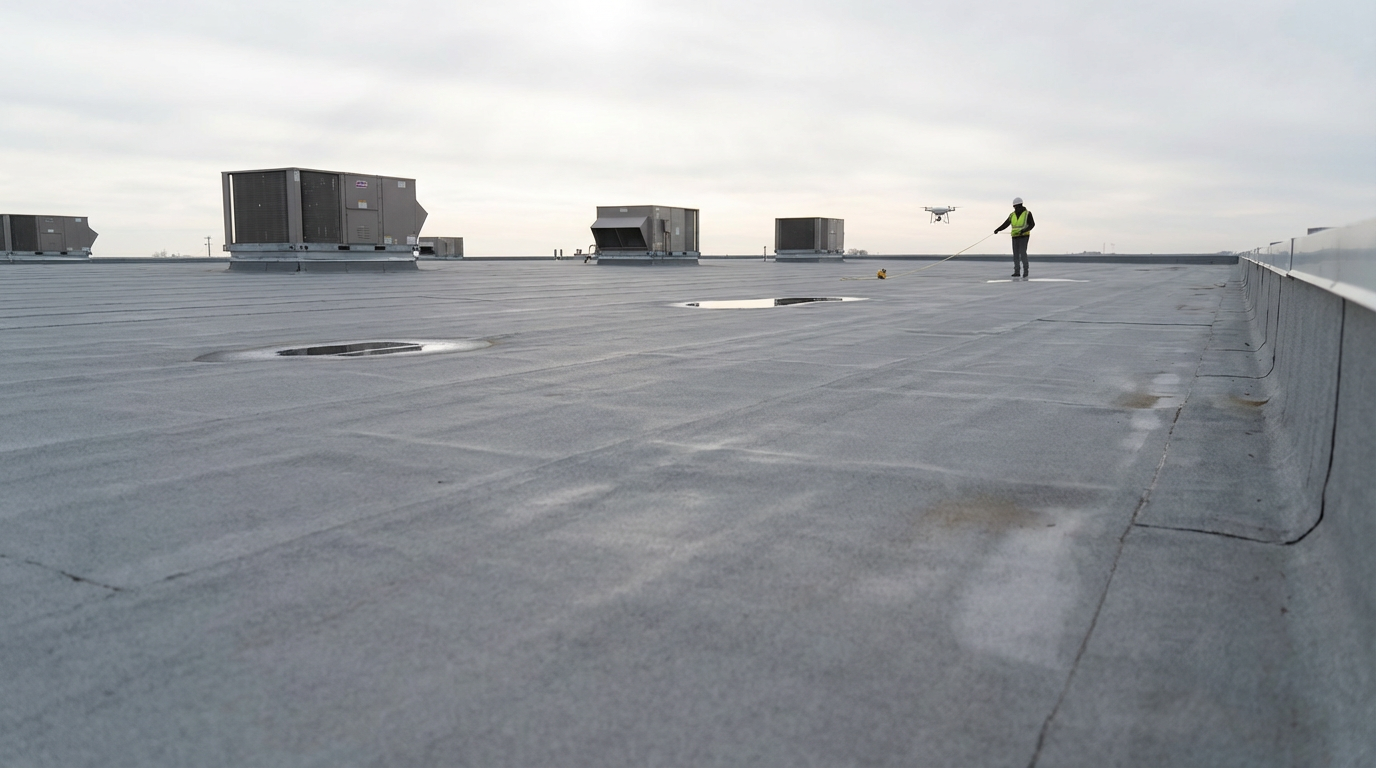
The right approach: When you discover a leak, document the location and timing, but also schedule a comprehensive roof inspection within 48 hours. A qualified commercial roofer in Elkhart Indiana should examine the entire roof system, not just the wet spot.
Warning signs you're stuck in patch-only thinking: You've had the same roof "repaired" more than twice in 18 months, or you're seeing leaks in multiple locations across your building.
Mistake #2: Ignoring Drainage When Planning Repairs
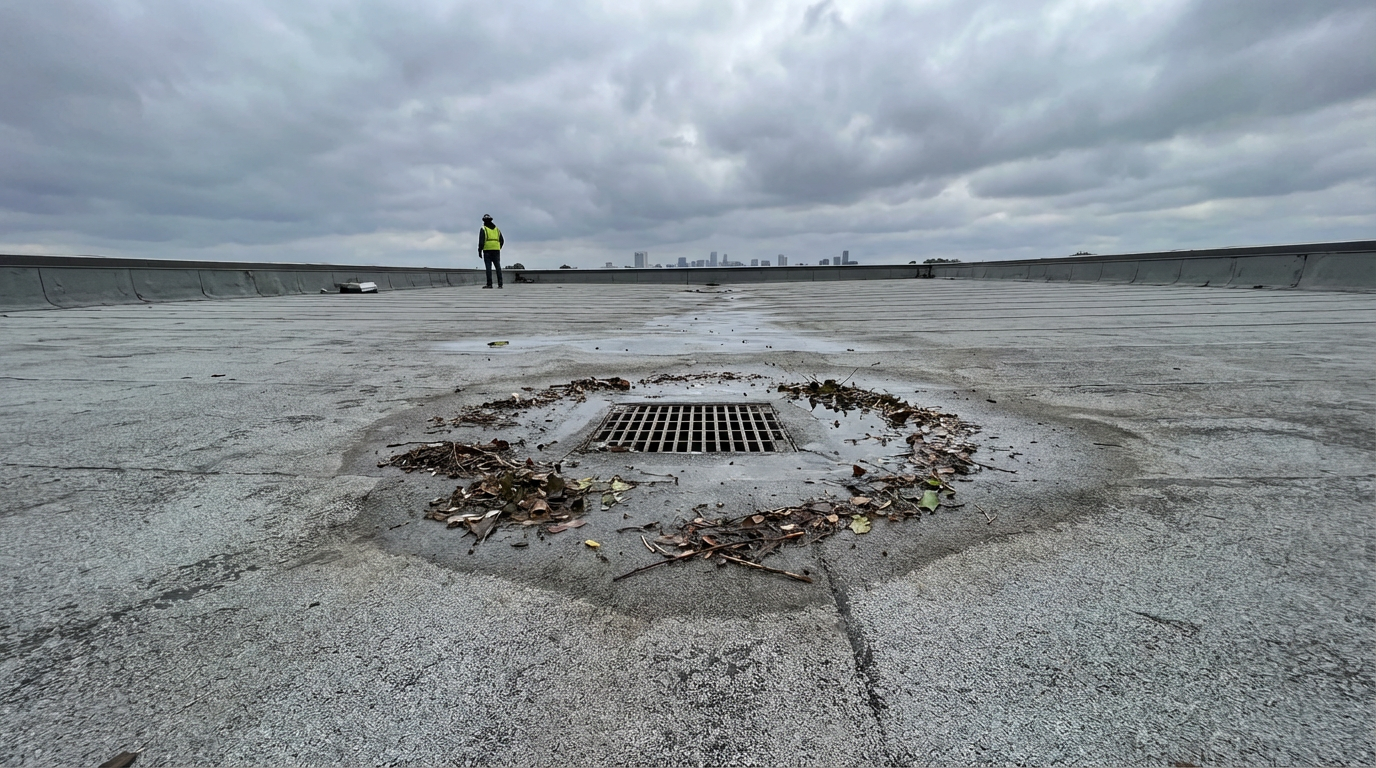
Most flat roof repair failures happen because water isn't moving off the roof properly. Yet contractors routinely patch membrane issues without addressing why water pooled there in the first place.
Standing water accelerates every type of roof deterioration. It finds microscopic holes in membranes, freezes and expands in winter, and creates the perfect environment for biological growth that further damages roofing materials.
Building owners often approve drainage-blind repairs because fixing ponding water sounds expensive and complicated. But ignoring drainage turns a $800 membrane patch into a $15,000 roof section replacement within two years.
The correct method: Every repair plan should start with a drainage assessment. If water pools anywhere on your flat roof for more than 48 hours after rain, that's a structural issue requiring slope correction, drain cleaning, or additional drainage points before any membrane work begins.
Red flag: Any contractor who quotes membrane repair without walking your entire roof and checking all drains is cutting corners that will cost you later.
Mistake #3: Mixing Incompatible Repair Materials
Not all roofing materials play well together. Applying the wrong sealant or membrane patch over your existing roof system can actually accelerate deterioration through chemical reactions or thermal expansion mismatches.
This mistake happens because many contractors stock universal repair products that work "good enough" on most roofs. But "good enough" means your repair might last 18 months instead of 8-10 years with the right materials.
For example, applying silicone sealants over EPDM rubber roofs can prevent future adhesion of proper EPDM patches. Using incompatible primers can cause membrane bubbling or premature separation.
Material compatibility rules: EPDM repairs require EPDM-compatible products. TPO systems need TPO-specific materials. Modified bitumen has its own requirements. Never let a contractor use "universal" products on your commercial roof without verifying chemical compatibility first.
Ask this question before any repair: "What specific roof membrane system do I have, and are these repair materials manufactured for that exact system?"
Mistake #4: Skipping Proper Surface Preparation
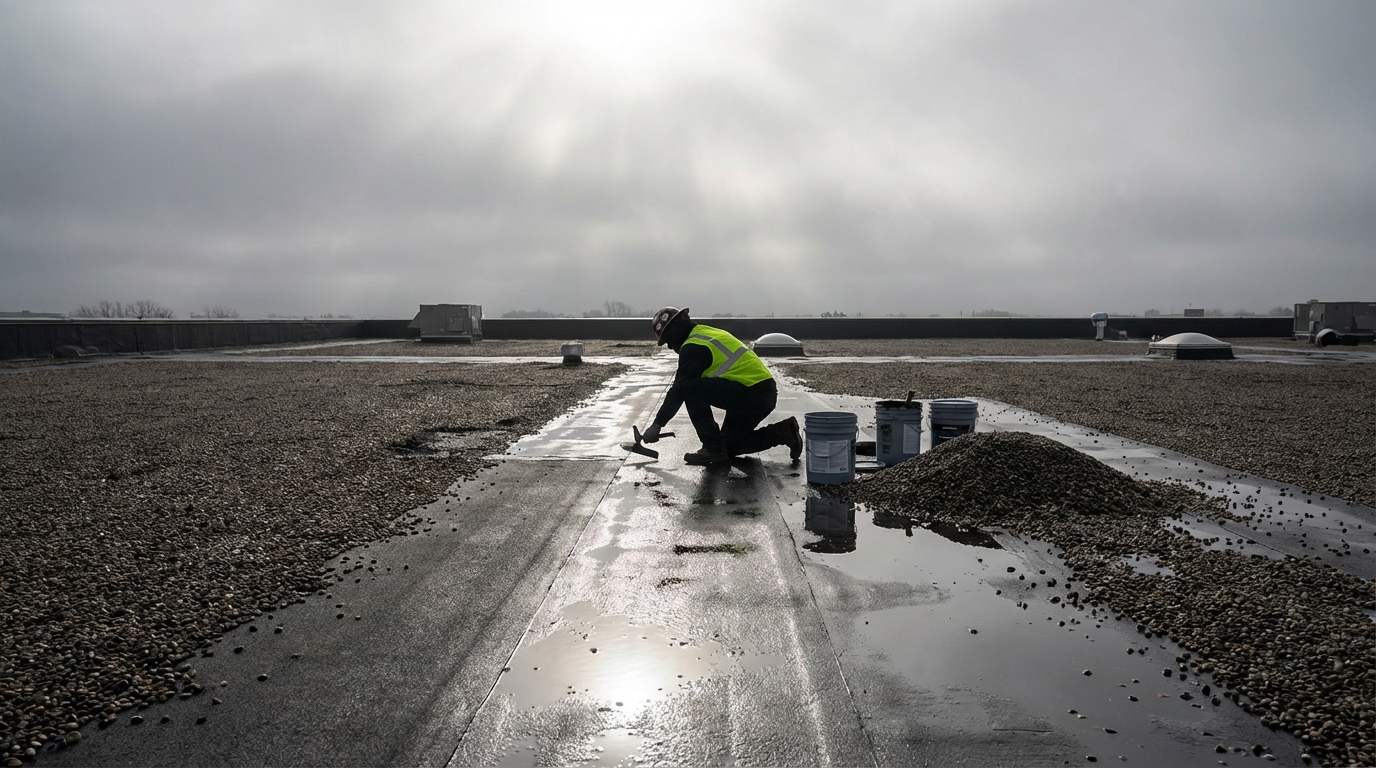
The most technically perfect repair materials will fail if they're applied over dirty, wet, or deteriorated surfaces. Yet time pressure and weather constraints push many contractors to skip proper surface prep.
Proper preparation means cleaning the repair area to remove all dirt, debris, and loose material. It means ensuring the surface is completely dry. For many membrane systems, it means applying specific primers or adhesion promoters.
Building owners often approve rushed surface prep because they want the leak stopped immediately, especially during business hours. But repairs applied over contaminated surfaces typically fail within 6-12 months, requiring complete re-work.
Surface prep standards: The repair area should be cleaned to bare membrane, allowed to dry completely (24-48 hours in humid conditions), and primed according to manufacturer specifications. Any contractor who wants to apply patches over wet or dirty surfaces is setting you up for failure.
Weather checkpoint: If it's raining, snowing, or below 40°F, most membrane repairs should wait. Emergency temporary measures can stop water intrusion, but permanent repairs require proper conditions.
Mistake #5: Choosing Contractors Based on Speed Instead of Expertise
When water is damaging your inventory or disrupting operations, the contractor who can start today looks like the obvious choice. But emergency flat roof repair requires more skill than routine maintenance, not less.
Emergency situations reveal whether a contractor truly understands flat roof systems or just knows how to apply patches. The wrong repair approach during an emergency often creates bigger problems that require extensive future work.
Fast contractors often lack proper insurance, use substandard materials, or skip steps that ensure long-term performance. The money you save on immediate response gets multiplied into much larger costs when their work fails.
Contractor selection criteria: Look for licensed, insured contractors with specific flat roof experience in your building type. Check recent references from similar commercial properties. Verify they carry appropriate insurance for commercial work.
Essential questions: How many years of flat roof experience? What's your warranty on emergency repairs? Can you provide references from commercial buildings similar to mine?
Mistake #6: Neglecting Preventive Maintenance Between Repairs
Most commercial flat roofs that require frequent repairs could have avoided 70% of those issues with basic preventive maintenance. Yet building owners often view maintenance as an unnecessary expense until problems become emergencies.
Preventive flat roof maintenance means regular drain cleaning, debris removal, membrane inspection, and minor issue correction before they become major problems. It's the difference between spending $500 twice a year versus $5,000 every emergency.
Building owners skip maintenance because the roof "looks fine" from ground level, and maintenance costs feel like money spent on nothing. But flat roofs deteriorate gradually, then suddenly. By the time problems are visible from inside your building, repair costs have typically multiplied 5-10 times.
Maintenance schedule that works: Professional inspection every six months, with additional checks after severe weather. Immediate attention to any standing water, vegetation growth, or membrane changes. Budget 2-3% of roof replacement cost annually for maintenance.
Cost comparison: Annual maintenance typically runs $0.50-$1.50 per square foot. Emergency repairs average $8-15 per square foot. Early replacement due to neglect costs $12-25 per square foot.
Mistake #7: Attempting DIY Repairs on Commercial Systems
Commercial flat roofs operate under different stresses, building codes, and performance requirements than residential systems. Yet some building owners attempt DIY repairs using residential-grade materials and techniques.
This mistake happens because flat roof repairs can look deceptively simple. Apply some sealant, stick on a patch, problem solved. But commercial roofs must handle foot traffic, equipment loads, thermal cycling, and weather extremes that quickly expose amateur repair work.
DIY repairs on commercial buildings also create liability issues. If your repair fails and causes property damage or business interruption, your insurance coverage may be compromised by non-professional work.
When to call professionals: Any leak affecting building operations, any repair larger than 2 square feet, any work involving drains or structural elements, and any repair where you're not 100% certain of the membrane type and compatible materials.
Professional advantage: Experienced commercial flat roof contractors carry warranties on their work, proper insurance coverage, and knowledge of local building codes that apply to your specific roof system.
Warning Signs You're Making These Mistakes
Watch for these indicators that your flat roof repair approach needs adjustment:
Repeat leaks: Same area requiring attention more than once per year
Multiple leak points: New leaks appearing in different locations every few months
Patch visibility: Your roof looks like a patchwork quilt from previous repairs
Seasonal patterns: Leaks that consistently appear after heavy rain or snow melt
Interior damage: Water stains, mold growth, or structural damage inside your building
Repair frequency: Calling for roof work more than twice per year
The Right Way: Systematic Flat Roof Repair
Professional flat roof repair follows a systematic approach that addresses root causes, not just symptoms:
Step 1: Comprehensive assessment - Document all visible issues, test membrane integrity, evaluate drainage patterns, and identify underlying structural concerns.
Step 2: Prioritized repair plan - Address drainage issues first, then membrane repairs in order of severity and cost-effectiveness.
Step 3: Material specification - Use only manufacturer-approved materials compatible with your existing roof system.
Step 4: Professional installation - Proper surface preparation, weather-appropriate timing, and warranty-backed workmanship.
Step 5: Documentation and maintenance planning - Record all work performed and establish preventive maintenance schedule.
Frequently Asked Questions
Can I temporarily stop a flat roof leak myself while waiting for professional repair?
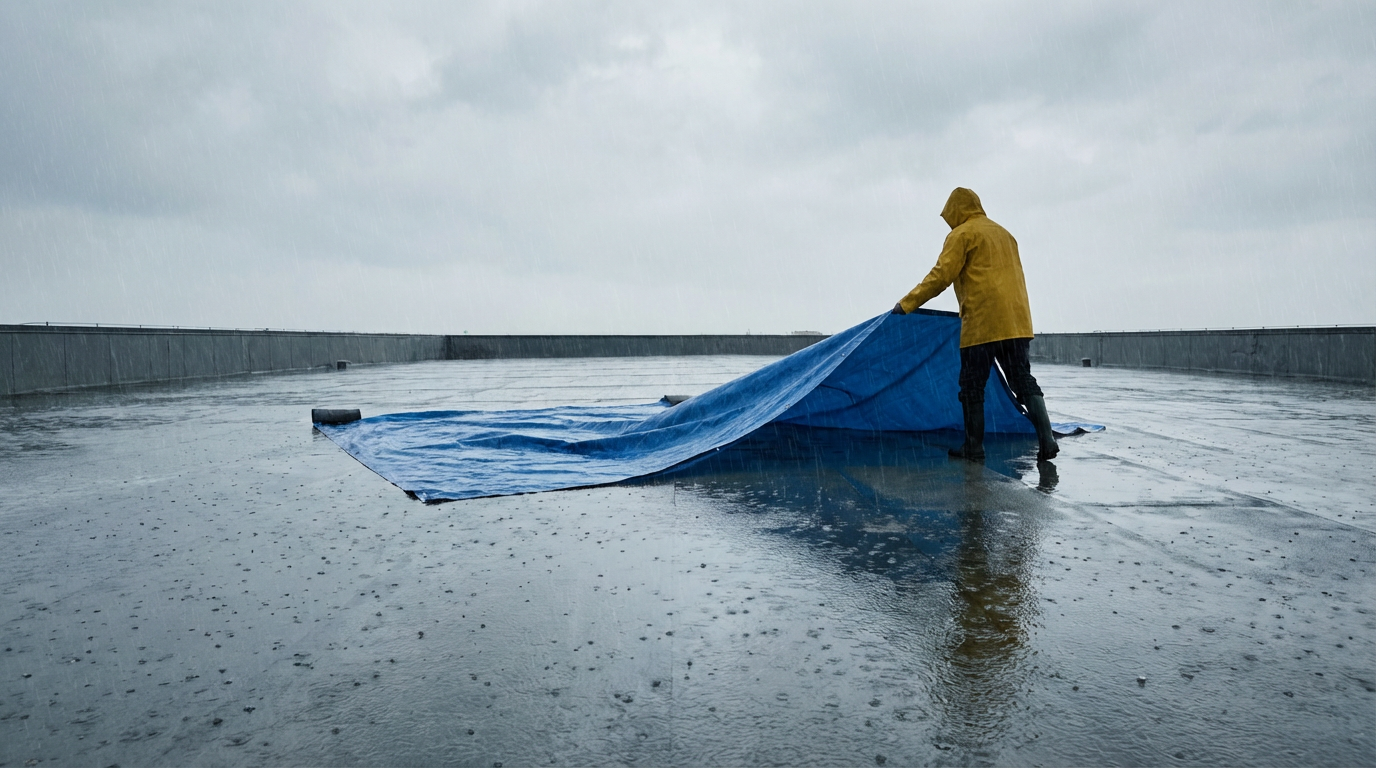
Yes, but limit temporary measures to tarping or plastic sheeting secured with sandbags. Avoid applying any sealants or patches that might interfere with proper repairs. Document the leak location and contact professionals within 24-48 hours.
How do I know if my flat roof needs repair or complete replacement?
Generally, if repair costs exceed 30% of replacement cost, or if you're experiencing multiple leaks across different roof sections, replacement becomes more cost-effective. A professional assessment can determine the remaining useful life of your roof system.
What's the difference between emergency repairs and permanent solutions?
Emergency repairs stop immediate water intrusion but may not address underlying causes. Permanent solutions include proper drainage correction, compatible materials, and comprehensive surface preparation. Emergency measures should always be followed by permanent repairs within 30-60 days.
How long should flat roof repairs last?
Properly executed repairs using compatible materials should last 8-12 years on EPDM systems, 10-15 years on TPO, and 15-20 years on modified bitumen. Repairs lasting less than 5 years typically indicate improper materials or installation methods.
Does my insurance cover flat roof repairs?
Insurance typically covers sudden damage from storms, but excludes gradual deterioration or maintenance issues. Document any storm damage immediately and work with experienced contractors who understand insurance requirements for commercial properties.
When is the best time of year for flat roof repairs?
Late spring through early fall provides optimal conditions for most membrane repairs. However, emergency repairs can be performed year-round with proper techniques. Plan major repairs during dry periods with temperatures above 45°F for best results.
Your Next Step: Stop the Cycle
The seven mistakes above create a expensive cycle: emergency patches lead to more leaks, which require more patches, until you're spending replacement money on repairs that don't last.
Breaking this cycle starts with one decision: treating your next repair as part of a comprehensive roof management strategy, not just a quick fix.
If you're dealing with recurring leaks, multiple problem areas, or repairs that don't seem to last, it's time for a systematic approach. Professional assessment can identify whether your roof needs targeted repairs or if you're approaching replacement territory.
Don't let another emergency patch turn into next year's major repair project. Your building deserves a roof system that protects your operations reliably, year after year.