Estimated Reading Time: 9 minutes
The best flat roof maintenance strategy for commercial buildings is a scheduled twice-yearly inspection and maintenance program combined with immediate response to minor issues. This approach extends roof life by 40-60% compared to reactive maintenance alone, saving building owners thousands in premature replacement costs.
Most commercial property managers wait until they see water stains on the ceiling or puddles forming after rain. By then, you're looking at emergency repairs that cost 3-5 times more than preventive maintenance. The smart approach? Treat your flat roof like you treat your HVAC system – with regular, scheduled care that catches problems before they become disasters.
Why Preventive Maintenance Beats Reactive Repairs
Your flat roof faces unique challenges that sloped roofs don't. Water sits longer. UV exposure is constant across the entire surface. Thermal expansion and contraction stress every seam and penetration daily. Without proper drainage, even minor issues compound quickly.
Here's what happens when you skip maintenance: A small membrane crack allows water penetration. That water freezes and expands in winter, making the crack larger. More water enters, reaching insulation and decking. Within one season, you've gone from a $200 repair to a $15,000 roof section replacement.
Preventive maintenance flips this equation. Regular inspections catch membrane wear, drainage issues, and flashing problems while they're still minor. The result? Roofs that last 25-30 years instead of 15-20, with fewer emergency calls and lower total ownership costs.
The Essential Flat Roof Maintenance Schedule
Spring Inspection (March-April): Check for winter damage. Look for membrane splits from freeze-thaw cycles, displaced flashing, and debris accumulation. Clean drains and gutters thoroughly. This timing lets you address issues before summer heat makes membrane repairs more difficult.
Fall Inspection (September-October): Prepare for winter. Ensure drainage systems are clear of leaves and debris. Check all penetrations and seams. Apply any needed coatings before cold weather sets in. This is your last chance to prevent winter water infiltration.
After Major Weather Events: Inspect within 48 hours of storms with high winds, hail, or heavy rain. Document any damage immediately for insurance purposes. Address emergency repairs quickly to prevent secondary damage.
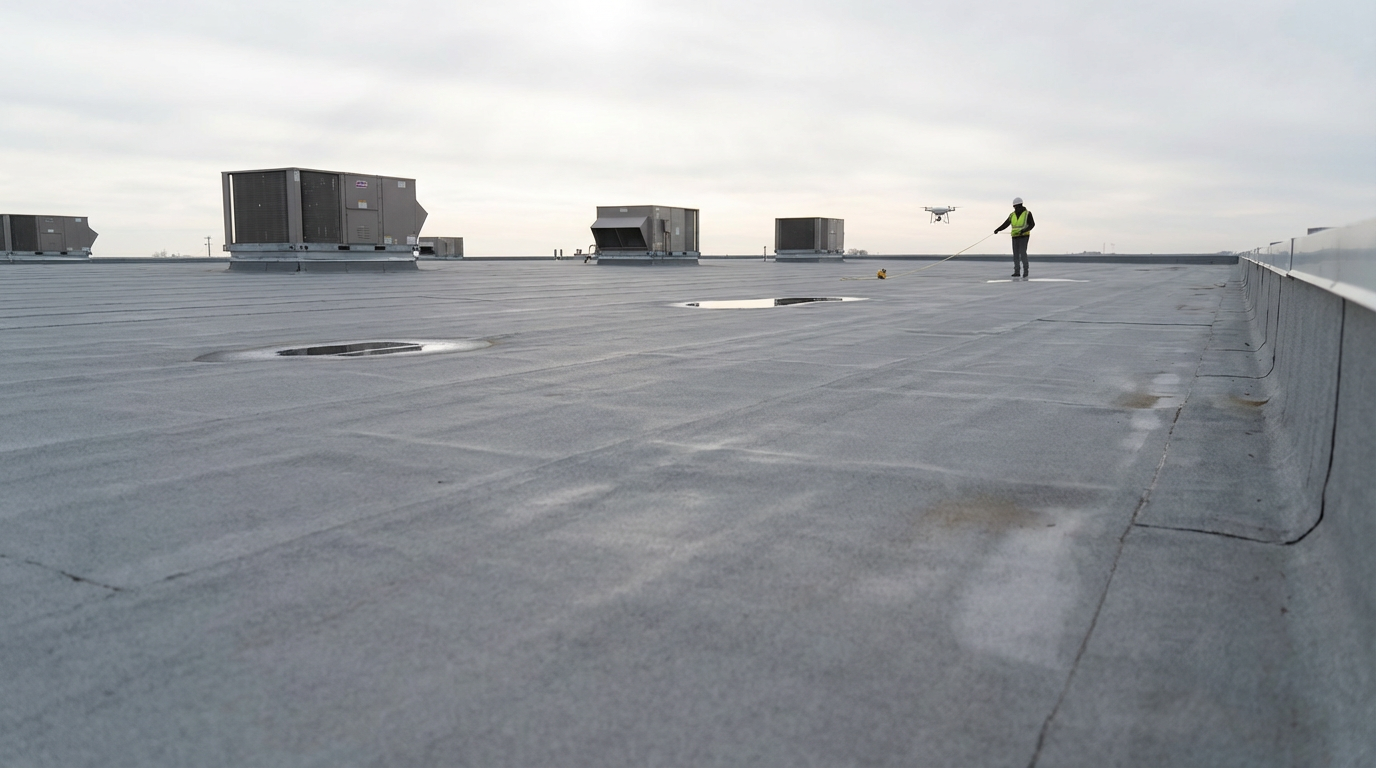
Between scheduled inspections, walk your roof monthly if safely accessible. Look for obvious issues like standing water, loose materials, or visible damage. This takes 15 minutes but can save thousands in emergency repairs.
What Every Inspection Should Include
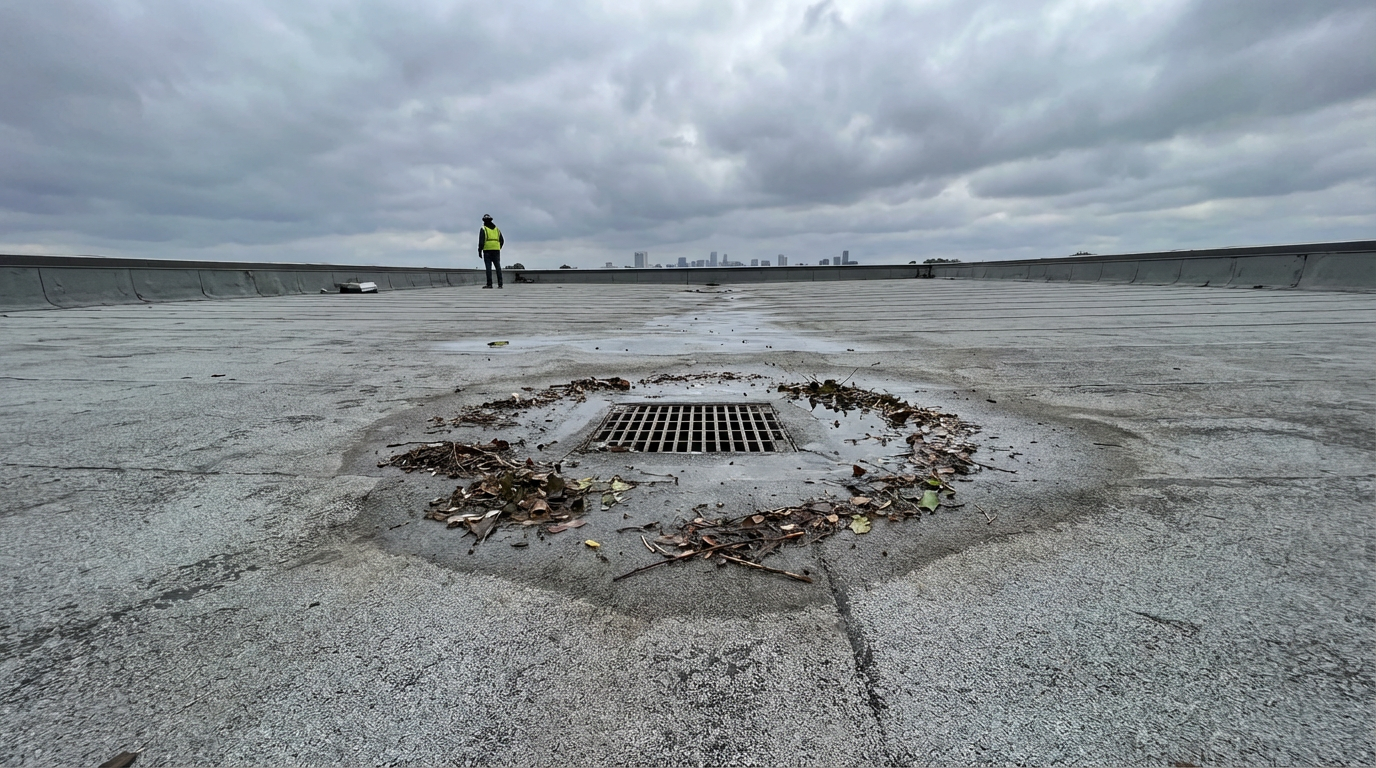
Start with drainage. Standing water is flat roofing's biggest enemy. Check all drains, scuppers, and gutters for blockages. Water should drain within 48 hours of rainfall – if it doesn't, you have a problem that needs immediate attention.
Examine the membrane surface for cracks, blisters, or punctures. Pay special attention to high-traffic areas, equipment mounting points, and anywhere different materials meet. Small issues here become big problems quickly.
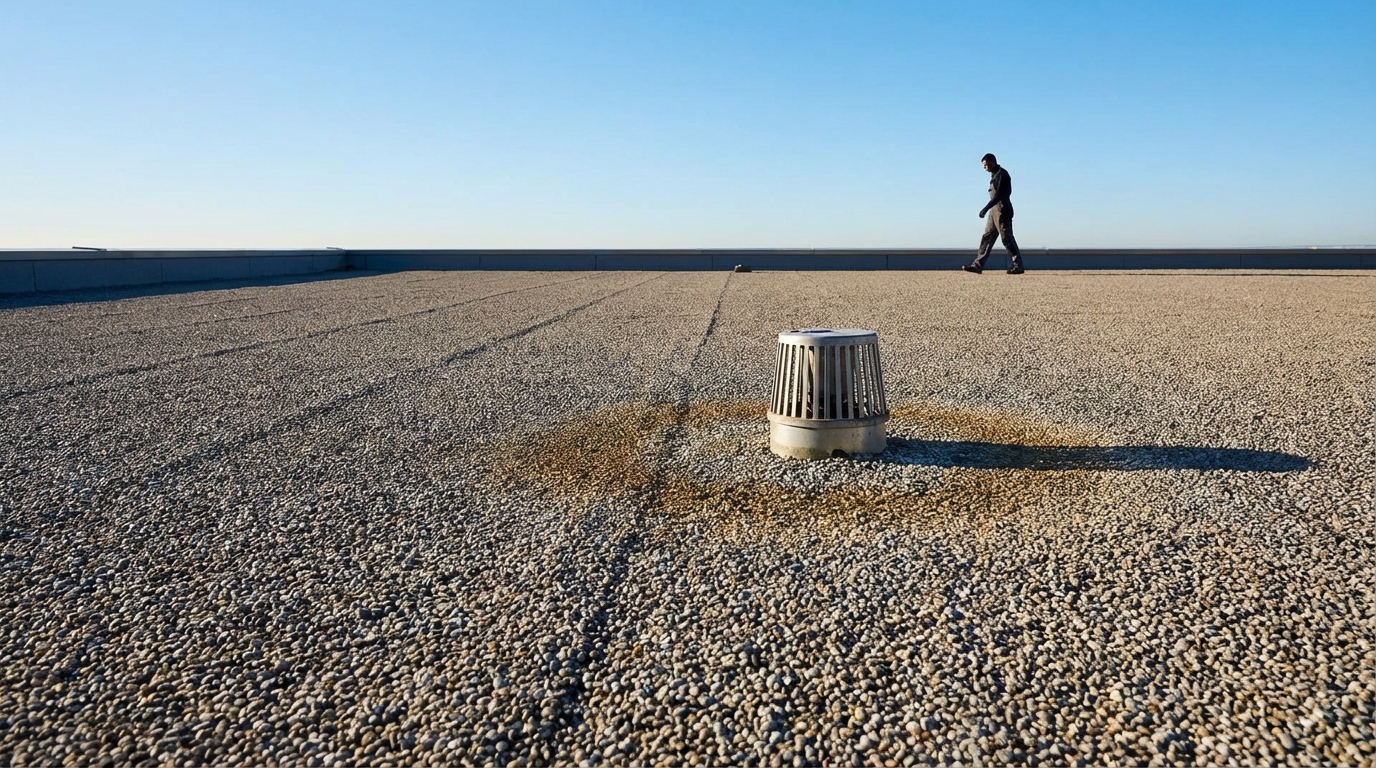
Inspect all penetrations – vents, HVAC units, pipes, and electrical conduits. The flashing around these areas should be intact and properly sealed. Most flat roof leaks start at penetrations, not in the field of the membrane.
Check the roof perimeter. Edge flashing and parapet walls take heavy weather exposure. Look for loose materials, open seams, or deteriorated sealants. These areas often show the first signs of system-wide aging.
Critical Maintenance Tasks That Extend Roof Life
Drain and Gutter Cleaning: Clean drains quarterly, not just twice yearly. A single blocked drain can cause ponding that leads to membrane failure. Remove all debris, check for proper slope, and ensure downspouts discharge away from the building foundation.
Membrane Cleaning: Power wash your roof annually to remove dirt, algae, and debris that can degrade membrane materials. Use appropriate cleaners for your specific membrane type – EPDM, TPO, and PVC each require different approaches.
Sealant Maintenance: Re-seal penetrations and joints every 3-5 years, depending on material quality and weather exposure. Don't wait for visible failure – proactive resealing costs a fraction of water damage repairs.
Equipment Maintenance: HVAC units, exhaust fans, and other rooftop equipment should be serviced regularly. Vibration loosens mounting hardware, and condensation from poorly maintained units can damage membrane materials.
The Right Materials for Maintenance
Use membrane-compatible materials only. Applying the wrong sealant or coating can void warranties and cause premature failure. EPDM requires different products than TPO or modified bitumen systems.
Quality matters more than cost for maintenance materials. A premium sealant that lasts 7 years costs less per year than a cheap product that fails in 2 years. Factor in labor costs, and the quality option becomes even more economical.
Why DIY Maintenance Often Fails
Many building owners attempt their own flat roof maintenance to save money. This approach usually costs more in the long run. Here's why professional maintenance delivers better results:
Safety concerns: Flat roofs can be deceptively dangerous. Wet membranes are slippery, and not all areas can support foot traffic safely. Professional roofers have proper safety equipment and training.
Material knowledge: Using incompatible materials can cause immediate failure or void warranties. Professional contractors know which products work with your specific roof system.
Problem recognition: Experienced roofers spot early warning signs that untrained eyes miss. They can differentiate between normal wear and developing problems that need attention.
Warranty protection: Many roof warranties require professional maintenance to remain valid. DIY repairs often void these protections.
When to Call Professionals Immediately
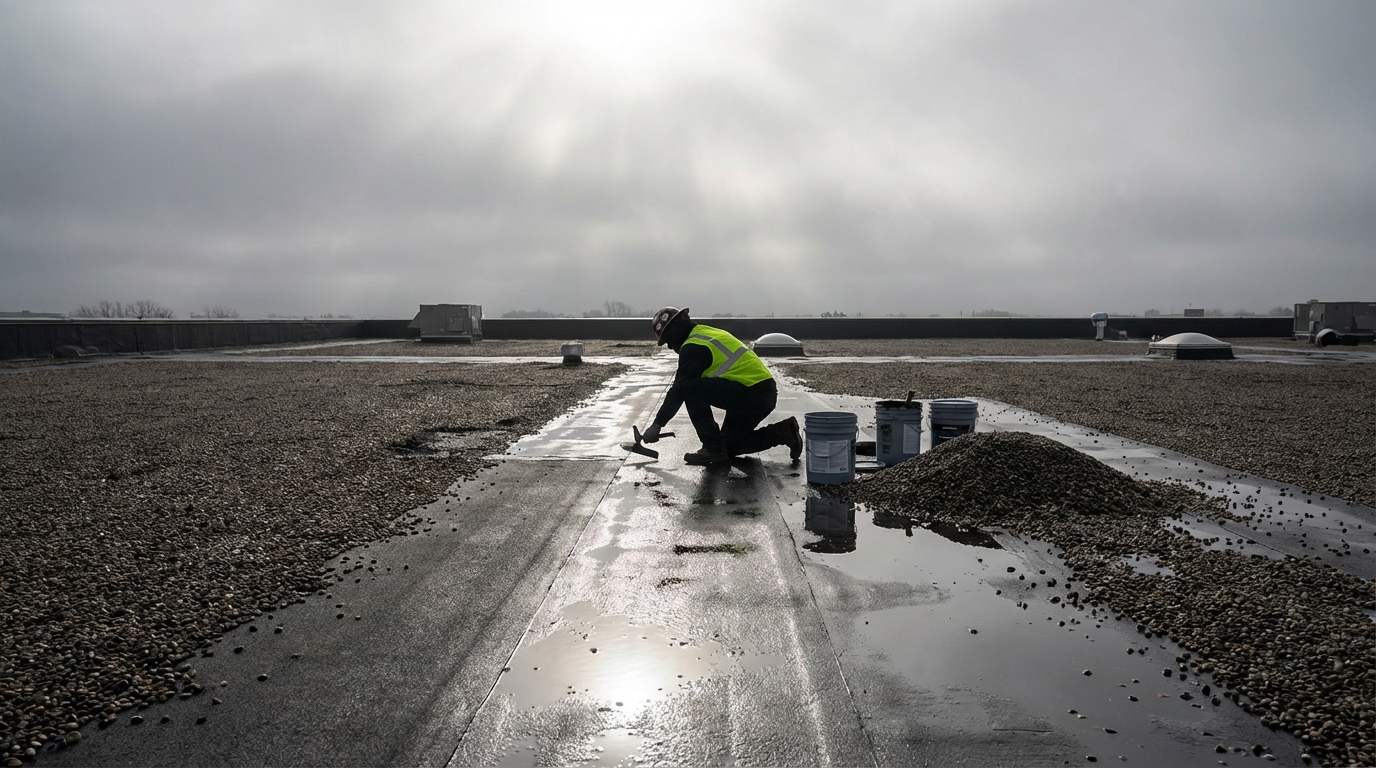
Some issues require immediate professional attention. Don't attempt DIY repairs for active leaks, large membrane tears, or structural concerns. These situations need expert assessment and proper materials to prevent making problems worse.
If you discover extensive damage during inspection, stop and call for professional evaluation. What looks like surface damage might indicate deeper structural issues that require engineering assessment.
Maintenance Costs vs. Replacement Costs
Professional flat roof maintenance typically costs $0.15-$0.30 per square foot annually. For a 10,000 square foot roof, expect $1,500-$3,000 per year in maintenance costs.
Compare this to replacement costs of $8-$15 per square foot. That same 10,000 square foot roof costs $80,000-$150,000 to replace. Proper maintenance that extends roof life from 20 to 30 years saves $26,000-$50,000 in present value terms.
Emergency repairs cost 3-5 times more than scheduled maintenance. A $500 preventive repair becomes a $2,500 emergency call when you wait for failure. Factor in business interruption from water damage, and the true cost multiplies further.
Budgeting for Flat Roof Maintenance
Set aside 1-2% of roof replacement cost annually for maintenance. This covers routine care plus minor repairs. For major maintenance like coating renewal, budget an additional 10-15% of replacement cost every 10-15 years.
Many commercial property managers underfund roof maintenance, then face large unexpected expenses. Consistent annual budgeting spreads costs evenly and prevents maintenance deferrals that lead to premature replacement.
Special Considerations for Industrial Roofing Services in Michiana
Michiana's climate presents unique challenges for flat roof maintenance. Freeze-thaw cycles stress membrane materials and flashing details. Ice dams can form at drains and gutters, causing backup and potential interior damage.
Spring maintenance becomes critical after harsh winters. Check for ice damage to membrane seams and flashing details. Clear any debris that accumulated under snow cover. Address drainage issues before spring rains test your roof's water management systems.
Summer heat in Northern Indiana can make membrane materials more pliable and vulnerable to damage. Schedule major maintenance work for moderate weather when possible. Avoid heavy foot traffic on hot days when membrane surfaces are soft.
Fall preparation should include gutter and drain cleaning before leaf drop. Install drain covers if trees overhang your roof. Check that all penetrations are properly sealed before winter moisture arrives.
Frequently Asked Questions
How often should I inspect my flat roof?
Inspect your flat roof twice yearly – spring and fall – plus after major weather events. Monthly visual checks from ground level help catch obvious problems early. Professional inspections should occur annually for roofs over 10 years old.
Can I walk on my flat roof for maintenance?
Most commercial flat roofs can support foot traffic, but check manufacturer guidelines first. Walk only on designated walkway pads when possible. Avoid walking on wet membranes or during extreme temperatures when materials may be more vulnerable to damage.
What's the biggest maintenance mistake building owners make?
Ignoring minor issues until they become major problems. A small membrane crack or loose flashing seems insignificant but can cause thousands in damage if water penetration occurs. Address problems immediately when discovered during inspections.
How do I know if my roof needs professional attention?
Call professionals for active leaks, large tears or punctures, extensive membrane damage, or structural concerns. Also seek professional help if you're unsure about problem severity or proper repair methods. Emergency flat roof repair costs less than water damage restoration.
Should I coat my flat roof as part of maintenance?
Roof coatings can extend membrane life when applied correctly to suitable surfaces. However, coatings aren't appropriate for all roof types or conditions. Have a commercial roofer in Elkhart Indiana evaluate whether coating makes sense for your specific roof system and condition.
What warranty coverage do I lose with poor maintenance?
Most manufacturers void warranties for lack of proper maintenance, use of incompatible materials, or unauthorized repairs. Keep detailed maintenance records and use only approved contractors and materials to preserve warranty protection throughout your roof's life.
Your Next Step: Professional Assessment
The best flat roof maintenance program starts with understanding your current roof condition and developing a customized care plan. Every roof system has unique requirements based on age, materials, building use, and environmental factors.
Don't wait for problems to develop. A professional roof assessment identifies maintenance priorities and helps you budget for upcoming needs. With over 40 years of experience in commercial flat roof repair and maintenance, Tru-Kote understands what Michiana buildings need to maximize roof performance and minimize unexpected costs.
Your roof protects your most valuable business assets. Treat it with the professional care it deserves, and it will serve you reliably for decades.