Estimated Reading Time: 9 minutes
The FAIR Method is the only systematic approach you need to protect your commercial flat roof investment. It stands for Find, Assess, Implement, Review – and when followed consistently, it prevents 90% of catastrophic roof failures while extending your roof's lifespan by 5-10 years. Most facility managers in Northern Indiana who implement this framework save $15,000-$50,000 in emergency repairs within the first two years.
Your flat roof is protecting millions of dollars in inventory, equipment, and operations. Yet most commercial building owners treat it like an afterthought until water starts dripping on their warehouse floor. That's backwards thinking that costs you money.
The FAIR Method changes this by giving you a repeatable system that catches problems early, prioritizes repairs correctly, and keeps your roof performing for decades. Here's exactly how it works.
Why Commercial Flat Roofs Fail (And Why Most "Maintenance" Doesn't Work)
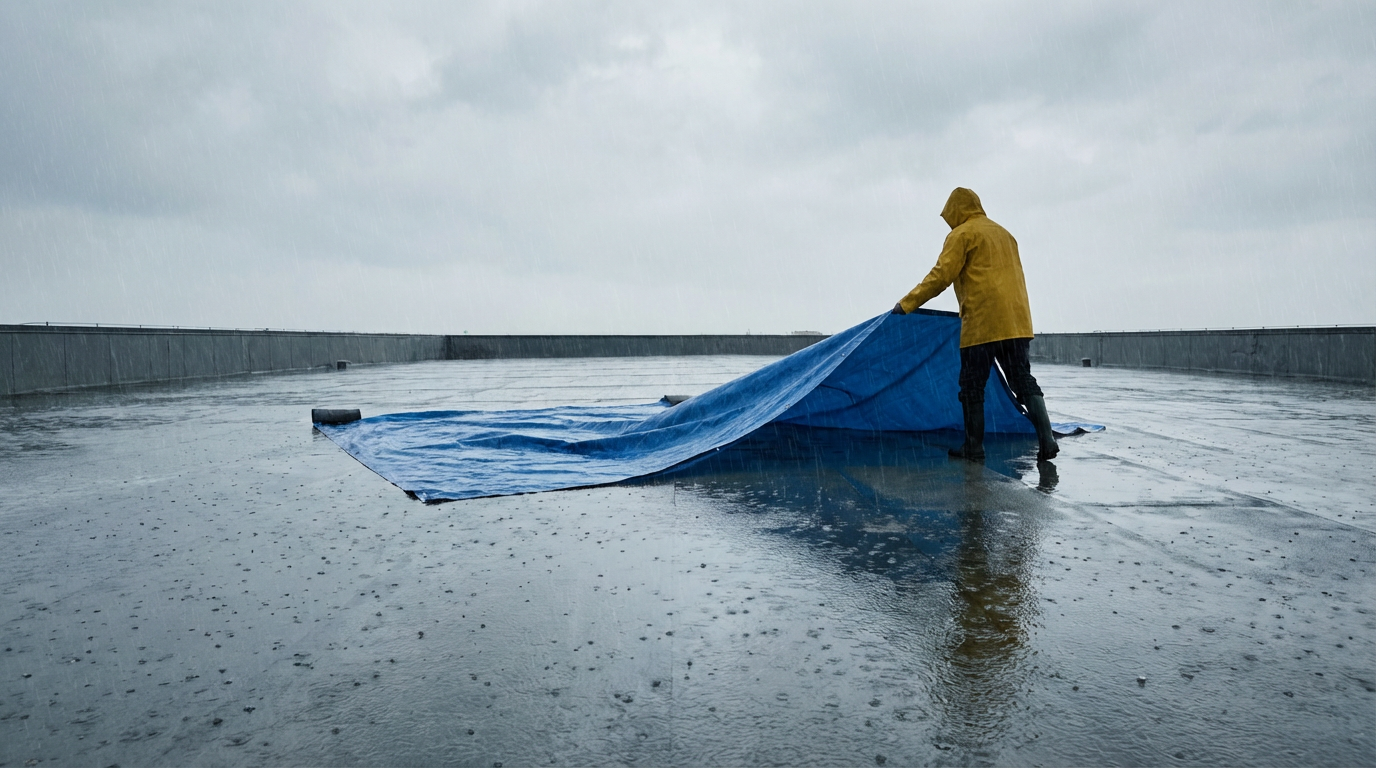
Walk through any industrial complex in Elkhart or South Bend, and you'll see the same pattern: flat roofs patched with layers of different materials, emergency tarps covering leaks, and facility managers scrambling to find buckets when it rains.
The problem isn't that flat roofs are inherently unreliable. Modern TPO, EPDM, and PVC membranes can last 20-30 years when properly maintained. The problem is that most "maintenance" consists of reactive patching instead of proactive prevention.
Traditional roof maintenance fails because it's random. A contractor walks your roof once a year, points out obvious problems, and gives you a repair quote. By then, small issues have become expensive emergencies.
The FAIR Method flips this approach. Instead of waiting for problems, you systematically find them early when they're cheap to fix.
The FAIR Method: Your 4-Step Framework for Flat Roof Success
Step 1: Find (Systematic Detection)
Most commercial flat roof inspections miss 60% of developing problems because they focus on obvious damage instead of systematic detection. The "Find" phase uses a methodical approach that catches issues before they become leaks.
What to inspect every quarter:
Membrane surface – Look for punctures, splits, or loose seams (especially after storms)
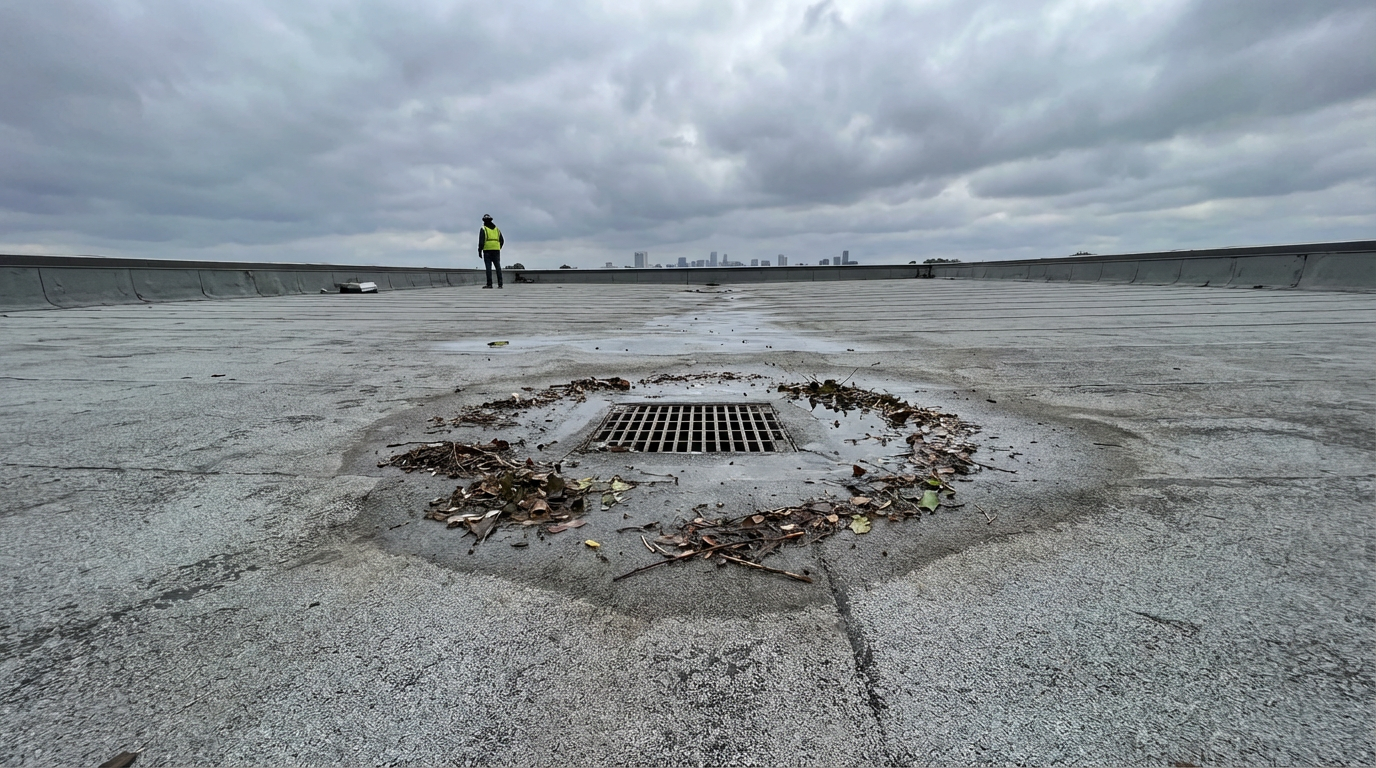
Drainage systems – Clear debris from drains, scuppers, and gutters
Flashing areas – Check where the roof meets walls, HVAC units, and penetrations
Ponding water – Mark areas where water sits longer than 48 hours after rain
Interior signs – Scan for water stains, musty odors, or temperature inconsistencies
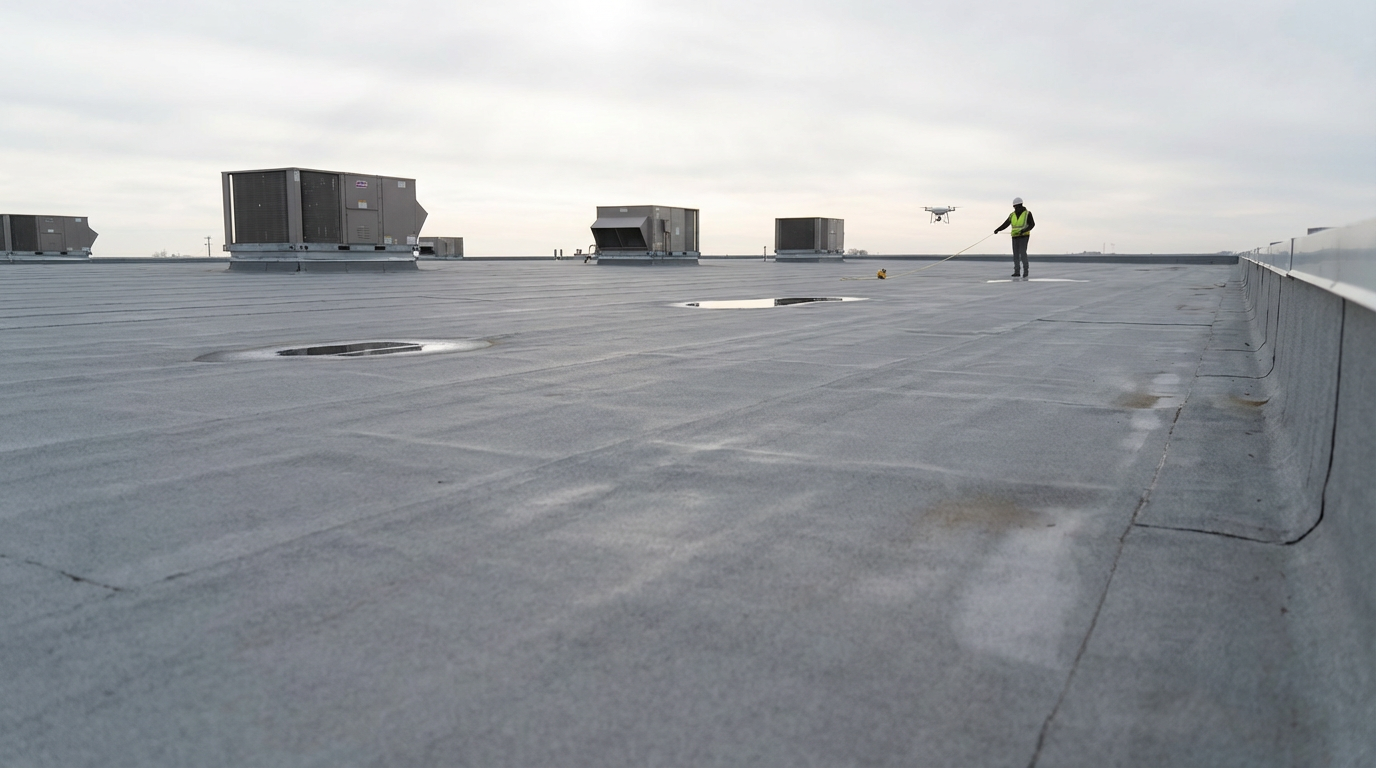
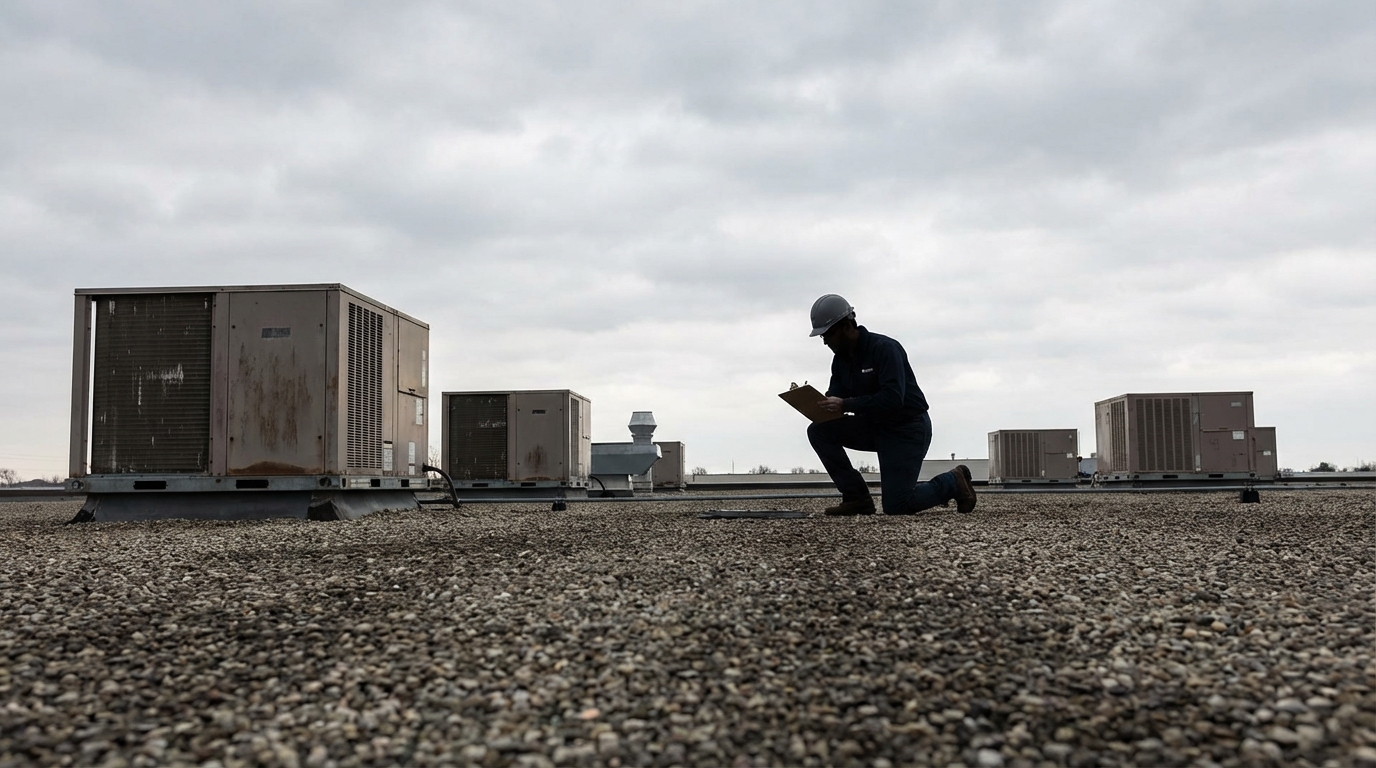
The 15-minute walkthrough: Start at one corner and walk a grid pattern across your entire roof. Take photos of anything questionable. Most facility managers can complete this monthly check in under 15 minutes for buildings up to 50,000 square feet.
Common mistake: Only inspecting after storms. Weather damage is obvious – it's the slow deterioration that costs you money. Membrane shrinkage, fastener backup, and flashing separation happen gradually and need regular monitoring.
Step 2: Assess (Priority-Based Evaluation)
Finding problems is worthless if you don't know which ones need immediate attention and which can wait. The "Assess" phase ranks issues by urgency and cost impact.
Priority 1 (Fix within 48 hours):
Active leaks or membrane breaches
Blocked drainage causing ponding
Loose flashing that could blow off
Safety hazards like unstable equipment
Priority 2 (Schedule within 30 days):
Membrane bubbling or loose seams
Minor flashing separation
Clogged secondary drains
Worn walkway pads
Priority 3 (Address next budget cycle):
General membrane aging
Cosmetic issues with no structural impact
Efficiency improvements like reflective coatings
Preventive upgrades to extend roof life
The cost calculation: A small membrane repair costs $200-$500. The same problem, left untreated, becomes a $5,000-$15,000 emergency repair plus potential interior damage. Always factor in business interruption costs – a warehouse leak doesn't just damage inventory, it stops operations.
Common mistake: Treating all problems as equally urgent. This leads to either expensive emergency repairs or delayed maintenance that makes small problems worse. Use the priority system to allocate your budget effectively.
Step 3: Implement (Strategic Repair and Replacement)
The "Implement" phase is where most facility managers make expensive mistakes. They either over-repair (replacing sections that could be fixed) or under-repair (patching problems that need systematic solutions).
Repair vs. Replace decision matrix:
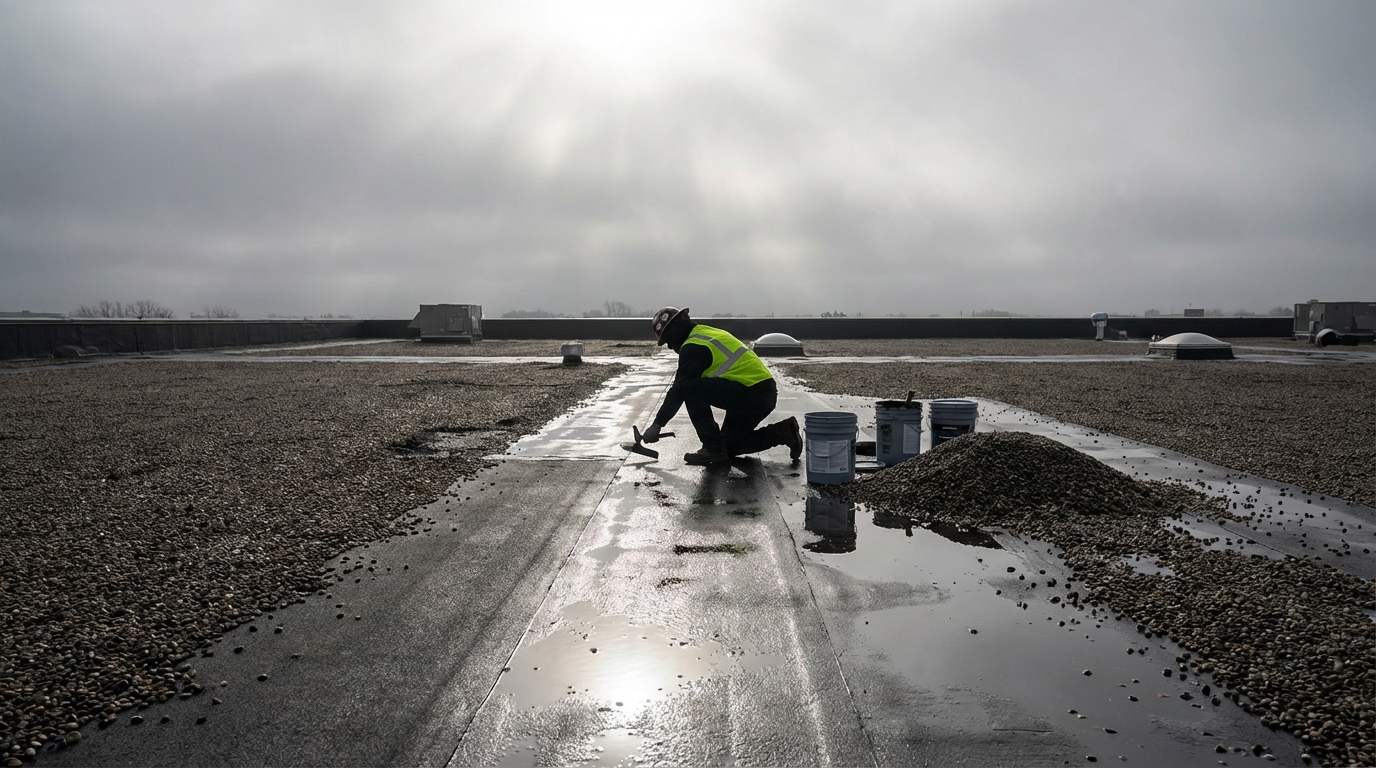
Repair when: Damage covers less than 25% of roof area, membrane is under 15 years old, and structure is sound. Focus on membrane patches, flashing repairs, and drainage improvements. Typical cost: $2-$8 per square foot.
Replace when: Multiple leak points across the roof, membrane over 20 years old, or recurring problems in the same areas. Full replacement gives you 20-30 years of protection with modern materials. Typical cost: $8-$15 per square foot for commercial flat roof replacement.
The material choice framework:
TPO – Best for energy efficiency and moderate budgets (warehouses, retail)
EPDM – Proven durability for low-slope applications (manufacturing, storage)
PVC – Chemical resistance for industrial applications (food processing, chemical storage)
Modified bitumen – Heavy traffic areas needing puncture resistance
Implementation timing: Schedule major work during your slowest operational periods. Most industrial roofing services in Michiana can complete replacement projects in sections to minimize business disruption.
Common mistake: Choosing contractors based solely on price. Low-bid contractors often use inferior materials or shortcuts that void warranties. Verify licensing, insurance, and manufacturer certifications before signing contracts.
Step 4: Review (Performance Tracking)
The "Review" phase ensures your investment is performing as expected and identifies patterns that inform future decisions.
Monthly tracking metrics:
Leak incidents – Document location, cause, and repair cost
Energy performance – Monitor heating/cooling costs for efficiency changes
Maintenance costs – Track spending to identify problem areas
Warranty claims – Ensure repairs are covered and properly documented
Annual review questions:
Are we spending more on repairs than planned?
Which roof sections need attention most frequently?
Is our current contractor meeting response time commitments?
Should we budget for replacement in the next 2-3 years?
The documentation system: Keep photos, repair invoices, and inspection reports in one digital folder. This history becomes invaluable when filing insurance claims or planning capital improvements.
Common mistake: Treating roof maintenance as a one-time expense instead of an ongoing investment. Buildings that follow the FAIR Method consistently spend 40% less on roof-related costs over 10 years compared to reactive maintenance approaches.
How to Measure FAIR Method Success
You'll know the FAIR Method is working when you see these measurable improvements:
Year 1 results:
50% reduction in emergency repair calls
No surprise leaks during heavy rain events
Predictable maintenance budget (no emergency overruns)
Improved indoor air quality and temperature control
3-year results:
Extended roof lifespan by 5-10 years
Lower insurance premiums due to proactive maintenance
Reduced energy costs from improved roof performance
Higher building value from documented maintenance history
The ROI calculation: A 50,000 square foot warehouse roof replacement costs approximately $400,000-$600,000. The FAIR Method typically extends roof life by 7 years, saving $57,000-$86,000 annually in avoided replacement costs. Add emergency repair savings and energy improvements, and most facilities see 300-500% ROI on their maintenance investment.
Common FAIR Method Implementation Mistakes (And How to Avoid Them)
Mistake #1: Skipping the systematic inspection
Walking your roof "when you think about it" isn't systematic detection. Set quarterly calendar reminders and stick to the schedule. Weather doesn't wait for convenient timing.
Mistake #2: DIY repairs on critical systems
Facility managers can handle basic maintenance like clearing drains, but membrane repairs and flashing work require professional expertise. Improper repairs often void warranties and create bigger problems.
Mistake #3: Ignoring manufacturer requirements
Every roofing material has specific maintenance requirements for warranty coverage. Follow these exactly – warranty claims can save thousands on premature failures.
Mistake #4: Choosing the wrong contractor relationship
Emergency-only relationships cost more than ongoing maintenance partnerships. Establish relationships with certified commercial flat roof contractors before you need emergency repairs.
Mistake #5: Focusing only on the roof membrane
Drainage, insulation, and structural deck all affect roof performance. Address the entire roof system, not just the visible membrane.
Your First 30 Days: FAIR Method Quick Start
Week 1: Complete your first systematic inspection using the checklist above. Take photos and document everything, even minor issues.
Week 2: Prioritize findings using the three-tier system. Get quotes for Priority 1 items and schedule repairs immediately.
Week 3: Research certified commercial roofer in Elkhart Indiana for ongoing partnership. Verify licensing, insurance, and manufacturer certifications.
Week 4: Set up your documentation system and schedule quarterly inspections on your calendar. Create a simple spreadsheet to track costs and issues.
The FAIR Method works because it's systematic rather than reactive. Instead of waiting for expensive emergencies, you're investing in predictable maintenance that protects your building and budget.
Frequently Asked Questions
How often should commercial flat roofs be professionally inspected?
Professional inspections should occur twice yearly – spring and fall – with quarterly self-inspections between professional visits. This schedule catches seasonal damage early while maintaining warranty requirements for most commercial roofing materials.
What's the difference between emergency flat roof repair and planned maintenance?
Emergency repairs cost 3-5 times more than planned maintenance and often require temporary solutions that need follow-up work. Planned maintenance addresses issues during optimal weather and scheduling, using permanent materials and methods.
Can I implement the FAIR Method with multiple buildings?
Yes, the FAIR Method scales effectively across multiple properties. Create a master tracking spreadsheet with separate tabs for each building, and stagger inspection schedules to spread workload throughout the year.
How do I know if my flat roof needs replacement or just repairs?
Replace if you have multiple leak points across 25% or more of the roof area, recurring problems in the same locations, or a roof over 20 years old. Single-point failures or isolated damage typically indicate repair needs.
What should I expect to pay for commercial flat roof maintenance?
Budget $0.50-$1.50 per square foot annually for preventive maintenance on commercial flat roofs. This includes professional inspections, minor repairs, and drainage maintenance. Emergency repairs can cost $5-$15 per square foot.
Do I need special training to do quarterly roof inspections?
No special training is required for basic visual inspections and documentation. However, never walk on wet or damaged roof surfaces, and always use proper safety equipment. Leave detailed assessments and repairs to certified professionals.
The FAIR Method gives you control over your commercial flat roof investment instead of leaving it to chance. Facility managers across Northern Indiana who implement this systematic approach report fewer surprises, lower costs, and better building performance.
Your roof protects everything inside your building – inventory, equipment, operations, and people. It deserves more than reactive patching when problems become obvious. The FAIR Method ensures your roof gets the proactive attention it needs to perform reliably for decades.