Estimated Reading Time: 5 minutes
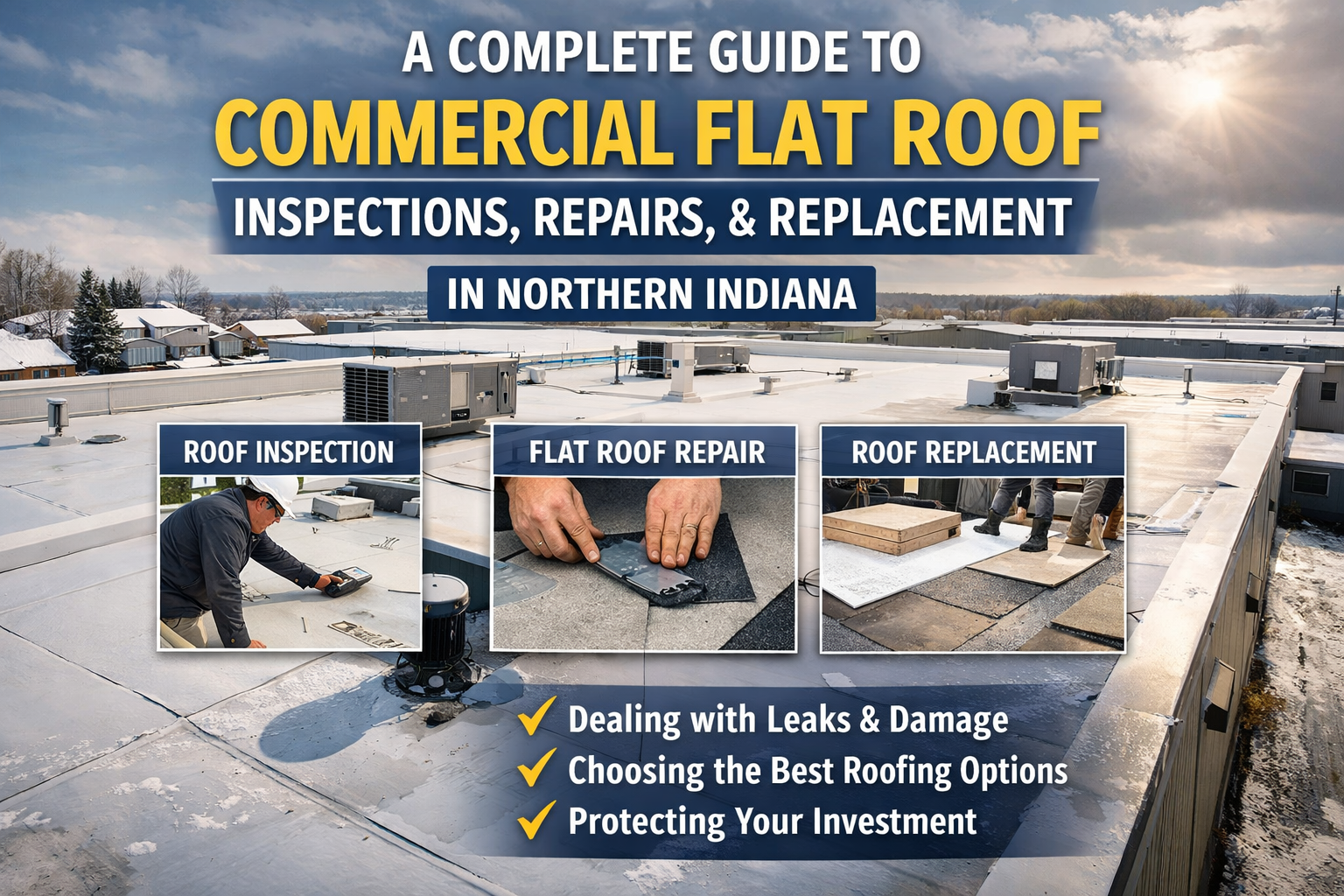
Is your commercial building in Northern Indiana experiencing leaks, aging roof materials, or rising maintenance costs? Flat roofing systems protect your building, operations, and assets—but only when they are properly inspected, repaired, and maintained.
Northern Indiana’s climate presents unique challenges, including:
Freeze / thaw cycles
Heavy snow and ice loads
High winds
Summer heat and UV exposure
This guide explains commercial flat roof inspections, repairs, restoration options, and replacement decisions, helping building owners and facility managers make informed, cost-effective choices.
Why Commercial Flat Roof Decisions Matter in Northern Indiana
Flat roofs do not shed water the same way sloped roofs do. As a result, they are more sensitive to:
Drainage performance
Seam integrity
Membrane condition
When problems go unnoticed, damage spreads quickly.
A properly maintained flat roof helps:
Protect interior spaces and equipment
Maintain energy efficiency
Reduce emergency repairs
Support predictable budgeting
Neglecting roof issues removes flexibility and increases long-term cost.
The Cost of Ignoring Flat Roof Problems
Water Damage and Structural Risk
Even small issues can lead to:
Water stains and ceiling damage
Mold and mildew growth
Saturated insulation with reduced R-value
Rotting roof decking or corroded metal
Moisture infiltration is one of the fastest ways a roof failure escalates.
Business Disruption and Downtime
Roof leaks can cause:
Temporary business closures
Inventory or equipment damage
Tenant complaints
Emergency repair premiums
Unplanned downtime is always more expensive than scheduled maintenance.
Rising Repair Costs Over Time
Early repairs are far less expensive than delayed action.
Example:
A small membrane puncture may cost a few hundred dollars to repair
Left unresolved, moisture can damage insulation and decking
This often leads to partial or full roof replacement costing thousands
Commercial Flat Roof Inspections: The Starting Point
What a Professional Inspection Includes
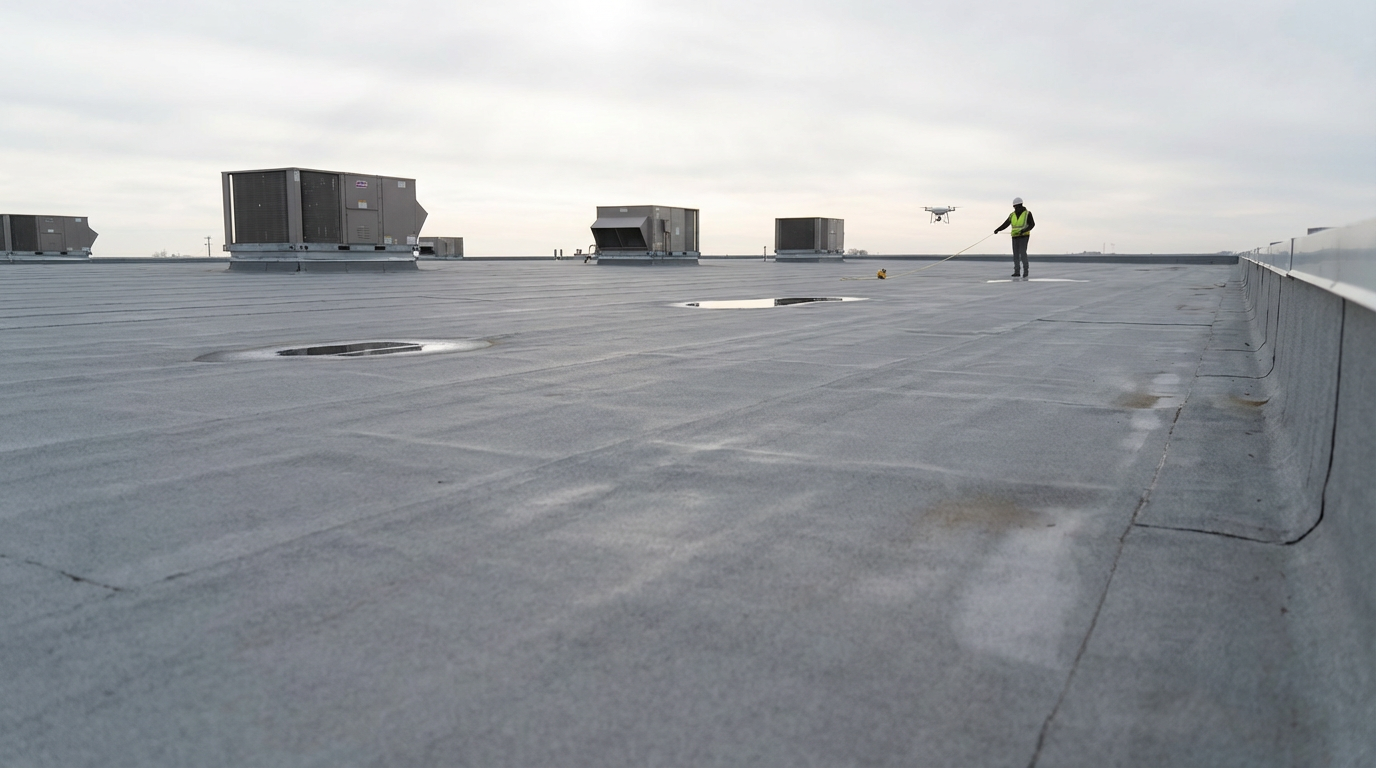
A thorough flat roof inspection typically evaluates:
Surface membrane condition
Seams and flashing
Drainage systems and ponding areas
Moisture beneath the membrane
Insulation performance
Roof penetrations and edges
Photo documentation and written reporting
Inspections replace guesswork with documented facts.
Why Routine Inspections Matter
Regular inspections help building owners:
Catch issues early
Maintain manufacturer warranties
Satisfy insurance requirements
Plan capital expenses
Prevent interior damage
When Inspections Should Be Scheduled
Best practice includes:
Annual inspections
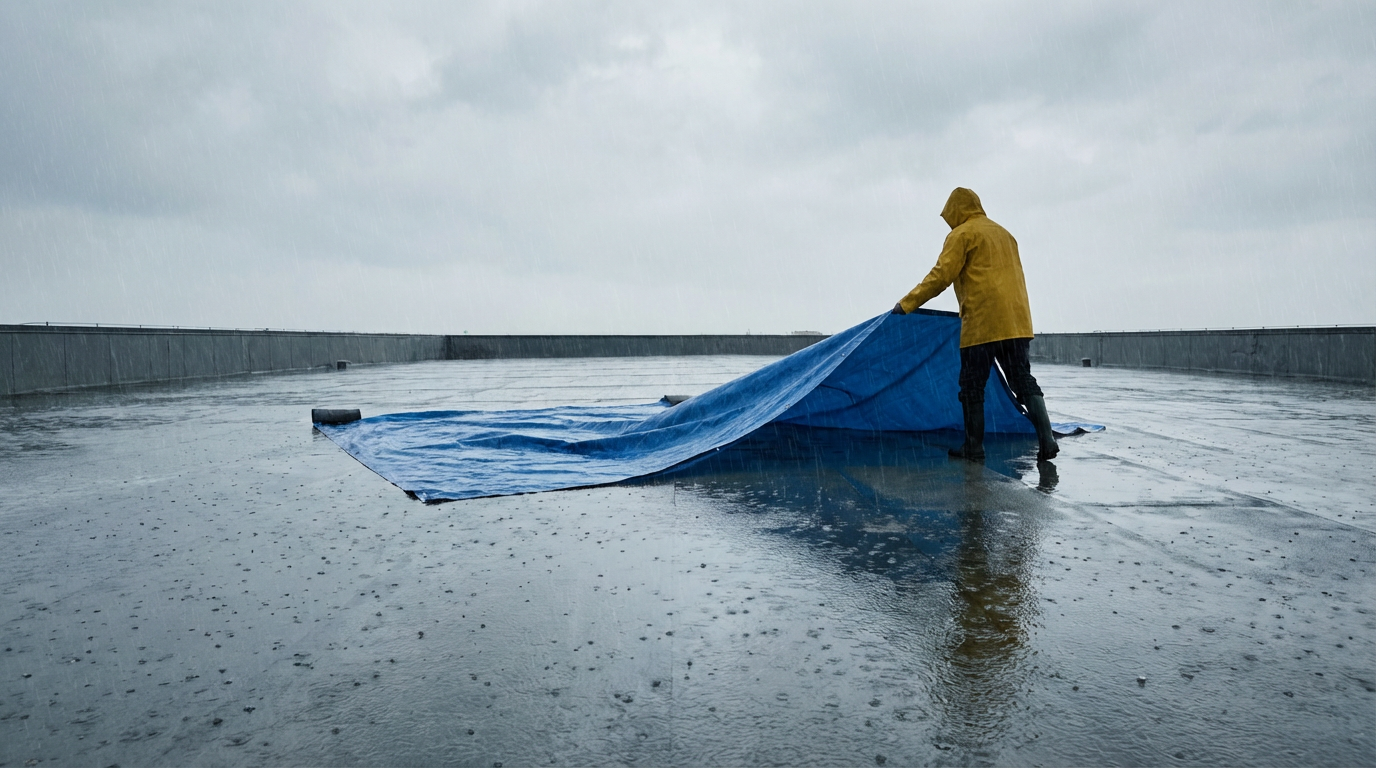
Post-storm assessments
Pre-purchase or pre-lease evaluations
Flat Roof Repairs: Extending Roof Life
Common Commercial Flat Roof Repairs
Repairs commonly include:
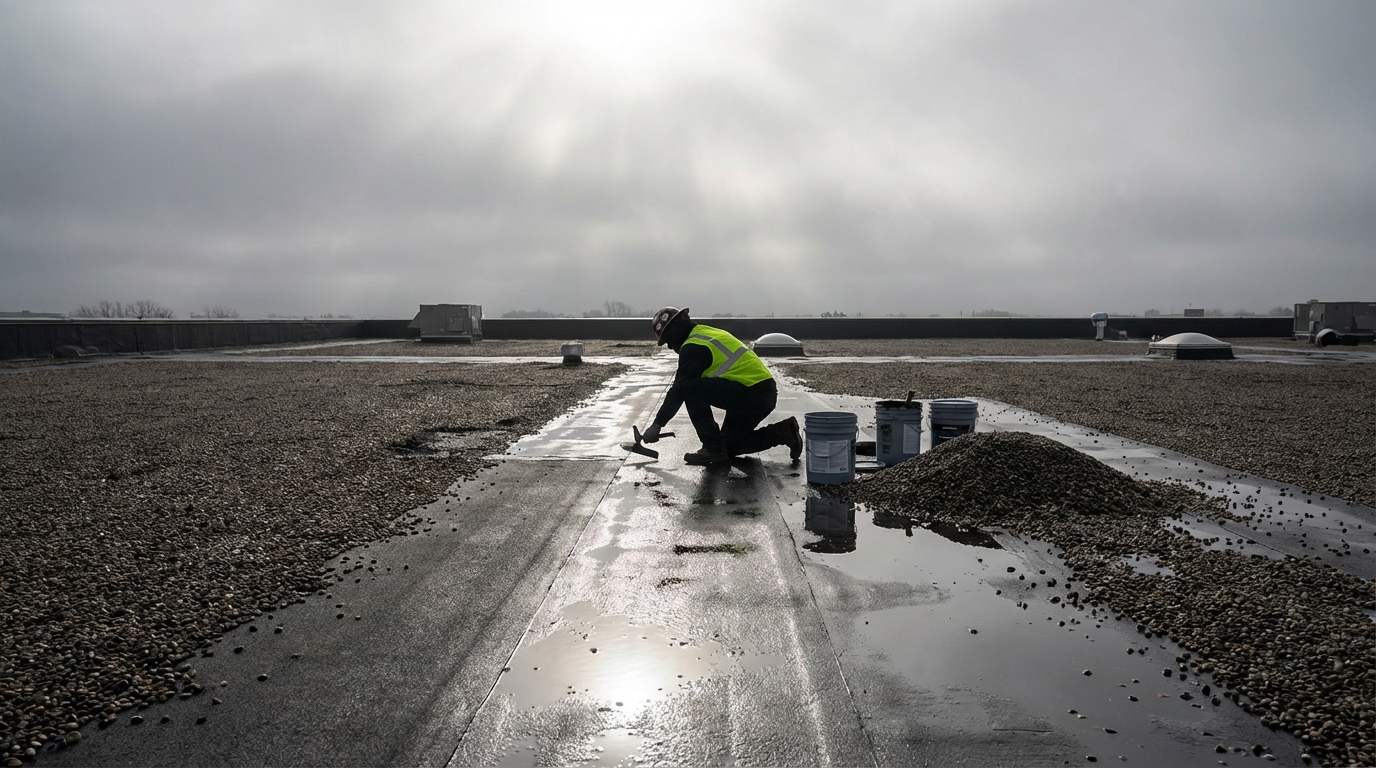
Leak detection and sealing
Flashing repair or replacement
Seam reinforcement
Puncture and membrane patching
Drain and scupper correction
Wind or storm damage repair
When Repairs Are the Right Choice
Repairs are effective when:
The roof structure is sound
Damage is localized
Insulation remains dry
The system still has usable life
Why Early Repairs Save Money
Timely repairs:
Limit labor scope
Prevent insulation saturation
Reduce interior damage risk
Extend roof lifespan
Roof Restoration and Coating Options
What Roof Coatings Do
Roof coatings can:
Seal and waterproof surfaces
Reflect UV rays
Improve energy efficiency
Extend roof life by 10–20 years
When Restoration Makes Sense
Restoration is often chosen when:
The membrane is aging but intact
There is no major moisture saturation
Budget control is important
Building downtime must be minimized
Benefits Compared to Replacement
Lower upfront cost
Faster installation
Reduced landfill waste
Improved thermal performance
Flat Roof Replacement: Knowing When It’s Time
Signs a Roof Has Reached End of Life
Replacement may be necessary when:
Leaks are recurring despite repairs
Insulation remains wet
Multiple past repairs exist
Seams and flashing continue to fail
Energy efficiency has declined
Factors Considered During Replacement
Building owners evaluate:
Roof age
Deck condition
Insulation moisture levels
Warranty options
Total lifecycle cost
Common Commercial Roofing Systems
Replacement systems may include:
PVC
TPO
EPDM
Modified bitumen
Metal systems (when appropriate)
Each system is selected based on building use, exposure, and long-term goals.
Northern Indiana Climate Considerations
Flat roofs in this region must withstand:
Heavy snow accumulation
Freeze / thaw expansion and contraction
Ponding water
Summer UV exposure
Wind uplift on open commercial sites
Proper system design and installation are critical for long-term performance.
Preventative Maintenance Programs
Typical Maintenance Tasks
Scheduled maintenance often includes:
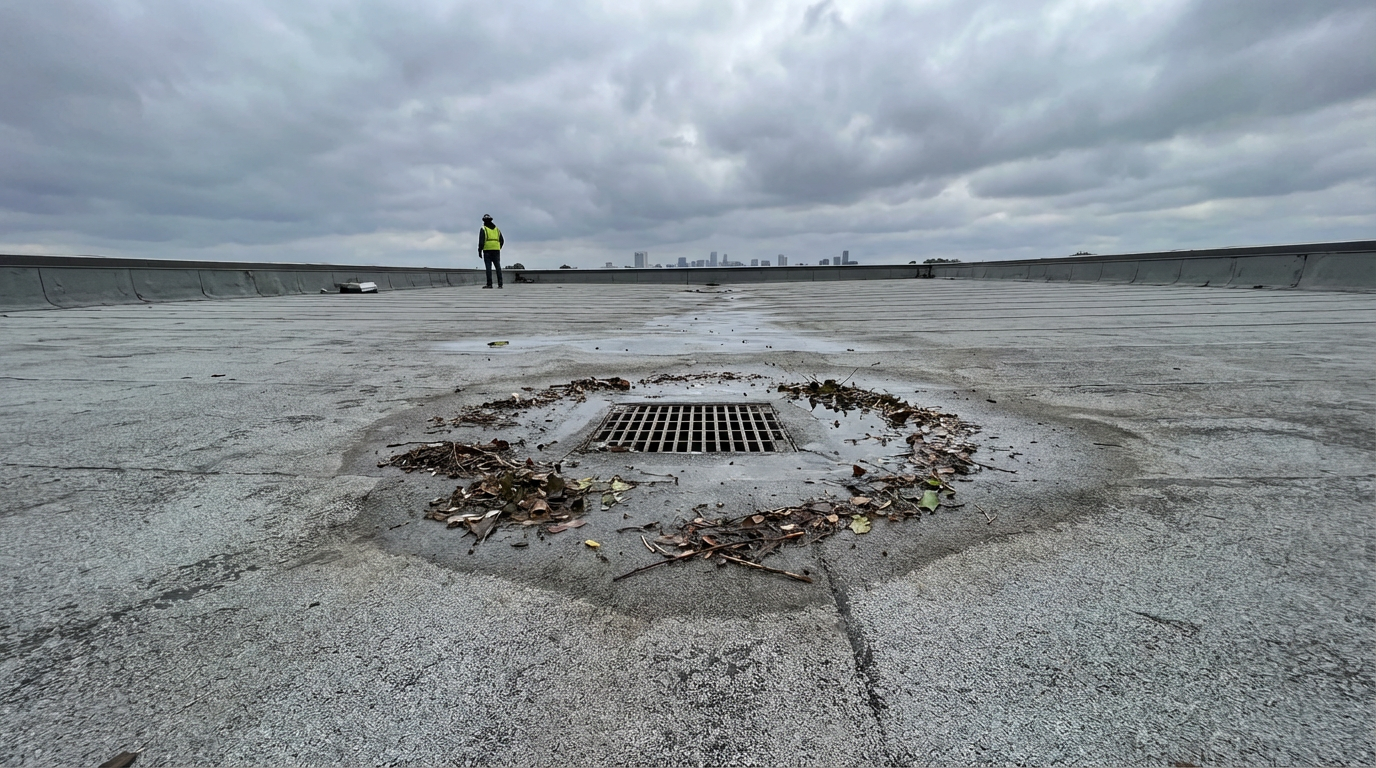
Drain and debris clearing
Seam and flashing inspections
Minor repairs before escalation
Monitoring ponding areas
Annual photo documentation
Benefits for Building Owners
Maintenance programs help:
Extend roof lifespan
Preserve warranties
Avoid surprise expenses
Improve operational reliability
How to Choose the Right Commercial Roofing Provider
When evaluating contractors, look for:
Proven commercial roofing experience
Manufacturer certifications
High-quality materials
Clear documentation and reporting
Emergency response capability
Strong safety and insurance standards
The right provider protects both your building and your budget.
Frequently Asked Questions
How often should flat roofs be inspected?
At least once per year, and after major storms.
How do I decide between repair and replacement?
Insulation condition, deck integrity, age, and long-term cost are key factors.
How long do commercial flat roofs last?
Typically 20–30 years with proper maintenance.
What affects cost the most?
Roof size, system type, insulation condition, and access.
Conclusion
Commercial flat roofs in Northern Indiana require proactive, informed management. Regular inspections, timely repairs, and structured maintenance programs protect your building, control costs, and reduce downtime. When replacement becomes necessary, choosing the right system and contractor ensures long-term performance.
Tru-Kote Roofing provides commercial flat roofing services built for Midwest conditions—supporting inspections, repairs, restorations, and full replacements with documentation and reliability.
Contact Us to schedule a professional assessment and take control of your roof’s performance.