Estimated Reading Time: 7 minutes
Summary
Seasonal roof maintenance is one of the most effective—and affordable—ways to protect a commercial building. By performing simple inspections every spring and fall, building owners can catch small problems early, prevent leaks, keep drainage working properly, and extend the life of their roof. This guide breaks down exactly what to look for, what photos to take, how to identify early warning signs, and when to call a professional for help.
Main Points
Regular spring and fall inspections help prevent expensive roof damage.
You don’t need technical knowledge—just simple visual checks.
Standing water, cracks, loose seams, and clogged drains are major warning signs.
Taking photos during each inspection helps track changes over time.
Some tasks are safe for building owners, but soft spots, active leaks, and seam damage require a professional.
Seasonal maintenance can add years to your roof’s lifespan and reduce long-term costs.
If you own or manage a commercial building, your flat roof is one of the most important parts of your property—even though it’s often the last thing people think about. A commercial flat roof protects your structure, your equipment, and the people inside. But like any major building system, it performs best when it’s maintained regularly.
Seasonal maintenance is one of the most cost-effective ways to extend roof life, prevent leaks, and avoid emergency repairs. The good news is that you don’t need to be a roofing expert to keep an eye on your roof. With a simple seasonal checklist and a basic understanding of what to look for, you can catch small issues long before they become expensive problems.
This guide walks you through exactly what to inspect every spring and fall, what photos to take for documentation, early warning signs to watch for, and when it’s time to bring in a professional.
Understanding Your Flat Roof
You don’t need an engineering degree to understand the basics of your flat roof. Here’s what matters most.
A “flat” roof isn’t actually flat.
There is a slight slope that helps water move toward drains or gutters. When that slope isn’t working properly, water sits—and sitting water is the biggest reason flat roofs fail early.
A few simple roof parts you should recognize:
Roof surface: The outer protective layer
Seams: The lines where roof materials meet
Drains or gutters: Where water exits
Flashings: Protective pieces around edges or openings
HVAC areas: Spots where workers often walk and equipment sits
Knowing these basics will make the seasonal checklists much easier to follow.
Why Spring and Fall Are the Two Most Important Inspection Times
Think of these as your “reset points” for the year.
Spring: Time to check for winter damage—ice, snow, cold temperatures, and storms create stress on your roof.
Fall: Prepare for freezing weather and remove debris from summer storms and falling leaves.
A twice-a-year inspection ensures you catch developing issues early, keeps water moving where it needs to go, and gives you a clear maintenance history year over year.
Spring Maintenance Checklist
Winter weather can be rough on a roof. Use this checklist to prepare for warmer months:
1. Clear Off Debris
Remove branches, leaves, packaging material left by contractors, and anything else sitting on the roof.
Why it matters:
Debris traps moisture and blocks drainage paths, causing water to pool.
2. Check for Standing Water
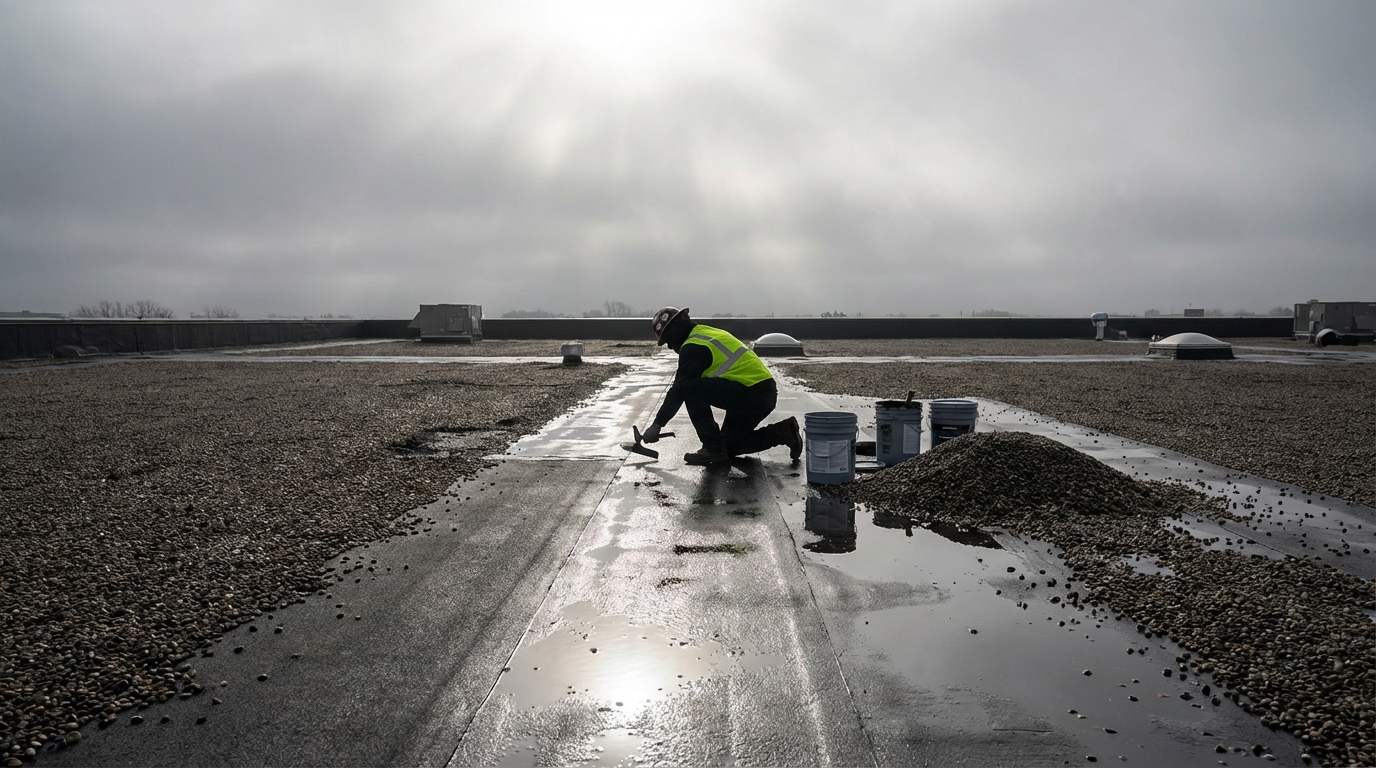
Walk the roof (safely) after a rainfall or use photos from previous inspections.
Look for:
Large shallow puddles
Water that stays longer than 24–48 hours
Dirt rings that show ponding patterns
Standing water is one of the biggest threats to flat roofs.
3. Inspect the Surface
You don’t need to know the roofing material. Just look for visible changes.
Check for:
Cracks
Blisters or bubbles
Soft or spongy areas
Tears or openings
Loose or separated seams
If something looks “different,” take a picture and note the location.
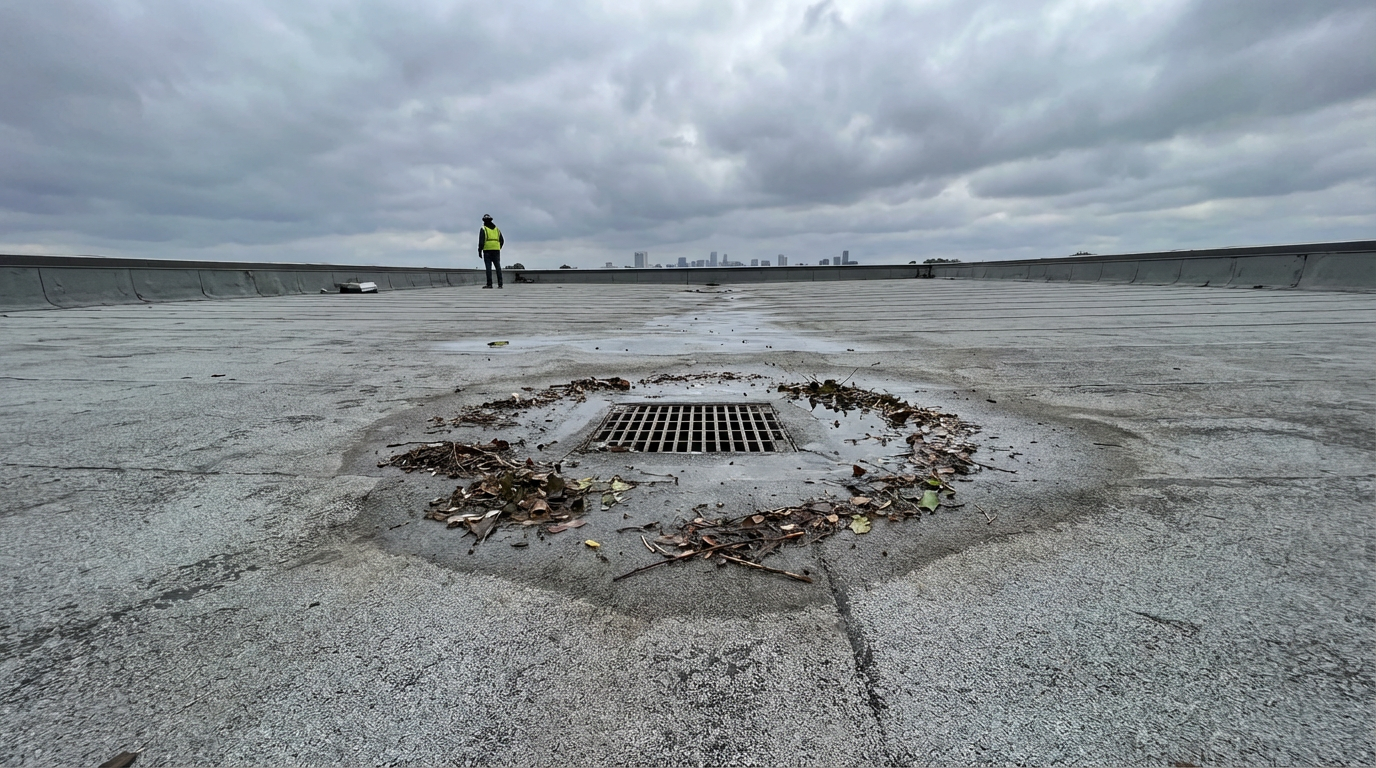
4. Examine Drainage Systems
Ensure:
Drains, scuppers, and gutters are clear
There are no blockages
Water flows freely
Even small clogs can lead to major leaks.
5. Look Around HVAC Units
These areas get a lot of foot traffic from service contractors.
Check for:
Punctures from tools
Wear from frequent walking
Leaking fluids that can damage roofing materials
Loose panels or wires rubbing the roof surface
6. Inspect Flashings and Edges
Flashings protect the most vulnerable areas of your roof.
Look for:
Gaps
Lifting edges
Cracked sealant
Rust or bending
This is where many leaks begin.
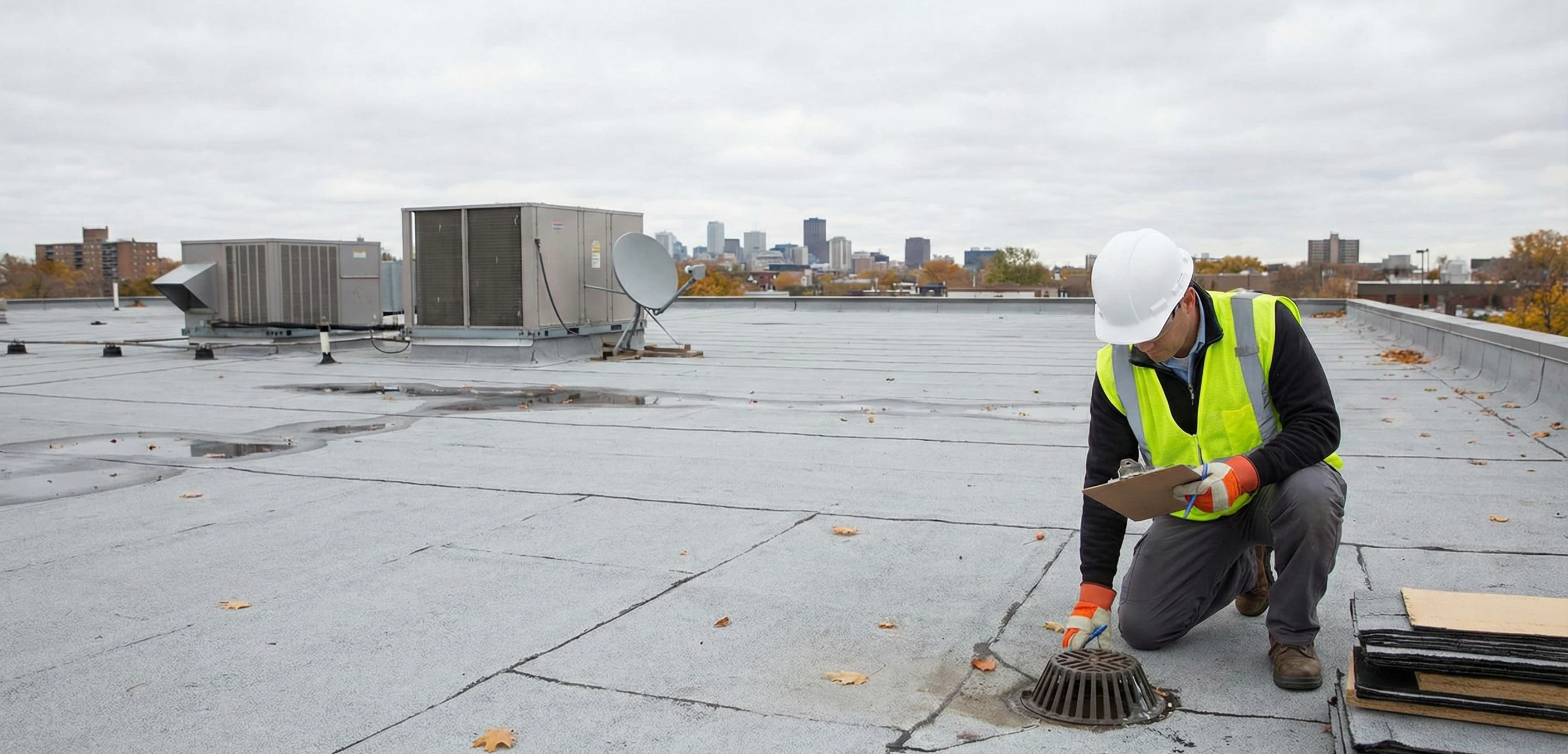
7. Document Everything with Photos
Photos help track changes over time and make it easier for professionals to diagnose issues.
Take pictures of:
Any damage
Standing water
All drains
Roof edges
HVAC areas
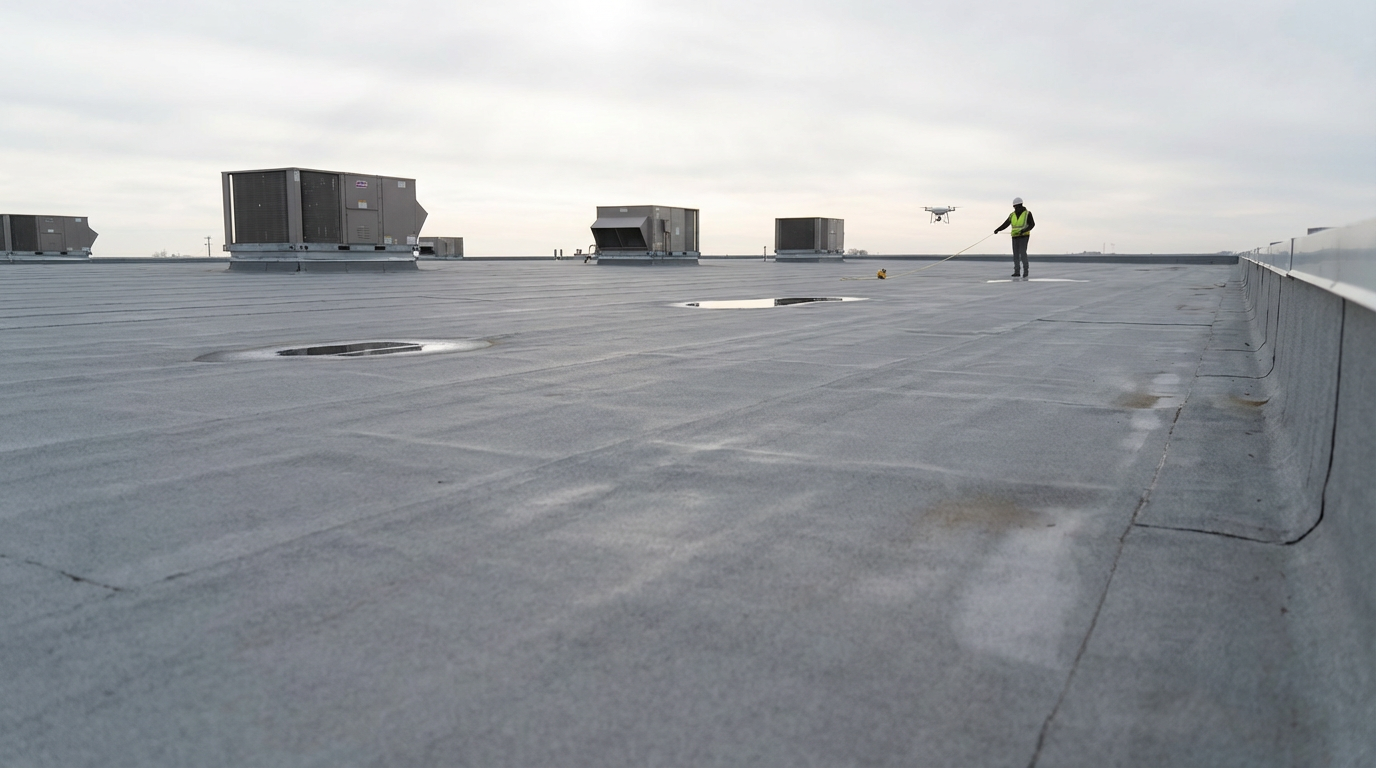
Wide shots of the entire roof
Fall Maintenance Checklist
Fall is all about preparing your roof for winter.
1. Remove Seasonal Debris
Especially leaves, branches, and twigs—these clog drains quickly once freezing temperatures hit.
2. Inspect for UV Damage
Summer sun can dry out roofing materials.
Look for:
Faded spots
Cracking
Brittle texture
3. Check Sealants and Caulking
These materials naturally break down over time.
Signs they need attention:
Peeling
Cracking
Missing or loose sealant
4. Confirm Drainage Is Winter-Ready
Before freezing temperatures arrive:
Clear drains again
Make sure gutters are ready for snowmelt
Check for rust or loose hardware
5. Inspect Around Equipment Again
Summer is peak HVAC service time.
Look for:
New punctures
Scrapes or dents
Damaged walk paths
6. Check for Warning Signs Before Snow Arrives
Note any:
Low or sagging areas
Soft or spongy surfaces
Water stains inside the building
Musty or moldy smells
Doors or windows that suddenly stick
7. Take Updated Photos
Try to photograph the same areas as in spring to create a clear visual maintenance history.
What Photos Should You Take?
Photos are one of the most valuable tools you have.
Essential photos include:
Drains
Edges and seams
HVAC surroundings
Any cracks or bubbling
Standing water
Wide roof shots
Tips for better roof documentation:
Take photos in good daylight
Capture close-up and wide views
Add dates to each file
Store photos with inspection notes
Early Warning Signs You Should Never Ignore
Exterior clues:
Water that stays longer than 48 hours
Bubbling or blistering
Cracks
Loose seams
Algae or moss growth
Interior clues:
Ceiling stains
Damp smells
Peeling paint
Mold spots
Higher energy bills
If you notice any of these, take photos and contact a professional.
DIY Observations vs. When to Call a Professional
You can safely check many things—but not everything.
Safe DIY tasks:
Visual inspections
Light debris removal
Basic drain clearing
Taking photos
Watching for interior signs
Call a roofing professional if:
The roof feels soft or sagging
You see tears, cracks, or open seams
Water is actively leaking
You notice standing water
You see damage near electrical or mechanical units
You feel unsafe or unsure
Professionals not only fix issues—they help extend the life of your roof by catching problems early.
How Seasonal Maintenance Saves You Money
Seasonal maintenance helps you:
Prevent expensive emergency repairs
Avoid business interruptions
Extend the life of your roof
Improve energy efficiency
Protect your building’s interior
A roof that’s cared for regularly can last years longer than one that isn’t.
A Simple Annual Inspection Calendar
Spring
Inspect for winter damage
Clear all drains
Document roof condition
Schedule repairs
Summer
Quick storm check
Remove debris
Look for UV-related wear
Fall
Remove leaves
Prepare drainage for winter
Document changes
Repair issues before freezing weather
Winter
Monitor for ice
Check inside for leaks
Avoid walking on the roof unless necessary
Conclusion: A Little Attention Goes a Long Way
Your flat roof is a major investment, and taking care of it doesn’t need to be complicated. With seasonal inspections, a simple checklist, and good documentation, you can protect your building, avoid costly surprises, and keep your roof performing for many years.
If something doesn’t look right—or if it’s been a while since your last professional inspection—now is the perfect time to schedule one. A trained roofer can evaluate your roof, offer guidance, and help ensure small issues don’t turn into big problems.