Estimated Reading Time: 7 minutes
Summary
Replacing a commercial roof is one of the largest capital expenses a property owner or manager will ever face—yet many organizations wait until leaks become emergencies before planning for it. Smart roof budgeting doesn’t just protect your building; it protects your cash flow, your operations, and your long-term financial strategy. This guide walks you through typical roofing costs, how to calculate annual reserve funding, what happens when replacement is delayed, life-extension upgrades that can buy you more time, and how to evaluate the true ROI of replacing a roof at the right moment.
Main Points
A commercial roof replacement is predictable—if you know your roof’s age and material, you can plan 5–20 years out.
Different roofing systems have different cost ranges and lifespans.
Creating a roof reserve fund now avoids emergency financial strain later.
Waiting too long increases the total cost of roof ownership and can lead to interior damage or structural repairs.
Some upgrades can extend a roof’s life and reduce replacement urgency.
Replacing at the right time improves energy efficiency, lowers repair costs, and boosts property value.
A commercial roof is more than a building component—it’s a long-term financial commitment. Whether you manage a retail strip, warehouse, office complex, restaurant, or industrial facility, your roof will likely need to be replaced at predictable intervals. Yet many organizations fail to plan for this expense in advance.
The result? Emergency replacements, cash-flow strain, disrupted operations, and avoidable property damage.
Proper roof budgeting allows you to avoid surprises, extend the life of your current system, and make strategic financial decisions years before replacement becomes urgent. Whether your roof is 5, 10, or 20 years from its expected end-of-life, now is the right time to build a plan.
Let’s break down how to prepare effectively.
1. Understanding Roof Lifecycles and Replacement Windows
Every roof ages differently depending on design, material, installation quality, and maintenance—yet most commercial roofing systems follow predictable patterns.
Typical Lifespans by Roofing Material
EPDM: 20–30 years
TPO: 20–30 years
PVC: 20–30+ years
Modified Bitumen: 15–25 years
Built-Up Roofing (BUR): 20–30 years
If you know your roof’s age and system type, you can approximate how many years you have left before replacement becomes necessary.
How Age Affects Roof Performance
Early years: Minimal issues, fewer repairs
Mid-life: Increased wear, occasional leaks, seam repairs
End-of-life: Frequent failures, wet insulation, energy loss, structural concerns
Why Age Should Drive Capital Planning
A 12-year-old TPO roof has different budget needs than a 26-year-old BUR system. Planning early allows for steady, predictable reserve funding instead of emergency spending.
2. Cost Ranges for Common Commercial Roof Systems
Roof replacement cost varies widely, but it’s essential to understand the ranges.
Typical Installed Costs
EPDM: $6–$12 per sq. ft.
TPO: $6–$12 per sq. ft.
PVC: $8–$14 per sq. ft.
Modified Bitumen / BUR: $8–$14 per sq. ft.
That means a 20,000 sq. ft. roof may cost anywhere from $120,000 to $280,000, depending on system and complexity.
Factors That Influence Cost
Tear-off vs. installing a new layer (“recover”)
Thickness of membrane
Type and depth of insulation
Number of penetrations (HVAC units, vents, skylights)
Accessibility for crews and equipment
Regional labor and material costs
Adding tapered insulation for drainage
Pro tip: Always budget using the higher end of the range unless you are certain a recover is possible.
3. How to Calculate Annual Reserve Funding
Creating a roof reserve fund is the smartest financial move you can make.
Basic Reserve Formula
Total estimated cost ÷ remaining years = annual reserve contribution
Example 1: A roof with 10 years of life left
Replacement cost: $300,000
10 years remaining → $30,000 per year
Example 2: A roof with 20 years of life left
Replacement cost: $300,000
20 years remaining → $15,000 per year
Adjusting for Inflation
Roofing costs have increased 5–15% in recent years.
A safe planning model adds 3–5% annually to your reserve target.
Creating Three Reserve Strategy Scenarios
Conservative: Fund the higher end of cost estimate with inflation
Moderate: Split cost between recover vs. tear-off scenarios
Aggressive: Fully fund early to avoid interest or loan reliance
Well-planned reserves prevent emergency budget decisions later.
4. The Real Cost of Waiting Too Long
Many owners understandably push roof replacement down the priority list. Unfortunately, delaying too long almost always costs more.
Direct Costs From Deferred Replacement
More frequent repairs
Larger, more expensive leaks
Wet insulation needing full replacement
Ceiling, wall, or flooring damage
Operational Losses
Tenant disruption
Downtime for businesses
Lost revenue from closures or equipment shutdowns
Long-Term Capital Impact
Emergency replacements cost significantly more
Limited time to competitively bid projects
Higher risk of structural deck repairs
A Simple Illustration
You might save $20,000 by delaying replacement a year—but lose $60,000+ in:
Emergency leak repairs
Interior damage
Higher energy bills
Emergency premium pricing
Waiting rarely saves money. It usually increases total cost of ownership.
5. Life-Extension Upgrades That Delay Replacement
If your roof is aging but not yet failing, strategic upgrades can add years of service life.
5.1 Reflective or Protective Coatings
EPDM or older TPO/PVC systems benefit from added UV protection
Silicone or elastomeric coatings can add 5–10 years
5.2 Drainage Improvements
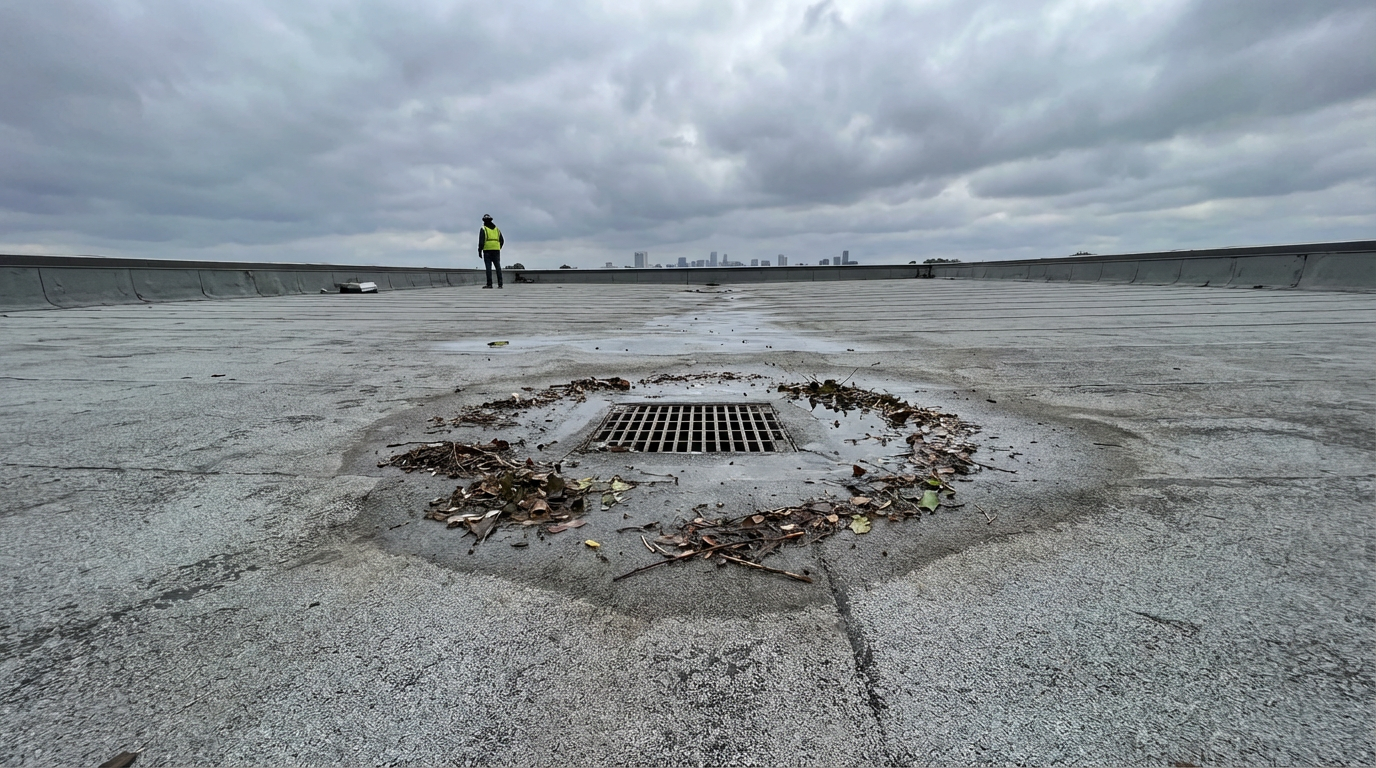
Address ponding water by:
Installing tapered insulation
Reworking drain locations
Clearing debris regularly
Better drainage equals longer roof life.
5.3 Preventive Maintenance Programs
Routine inspections (spring and fall) catch small problems early.
Small repairs: hundreds
Emergency leak repairs: thousands
5.4 Reinforcing High-Traffic Areas
Installing walkway pads around HVAC units helps prevent membrane punctures.
When Life-Extension Makes Sense
Roof is mid-life, not near failure
Leaks are isolated
Membrane is still structurally sound
When It Doesn’t
Multiple wet insulation areas
Widespread seam failure
Significant sagging or structural concerns
Coatings and upgrades are tools—not substitutes for a true end-of-life replacement.
6. The ROI of Replacing a Roof at the Right Time
Many owners think of roof replacement strictly as an expense, but it often delivers measurable returns.
Energy Savings
Modern roofing systems include highly efficient insulation and reflective surfaces that reduce heating and cooling costs.
Reduced Repair Spending
A failing roof creates recurring expenses. A new roof eliminates:
Leak repairs
Interior restoration
Emergency callouts
Improved Warranty Coverage
New systems often come with 15–30-year warranties, offering predictable costs.
Stronger Property Value
A recently replaced roof improves:
Appraisal value
Tenant retention
Insurance confidence
Resale attractiveness
Cost Projection Example
Waiting 5 years to replace a failing roof might cost:
$20,000–$50,000 in repairs
$30,000–$60,000 in energy loss
$10,000–$40,000 in interior repairs
Replacing now may be the financially responsible choice.
7. A Step-by-Step Long-Term Roof Budget Plan (5, 10, and 20-Year Versions)
5-Year Plan
Conduct a professional inspection
Determine remaining lifespan accurately
Begin accelerated reserve contributions
Evaluate whether life-extension or replacement is needed
Prepare for competitive bidding
10-Year Plan
Perform mid-life upgrades (coatings, drainage)
Build steady annual reserves
Track inflation-adjusted cost projections
Monitor warranty terms and expiration dates
20-Year Plan
Establish a roof history log
Conduct annual inspections
Model multiple replacement scenarios
Adjust reserve funding yearly
Prepare long-term cash-flow strategies
A well-planned roof budget helps owners and financial teams stay proactive, not reactive.
Conclusion: The Best Time to Plan Is Before You Need It
Your roof is one of the most important—and most financially significant—components of your building. Planning 5, 10, or even 20 years ahead gives you the flexibility to make smart decisions, avoid financial shocks, and protect your property through every stage of its lifecycle.
If you haven’t assessed your roof recently, now is the perfect time to schedule a professional inspection. Understanding your roof’s true condition is the first step toward building a long-term, reliable, cost-effective capital plan.