Estimated Reading Time: 18 minutes
Most commercial flat roofs do not fail in one dramatic moment. They send signals first, sometimes for a year or two, before anything falls apart. The owners who get burned are not the ones with bad roofs. They are the ones who did not know what the signals meant.
After 40-plus years tearing off and installing flat roofs around Elkhart, I can usually tell within one walk-through whether a roof needs a repair or a replacement. It is not magic. It is a short list of symptoms almost anyone can learn to spot, plus two questions that settle the argument.
This guide gives you both. Twelve symptoms, one scorecard, and the honest math on when to stop patching and start budgeting for commercial flat roof replacement.
The two questions that decide repair or replace
Before any symptom list, answer these two things. Everything else hangs off them.
1. How much of the roof is actually affected?
A leak over the lobby is an event. A leak over the lobby, plus blistering across the south half, plus open seams around every rooftop unit is a condition. Roofers use a rough 25 percent line: once damage or deterioration covers about a quarter of the roof, piecemeal repair usually costs more per year than it saves. You end up paying for a new roof in installments without ever getting one.
2. Is the insulation wet?
Dry insulation means the roof still has bones. Wet insulation means the system is failing from the inside, even if the membrane looks passable from above. Wet insulation does not dry out on its own under a sealed membrane. It sits there, loses its R-value, corrodes fasteners and steel deck, and spreads sideways every time it rains. If a moisture scan shows large saturated areas, replacement stops being a question of if and becomes a question of when.
Every symptom below feeds one of those two questions.
Symptoms on the roof surface
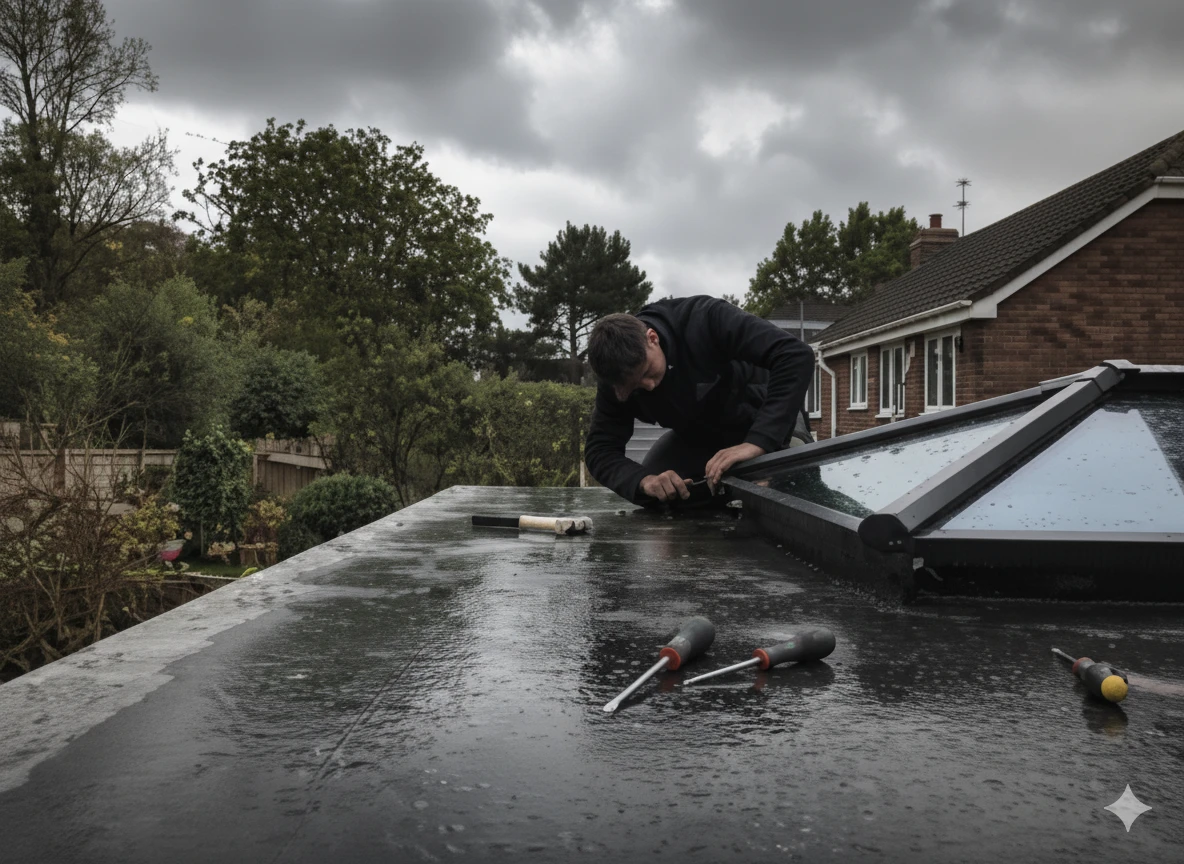
You can spot most of these yourself on a dry day with a camera. Stay off the roof if any area feels soft underfoot. That is a symptom of its own, and not one to test with body weight.
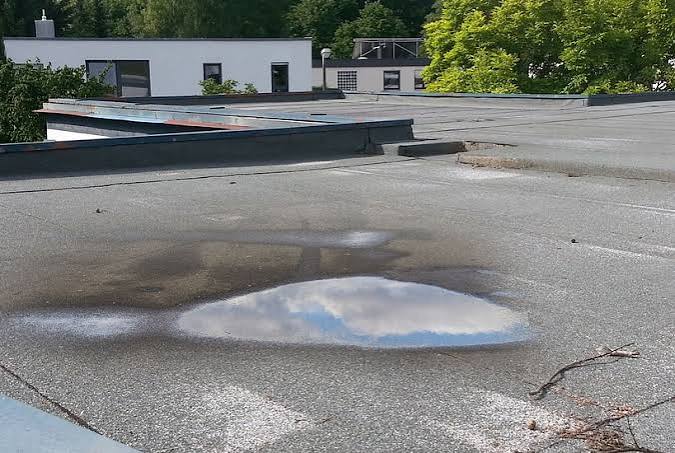
1. Ponding water that outstays the storm
A flat roof is supposed to shed water, not store it. A shallow puddle an hour after heavy rain is normal. Water still standing 48 hours later is a problem.
Lingering ponding means clogged or undersized drains, compressed insulation creating birdbaths, or a deck that has started to dip. Standing water finds every pinhole and weak seam on the roof. Then winter arrives, the water freezes, expands, and opens those weak points wider.
A single low spot near a drain that needs clearing is a repair. Ponding spread across big sections usually means the deck or insulation underneath has changed shape, and no coating fixes geometry. If drainage is the root cause, read our guide to flat roof drainage design in Elkhart before you approve any fix. Solving the water's path matters more than patching the symptom.
2. Blisters and bubbles in the membrane
Raised, ballooned spots mean moisture or air trapped under the membrane. One or two small blisters on an otherwise healthy roof can be cut out and patched. A roof covered in them is telling you water has been living under the membrane for a long time.
Do not walk on blisters or let maintenance staff pop them. Photograph them, note where they cluster, and get a moisture scan. Clusters near a single penetration lean repair. Blisters everywhere lean replace, because they are really a map of how much of the roof has been wet.
3. Cracks, splits, and alligatoring
Surface cracking that looks like dried mud or alligator skin is UV and age damage. On a single-ply membrane it shows up as splits, often along folds and stress points. On older modified bitumen or built-up roofs it crazes across the surface.
Small, localized splits are routine repair fair. Widespread alligatoring means the membrane itself has reached the end of its chemistry. There is no patch for a material that is done. This is one of the clearest replacement signals a roof gives, and one of the most ignored because it rarely leaks right away. It leaks the following winter.
4. Seams pulling open
Seams are where flat roofs die. Every TPO, PVC, and EPDM roof is a set of sheets joined together, and those joints carry the stress of every temperature swing. Look for lifted seam edges, gaps you can slide a finger into, and patches of dirt collected along seam lines.
One failed seam near a curb or pipe is a repair, and a fairly cheap one. Open seams in several unrelated areas means the adhesive or weld is giving up roof-wide. That is a system problem, and chasing it seam by seam is the treadmill that eats maintenance budgets.
5. Sagging or soft spots
If the roof dips visibly, feels spongy, or crunches underfoot, stop walking on it. Soft spots mean saturated insulation or a deck that is losing strength. Sagging is ponding's bigger, meaner sibling: the structure has moved, and now holds water by default.
This one is never a wait-and-see symptom. Wet insulation spreads, and a weakening deck is a safety issue for anyone who services the rooftop units. Budget damage aside, a soft deck puts your HVAC contractor at risk too.
6. Membrane shrinkage at the walls
Aging membranes, EPDM especially, shrink as they lose their oils. The first place it shows is the perimeter: metal edge pulled loose, bridging where the membrane no longer reaches the corner, wrinkles radiating from the parapet.
Caught early, shrinkage can sometimes be arrested at the edges. By the time corners are bridging or the edge metal has torn free in a windstorm, the membrane is pulling against itself across the whole roof, and the stress does not reverse.
7. Flashing failures at every penetration
Most leaks do not start in the field of the roof. They start where the roof meets something: pipes, curbs, skylights, walls, HVAC units. Cracked sealant, pulled counterflashing, and brittle pitch pockets are normal aging on a 15-year-old roof. They are repairable, one by one.
The replace signal is when flashing failures keep appearing at different penetrations every season. That pattern says the membrane and flashing system are aging out together, and each repaired boot buys less time than the last.
8. Vegetation, moss, or dark stained patches
Plants on a roof mean one thing: long-term standing moisture and collected dirt. Weeds finding root in a roof seam will do what weeds do to a sidewalk, except the crack they widen leads straight into your building.
Dark stains and biological growth also hold moisture against the membrane, which accelerates every other symptom on this list. A green roof should be a design choice, not a discovery.
Symptoms inside the building
By the time a roof problem shows up indoors, it has usually been on the roof for a while. Interior signs are not early warnings. They are late ones.
9. Ceiling stains and recurring drips
Brown rings, sagging tiles, a drip that returns a week after the last repair. Interior water means the membrane, the insulation, and the deck have all been involved for some time. Water travels sideways through a roof system, so the stain below is rarely under the entry point above.
One new stain after a storm can be a fixable flashing issue. Stains in multiple rooms, or the same stain returning after repairs, point to system failure. If water is actively coming in right now, that is an emergency, not a diagnostic exercise. Call for emergency leak response first and use our first 24 hours leak guide while the crew is on the way.
10. Musty smells and humidity that will not clear
A building that smells like a damp basement on dry days often has wet roof insulation. You will not see the leak, because the water is sitting in the insulation layer, slowly degrading it and feeding mold.
This symptom fools people into checking HVAC systems and plumbing first. Those get cleared, the smell stays, and the roof keeps rotting quietly. If your building has this smell plus any exterior symptom from the list above, ask for a moisture survey before another plumber visit.
11. Mold, peeling paint, or swollen drywall near exterior walls
Chronic moisture finds the coldest surfaces: exterior walls, top-floor corners, window heads. Mold spots that return after cleaning, or paint that bubbles along the same wall every spring, usually trace back to water coming down from the roof edge, not sideways from the wall itself.
By this stage the repair question has often answered itself. Damage visible inside walls means the water path has been active for months, sometimes seasons.
12. Rising energy bills with no other explanation
Wet insulation is not insulation. A roof assembly with saturated sections can lose most of its R-value in those areas, and your furnace and AC pay the difference every month. Owners often notice this one in the spring utility reconciliation, not on the roof.
If bills are climbing and the equipment checks out, the roof assembly belongs on the suspect list. We covered the math on what wet or thin insulation costs you in the real ROI of flat roof insulation upgrades.
When a few symptoms turn into a pattern
One symptom is a repair ticket. Three symptoms in different parts of the roof are a biography. This roof is aging out.
The pattern that kills roofs is rarely one dramatic failure. It is a blister field, plus two open seams, plus a stain in the stockroom, plus last winter's ice damage at the drain. Each item looks manageable alone. Together they describe a system with a year or two left, maybe less.
The other pattern worth watching is in your accounting. Add up what you have spent on the roof over the last 24 months. If you have called a roofer more than twice for leaks in two years, you are on the repair treadmill. If the total is approaching a quarter of replacement cost, you are already paying for a new roof and not getting one. Worse, a long-ignored leak gives your insurer a reason to push back when you finally do file. We have seen how a neglected leak can turn into an insurance claim denial more than once.
The repair vs. replace scorecard
This is the short version of what we run through on site. Answer yes or no, and be honest. Nobody grades it but your roof.
Is the roof 20 years old or older?
Has a roofer been out for leaks more than twice in the past two years?
Do you see ponding water 48 hours after rain in more than one area?
Are seams open or lifting in multiple spots?
Do blisters, cracks, or alligatoring cover large areas rather than one corner?
Are there any sagging or soft spots underfoot?
Is there more than one interior leak point, or a stain that keeps returning after repairs?
Are heating or cooling bills rising with no other explanation?
Has wet insulation been confirmed or suspected? (Never checked leans yes.)
Is the damage spread across the roof rather than concentrated near one unit or drain?
Your score:
0 to 2 yes: Repair it. The roof has useful life left, and a good preventive maintenance program will stretch that life further than any other dollar you can spend on it.
3 to 5 yes: The roof is declining. Make the repairs it needs today, but start budgeting for replacement within one to three years. Waiting until failure means paying emergency prices and losing your scheduling options.
6 or more yes: Replacement. Patching is now the expensive option. Get two or three quotes, insist on a moisture survey with each, and compare like for like.
Two answers override the math no matter what the rest say: widespread wet insulation and a sagging deck. Either one alone moves the roof into the replace column. Wet insulation only spreads, and a sagging deck is a structure question, not a roofing line item.
If your score says replace but the insulation is dry and there is only one roof layer up there, a middle path exists. Our roof overlay vs. full replacement guide walks through when an overlay is legitimate savings and when it is just delaying the same tear-off at tomorrow's prices.
Repair, restore, or replace: your three real options
Owners usually hear two options: patch it or tear it off. There are actually three, and the middle one is undersold.
Repair. The right call when damage is localized, insulation is dry, and the roof is under roughly 15 years old with a decent service history. Repair is always the smallest check of the three, and a good one buys real years. It only makes sense while the rest of the roof is sound enough to deserve it.
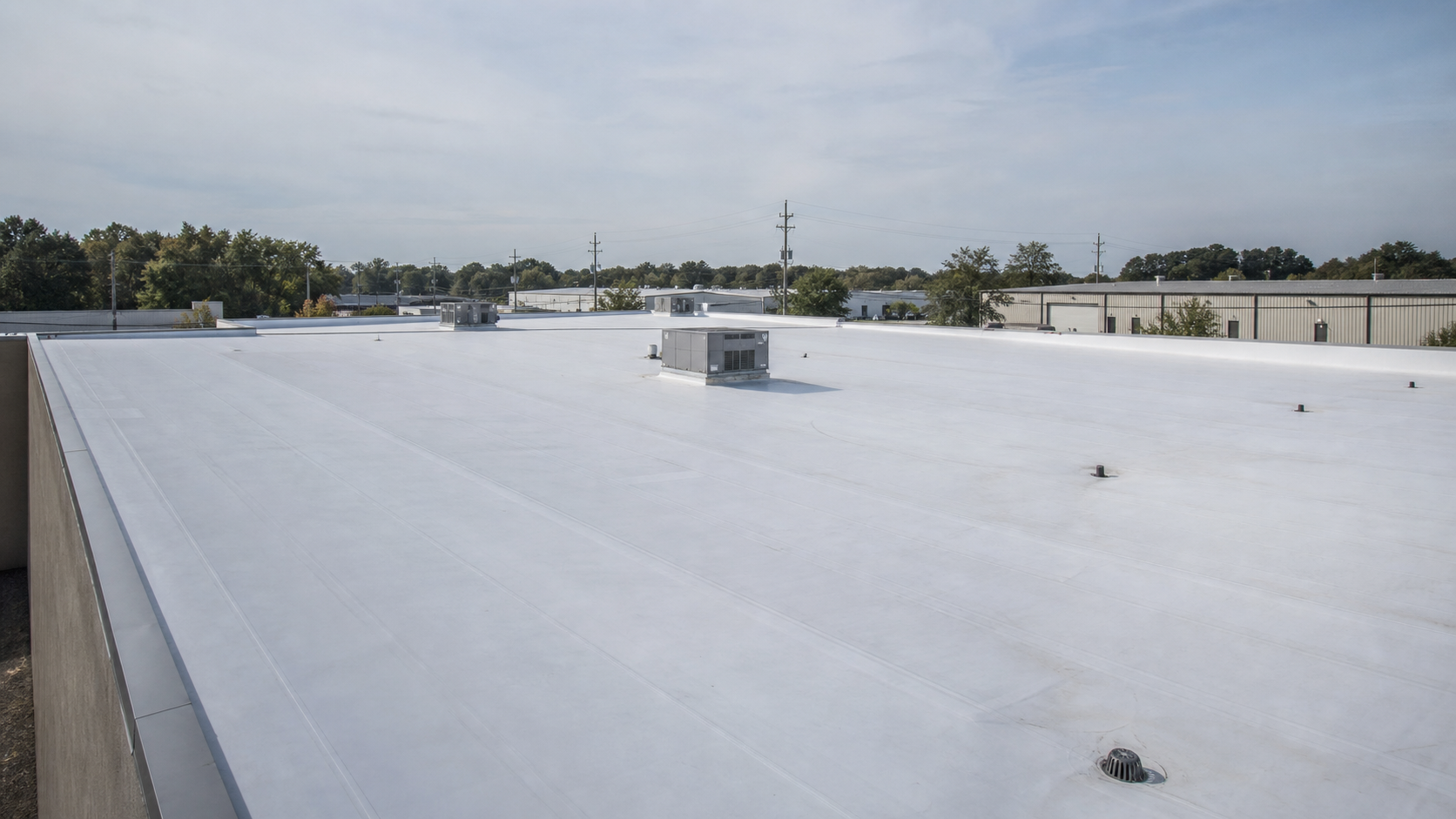
Restore with a coating system. If the membrane is aged but still attached and the insulation is dry, a restoration coating can add 10 to 15 years of service life at a fraction of what replacement costs. It does not work over wet insulation, widespread seam failure, or structural problems, which is exactly why the scorecard comes first. Our commercial roof coatings page explains where coatings fit and where they do not.
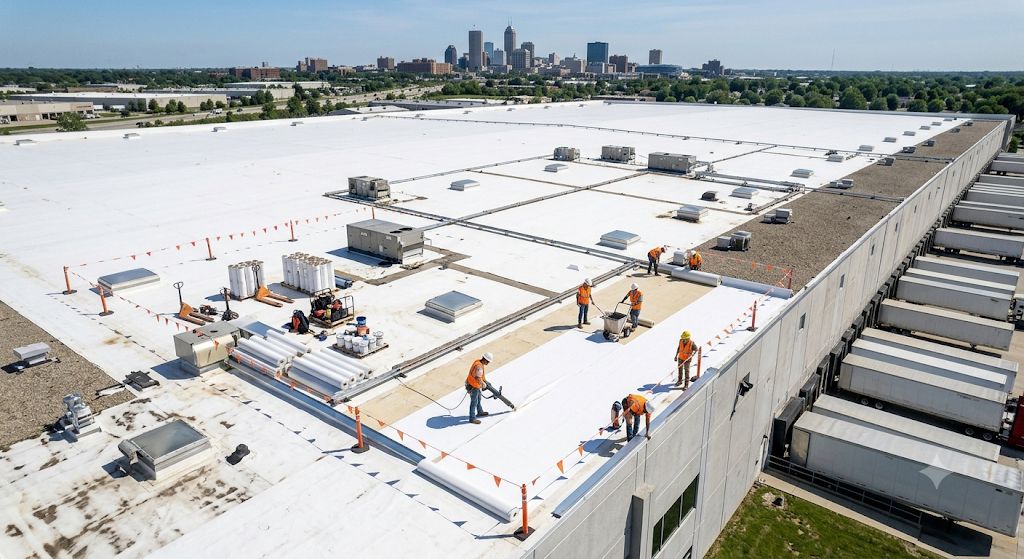
Replace. Tear off the failed system and install a new one. What replacement costs depends on how many layers come off, what shape the deck is in, how much insulation the building needs, and which membrane goes on. That is why per-square-foot numbers pulled from a website, ours included, are not worth much until someone has actually surveyed your roof. What you are really buying is a reset: new membrane, insulation up to current code, and two decades or more off the repair treadmill. If you are actively weighing repair against replacement on your building right now, that decision has its own page: flat roof repair vs. replacement in Elkhart.
Full disclosure: we install all three outcomes, including new roof installation, so we are not neutral on which one we would rather sell you. That is exactly why we lead with the scorecard. The diagnosis has to come before the pitch, and a contractor who quotes replacement without a moisture survey is guessing with your money.
What a real diagnostic inspection includes
A ten-minute walk and a number on a business card is not an inspection. An inspection that can actually answer repair vs. replace includes:
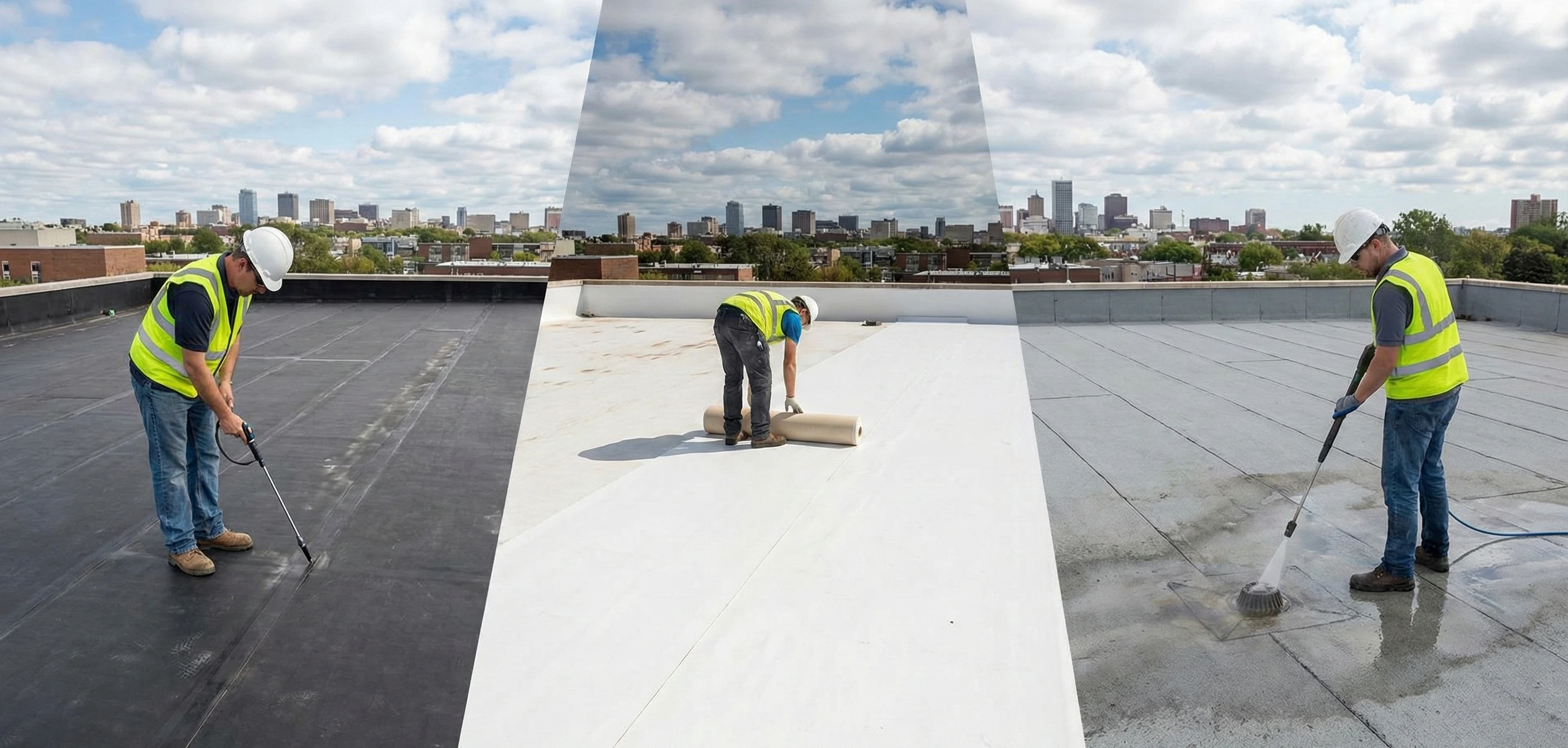
A full surface walk: seams, flashings, penetrations, edge metal, and drains, all photographed
A moisture survey using infrared scanning at dusk or electronic moisture meters, which maps wet insulation you cannot see from above
Core cuts in suspect areas, so layers, moisture, and deck condition get verified physically, not assumed
A written condition report with photos, a remaining-life estimate, and priced options for repair, restoration, and replacement so you can compare the math side by side
The written report matters more than the visit. It is what you take to your ownership group, your board, or your insurance carrier. We wrote about what a professional flat roof inspection reveals that owners usually miss if you want the full picture of what gets checked.
Why Northern Indiana roofs show these symptoms early
National averages assume national weather. Flat roofs around Elkhart, South Bend, Goshen, and Mishawaka live a harder life.
Lake-effect snow sits on a roof for weeks, and every January thaw sends meltwater racing toward drains that are half-blocked with ice. Spring routinely swings 40 or 50 degrees in a day, and every swing works the seams. Summer UV pushes black membrane surface temperatures well past 150 degrees, which is why EPDM shrinks and coats itself in alligator cracks faster here than the brochure lifespan suggests. The material guides assume average conditions. Northern Indiana is not average conditions.
If you are comparing membrane lifespans while you plan, our EPDM vs. TPO vs. PVC comparison gives honest numbers for this climate, and the commercial roof lifespan guide covers the age side of the repair-or-replace question. Buildings across the region are covered in our service areas.
The practical takeaway is schedule-related. Walk your roof twice a year: once in spring after the thaw has done its work, once in fall before freeze-up. Symptoms caught in spring get fixed at repair prices. Symptoms found by water dripping on inventory in February get fixed at emergency prices.
If your roof scored 6 or higher
You can wait. Roofs rarely send a final notice. But every season of waiting quietly raises the price: wet insulation spreads, deck sections soften, and the coating option falls off the table until replacement is the only door left. Meanwhile the building keeps paying the wet-insulation tax on every utility bill.
The cheap next step costs nothing but an hour. Get a real diagnostic inspection with photos, a moisture survey, and a written report, then decide with numbers instead of dread. Call us at (574) 536-4326 or schedule through the contact page.
If you are outside the Elkhart area, use the scorecard above, then ask any contractor you call the same two questions: how much of the roof is affected, and is the insulation wet. The good ones will answer both before they quote anything.
Frequently asked questions
What are the biggest signs a commercial flat roof needs replacement?
The heaviest signals are ponding water that lingers more than 48 hours, seams failing in multiple areas, widespread cracking or blistering, sagging or soft spots underfoot, repeat interior leaks, and confirmed wet insulation. Any one of these can be a repair. Three or more in combination usually means the system is at the end of its life. A roof older than 20 years showing these signs is almost always a replacement candidate.
How long does a commercial flat roof last?
Installed and maintained properly, EPDM and TPO typically last 20 to 30 years, PVC often reaches 25 to 35, and modified bitumen runs 15 to 20. Northern Indiana weather shaves years off brochure numbers when maintenance gets skipped, and a preventive maintenance program can add them back. Age alone does not force replacement, but a 20-year-old roof showing multiple symptoms is near the end either way.
Can ponding water on a flat roof be fixed without replacement?
Sometimes, yes. If the cause is a clogged or undersized drain, clearing or adding drainage solves it. A single shallow birdbath can be corrected with tapered insulation during otherwise normal repair work. Ponding that covers large areas usually means the deck or insulation has compressed or sagged, and rebuilding that slope happens during replacement or a major overlay, not with a patch.
Is a roof coating a good alternative to flat roof replacement?
A restoration coating is a legitimate alternative when the membrane is still attached, seams are sound or repairable, and moisture surveys show the insulation is dry. In that scenario a coating adds 10 to 15 years of service life for a fraction of what a tear-off costs. It is not an alternative when insulation is saturated or the roof has structural damage, because coating over trapped moisture guarantees failure and wasted money.
How much does commercial flat roof replacement cost in Indiana?
Honest answer: nobody can quote that responsibly without walking the roof. The price moves with the number of old layers coming off, deck condition, how much insulation the building needs, the membrane you choose, rooftop access, and how much wet insulation shows up once tear-off starts. Two roofs with identical square footage can price far apart. What you should expect from any contractor is a moisture survey first, then a written quote broken out by scope so you can compare bids on equal terms. Be cautious of per-square-foot numbers quoted over the phone, because they are guesses wearing a suit.
Should I repair or replace a flat roof that is 20 years old?
At 20 years, condition decides, not the calendar. A dry 20-year-old roof with localized damage is worth repairing. A 20-year-old roof with multiple symptoms on the scorecard, wet insulation, or climbing annual repair costs is past the point where repair spending makes sense. Get a moisture survey before committing either way, because the answer lives under the membrane.
Do I have to close my business during a roof replacement?
Almost never. Commercial flat roof replacements are staged in sections, with the crew working one area at a time and the building protected below. Expect noise, some vibration, and occasional material staging in the lot. A good contractor sequences work around your busiest areas and hours, and tells you in advance which days will be loud.
What happens if I keep patching a failing commercial roof?
The pattern is predictable. Wet insulation spreads, energy bills climb, deck sections soften, and interior damage grows. Repair frequency increases while each fix buys less time. Eventually the building hits an emergency, and emergency work costs more than planned work. Long-ignored leaks also give insurers grounds to limit or deny claims when damage finally forces one.